Danielle Solzman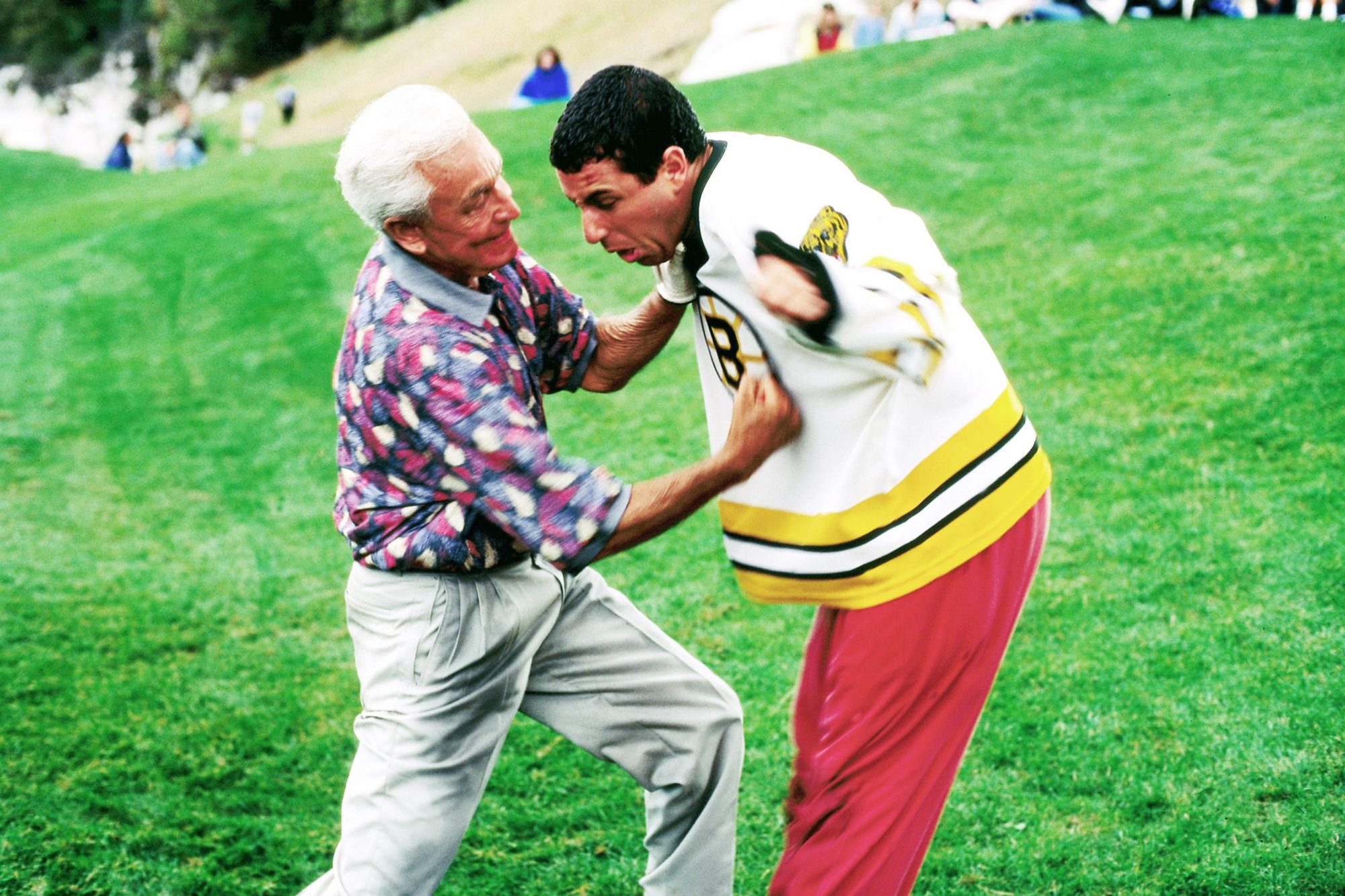
Happy Gilmore—the first team-up between director Dennis Dugan and star Adam Sandler—is one of the better Sandler comedies.
“The price is wrong, bitch!” – Happy Gilmore (Adam Sandler) to Bob Barker
Happy Gilmore (Adam Sandler) dreams of hockey stardom but lacks the skills to make it. When his grandmother (Frances Bay) faces foreclosure over unpaid taxes, Happy stumbles into golf after discovering his powerful, hockey-style swing can drive the ball incredible distances. Hoping to win prize money, he joins the pro tour with help from one-handed ex-golfer Chubbs Peterson (Carl Weathers).
Happy’s wild antics and temper clash with golf’s traditions, but PR rep Virginia Venit (Julie Bowen) sees his popularity as a boost for the sport. Rival Shooter McGavin (Christopher McDonald) views him as a threat and hires a heckler to derail him. A televised brawl with Bob Barker sidelines Happy, but an endorsement deal keeps him in the game.
Shooter spitefully buys Grandma’s house at auction, leading to a wager: whoever wins the Tour Championship gets the property. Happy trains with Chubbs to improve his short game, but Chubbs dies unexpectedly after a comedic mishap. Determined to win, Happy enters the final round against Shooter.
Even after being injured by Shooter’s sabotage, Happy rallies. On the last hole, he uses a fallen TV tower to sink a miraculous Rube Goldberg-style putt, claiming victory. Shooter’s attempted theft of the trophy ends with an angry mob in pursuit, while Happy celebrates at Grandma’s restored home.
I meant to watch the film for its 25th anniversary, but Covid delays pushed it back. Sadly, I’m only now revisiting it as a tribute to the late Bob Barker. The late host of The Price Is Right host is paired with Happy Gilmore during the Pepsi Pro-Am, where a hired heckler Donald Floyd (Joe Flaherty) repeatedly distracts the rookie golfer. Trying to behave, Happy avoids attacking the fan—instead, he brawls with Barker in what has become one of the greatest comedic fight scenes in movie history. Sports films can pull a punch or two, but this one delivers a knockout and a scene that still has audiences quoting it decades later.
There are the usual faces from Sandler’s circle, but this early entry in his career feels fresh rather than formulaic. When the Sandman is on, he is on. Amid the slapstick, there are touching moments that give the comedy some heart. Verne Lundquist’s cameo as himself lends golfing credibility, even as Happy embraces the role of PGA Tour troublemaker. His behavior might merit expulsion, but ratings trump decorum. The sport’s surge in viewers and sponsorships proves that controversy sells. Happy even cashes in himself, landing a Subway endorsement deal that keeps him in contention.
Released just over a year after Billy Madison, Happy Gilmore was another hit for Universal Pictures. Sandler’s former roommate Judd Apatow did an uncredited rewrite, with golf consultant Mark Lye approving only after five drafts. The original script had Happy winning a Masters Green Jacket instead of the Tour’s Gold Jacket. Many ideas from Sandler and co-writer Tim Herlihy stretched realism, but that’s the beauty of the film’s absurdity. Its blend of golf satire, outrageous gags, and quotable moments helped cement its cult status. Bob Barker’s recent passing will likely draw a new generation of viewers to discover why Happy Gilmore still scores nearly three decades later.
Sports comedies can be a tricky genre to pull off but Happy Gilmore manages to hit it in the hole more often than not. Who the hell is Happy Gilmore? A winning golfer, that’s who.
DIRECTOR: Dennis Dugan
SCREENWRITER: Tim Herliy & Adam Sandler
CAST: Adam Sandler, Christopher McDonald, Julie Bowen, Frances Bay, and Carl Weathers
Universal released Happy Gilmore in theaters on February 16, 1996. Grade: 4/5
Please subscribe to Dugout Dirt and Solzy at the Movies on Substack.