Danielle Solzman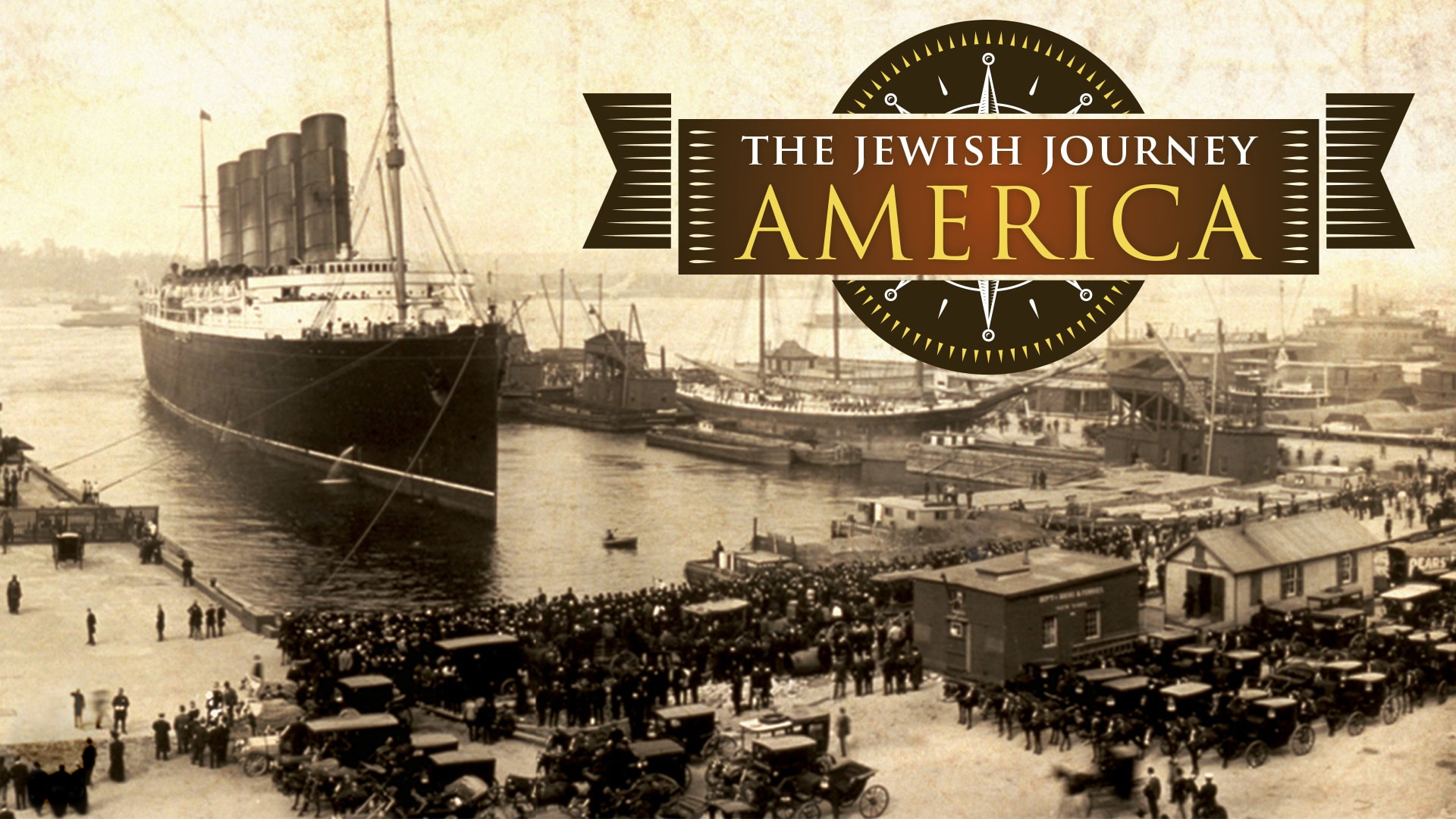
In The Jewish Journey: America, filmmaker Andrew Goldberg traces Jewish immigration to America all the way back to the 1600s.
What better way to kick off Jewish American Heritage Month than The Jewish Journey: America? One cannot tell America’s story without the Jewish immigrant story. After all, Jews played a big part in the contributions to the American popular culture. You have filmmakers like the Warner brothers, William Fox, Louis B. Mayer, Harry Cohn, Carl Laemmle, Adolph Zukor, Marcus Loew, and more. Many of them came to America in search of a better life or to escape persecution–sometimes, a case of both.
There are plenty of photographs and video footage as The Jewish Journey: America goes back in time. Filmmaker Andrew Goldberg talks to a number of people, ranging from first to fourth generation immigrants. They are a mixture of scholars, writers, and immigrants. There’s a specific focus on the five decades of Jewish immigration preceding the film’s PBS broadcast date in 2015. Even in the 21st century, there are still challenges facing immigration–it doesn’t help when the person in the White House is xenophobic and anti-immigrant.
America’s first Jews arrived in the 1650s, beginning in what was then New Amsterdam and Rhode Island. Jewish populations would later build up in Charleston, S.C. and Savannah, Ga. Around 1840-1850, there was a large migration of Jews arriving from the German-speaking areas of Europe. This included some 50,000 Jews, who settled in both the Northeast and Midwest. This wave of immigration also saw Jews going west during the California Gold Rush. The Strauss and Guggenheim families arrived during this time. It wasn’t until a wave of 200,000 Jews arrived in the late 19th century that America’s Jewish population saw a substantial change.
Jewish populations increased in Eastern Europe, specifically in the Russian Pale of Settlement. Conditions weren’t great and that’s what led Jews to leave the Czarist Empire for a better life in America. It’s not an understatement to say that pogroms were one of the biggest driving factors in driving Jews to leave Europe. At the same time, it was illegal to leave without the proper papers. This made things easier said than done.
Upon arriving to America, many Jews would work as peddlers or in the garment industry. They sent money back home to their families. Others made their way into other trades, like vaudeville and theatre. The filmmaking scene would really increase after the turn of the century in the 1900s.
The 1920s brought Jewish immigration to a “near halt” as doors closed because of xenophobia. America’s immigration laws would play a devastating impact as the Nazis came to power in Germany. There were fewer than 150K Jews allowed to enter in the lead up to and during the war. The numbers were equally similar after the Holocaust. When it comes to immigration, the 1930s and 1940s are considered a dark age. America could have done a lot more to save Jews during the Holocaust had the country opened its doors to an increase in Jewish immigration.
Jews in the Islamic world had a different experience. They lived simple lives but were assimilated into the environment. Egypt and Iraq offered the best opportunities, at least prior to 1948. That’s not to say that Jews didn’t experience antisemitism but it was different from the pogroms that Jews experienced in Europe. After the State of Israel’s founding, they were no longer welcome in the Islamic world. They were fired from civil jobs and had to forfeit property. Numbers dwindled as Jews fled the persecution. One interviewee said their family disguised themselves as Arabs in their attempt to leave their home.
Iranian Jews would begin to immigrate with the rise of the Islamic Revolution in Iran. Thousands fled and made their way to the US. Everyone basically had to start over from scratch in learning a new culture and a new way of life.
One’s observance might change after arriving in New York but as Rabbi Manis Friedman notes, “Jews are still Jews.” Both observance and Torah study have increased. Even for those who are more culturally Jewish than religiously Jewish, ritual still plays a role in their life.
Cat Greenleaf on being Jewish: “I love being part of something. Even if we’ve never met–your last name is Goldberg, my last name is ambiguous–Greenleaf–but we know that we’re Jews and we know that there’s a similarity there. I like being part of something bigger than I am.”
It didn’t matter what time someone arrived in the US as they had a different experience. The Jewish Journey: America shows how it was a very different experience for Mizrahi Jews compared to Ashkenazi Jews. Mizrahim were essentially kicked out from their homes in the Arab world. To say that they had no other choice is not an understatement. At the same time, opportunities increased upon moving to the US.
The Jewish Journey: America isn’t in-depth as a longer documentary might be, but it covers so many facets of the Jewish immigrant experience.
DIRECTOR/SCREENWRITER: Andrew Goldberg
NARRATOR: Martha Teichner
FEATURING: Michael Stanislawski, Dr. Arnold Richards, Martin Greenfield, Joseph Berger, Hasia Diner, Rabbi Brad Hirschfield, Rabbi Manis Friedman, Rabbi Marc Angel, Yvette Marrin, Cat Greenleaf, Rabbi Malka Drucker, Annie Polland, Melvin Federbush, Lital Levy, Cynthia Kaplan Shamash, Lucette Lagnado, André Aciman, Houman Sarshar
The Jewish Journey: America premiered March 3, 2015 on PBS. Grade: 3.5/5
Please subscribe to Solzy on Buttondown and visit Dugout Dirt.