Danielle Solzman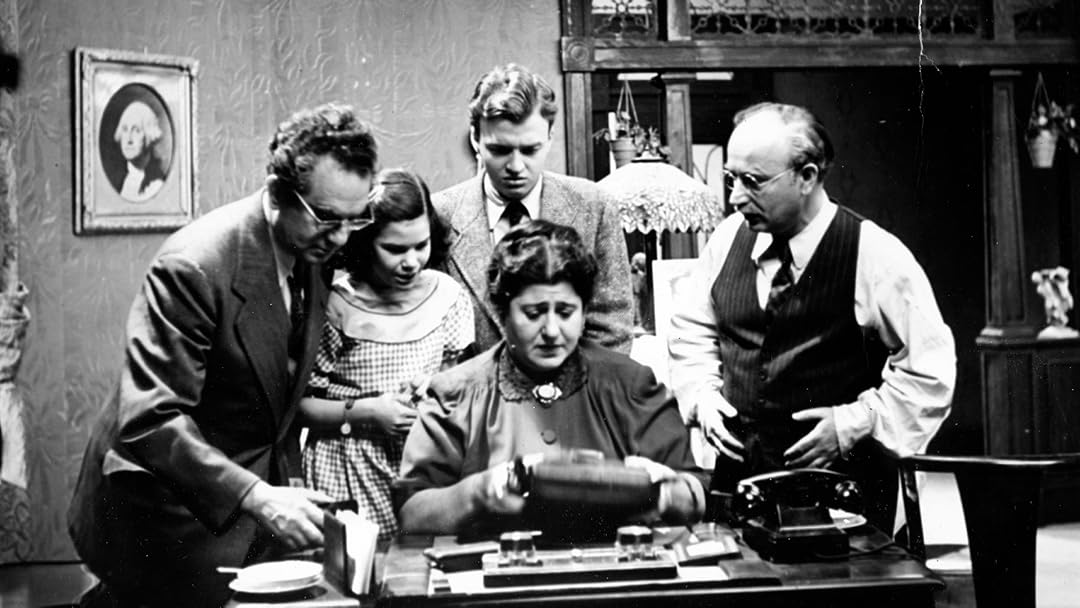
Yoo-Hoo, Mrs. Goldberg revisits the life and career of Gertrude Berg, best known for her role as Molly Goldberg on radio and television.
Gertrude Berg lived a rather impressive life but there’s a good chance that you’ve probably never heard of her. She was a trailblazer in the years before Lucille Ball became a star, writing 12,000 scripts throughout her career. In fact, some consider her to be the Oprah of her day. Even though her radio and TV shows were comedies, they also touched on social commentary and family values. What makes Berg’s shows stand out is that they centered on Jewish characters at a time when Jewish characters were uncommon in any medium. You can blame the studio moguls for that decision.
Aviva Kempner’s portrait of Berg weaves in archival clips and interviews with family, friends, and historians. If you’re unfamiliar with Berg, you’ll learn plenty about the trailblazing woman during the hour-and-a-half documentary. I regret that I missed the film while it was playing in theaters and that I waited this long to watch it. Having rewatched The Life and Times of Hank Greenberg last year, I knew I needed to finally get around to watching the Berg doc. It was worth the wait.
The second season of Rise of the Goldbergs on the radio was second only to Amos ‘n’ Andy. The thing about Rise of the Goldbergs is that Gertude Berg had insisted on Yiddish actors to play Jewish parts. It was probably one of the rarities in which Jews were allowed to play noticeably Jewish characters. There was a time when Berg brought in a Rabbi to conduct a Pesach seder over the radio. A Roman Catholic woman was so touched that she felt compelled to write a letter.
Normand Lear admitted that Berg “saved the sanity of this Jewish kid.” This comment came while Yoo-Hoo, Mrs. Goldberg was focusing on World War II and the Holocaust. At one point, the film makes note of Berg finding ways to calm children after the news of Kristallnacht became public. Speaking of the Holocaust and World War II, Berg did her part when it came to war bonds.
After her many years on the radio, Berg decided to make the transition to TV. William S. Paley was hesitant to give her an audition. Berg soon prevailed and CBS gave her a spot on the air in 1949. It was the first sitcom in the history of television. A neighbor calling out “Yoo-hoo, Mrs. Goldberg” led to neighbors chitchatting from their apartment windows.
The documentary doesn’t ignore the Red Scare and the impact that it had on The Goldbergs. Dr. Glenn D. Smith Jr., a Berg historian, discusses how Berg threatened General Foods that if they didn’t stop threatening to blacklist Philip Loeb, she would go use every available platform to tell her audience to not buy General Foods product again. In the short-term, General Foods said they “would no longer accuse someone of communism until evidence proved otherwise.” Unfortunately, General Foods pulled their support, citing economic reasons. Coffee sales had increased so it was probably a BS decision.
Berg used her celebrity to try and find another sponsor. She went to see Cardinal Spellman. He would only help if she converted to Catholicism. This was the end of the road for her efforts in saving the show. In short, it was fire Philip Loeb or go on with the show. By the time everything was settled, I Love Lucy premiered on CBS and Gertude Berg was no longer the First Lady of Television. Berg was able to find a new home on NBC and found another actor. Because of replacing Loeb with Harold Stone, the show would never be the same. Bob Harris soon replaced Stone and stayed with the role through 1954.
Here’s something you might not know about the actress: she was the first-ever actress to take home an Emmy Award for Lead Actress in a Television Series in during the 3rd Emmy Awards in 1951. Between radio and television, she had been performing in the role for 20 years.
Adam Berg, a grandson of Gertrude Berg, mentions that there were several issues that nobody would discuss during family gatherings. “One was Red Channels, the blacklist, or the unfortunate demise of Mr. Loeb.” Loeb received a severance package and later lived with the Mostels following a pair of cataract operations. He checked himself into a hotel, where he ended his life. Anna Berger, an actress who appeared on The Goldbergs, rightfully describes it as “the most shameful period in American history, a blight on America–friends against friends, finger pointing accusations, Red Channels.” Berger appears emotional while discussing Loeb.
Berg was blacklisted by association. With no future in TV, Berg had no choice but to take to the stage. In taking to Broadway, she would win a Tony Award. The World of Sholem Aleichem helped break the blacklist in 1959. Berg joined Zero Mostel and others in appearing in the cast. She also made appearances on The Steve Allen Show and The Perry Como Show. She starred with Cedric Hardwicke in Mrs. G Goes to College. It was a new character instead of reprising her role as Molly Goldberg. It was otherwise business as usual.
Yoo-Hoo, Mrs. Goldberg is a tribute to an underappreciated Jewish woman and pioneer of television.
DIRECTOR/SCREENWRITER: Aviva Kempner
FEATURING: Judith Abrams, Joyce Antler, Ed Asner, Adam Berg, Anna Berger, Morris Deutsch, D. Chris Milanos Downey, Madeline Gilford, Justice Ruth Bader Ginsburg, Gary David Goldberg, Linda Greenberg, Viola Harris, Ann Kantor, Aliza Kempner, Piera Kempner, Howard Langer, Norman Lear, Arlene McQuade, Margaret Nagle, Larry Robinson, Anne Schwartz, Dr. David Schwartz, Henry Schwartz, Leona Schwartz, Andrea Roane Skehan, Dr. Glenn D. Smith Jr., Susan Stamberg, Robert Thompson, Jack Urbont, Mindy Weisel
International Film Circuit released Yoo-Hoo, Mrs. Goldberg in theaters on July 10, 2009. Grade: 4/5
Please subscribe to Solzy on Buttondown and visit Dugout Dirt.