Danielle Solzman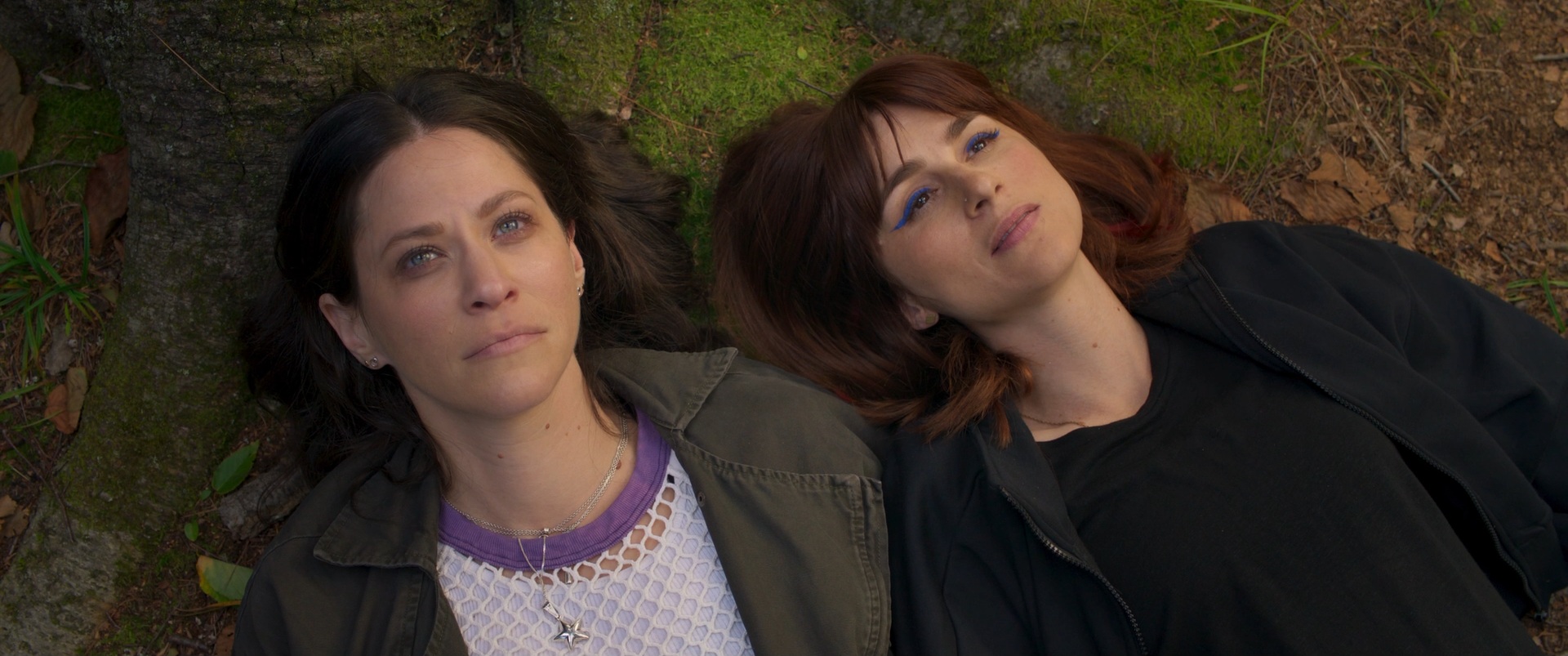
Rachel Israel opens up about directing The Floaters, crafting a joyful Jewish story, and the challenges and rewards of filming at a real summer camp.
In this interview, director Rachel Israel discusses her new film The Floaters, a heartfelt summer camp comedy centered on Jewish identity, individuality, and belonging. She shares how the project came to her, why authentic representation mattered in casting, and how she approached directing a story set in a world she never personally experienced. Israel reflects on filming at a real camp—including unexpected visits from bears—and explains how empathy drives her creative process. She also touches on the challenges of post-production, her fondness for improv, and what took so long to follow up her debut feature Keep the Change. Throughout, Israel emphasizes the importance of Jewish joy and the value of telling diverse, meaningful stories on screen.
Recently kicked out of her band and desperate for direction, Nomi (Jackie Tohn) reluctantly takes a job at Camp Daveed, the Jewish summer camp she once attended—now run by her childhood best friend, Mara (Sarah Podemski). With the camp in disarray (including a catastrophic plumbing failure), Mara assigns Nomi to supervise a group of misfit teens known as the floaters, who don’t quite fit in with the camp’s traditions or cliques.
Rachel Israel directed The Floaters from a script by Brent Hoff and Andra Gordon & Amelia Brain, and a story by Hoff, Becky Korman, Lily Korman, and Shai Korman. The film stars Jackie Tohn, Sarah Podemski, Aya Cash, Judah Lewis, Nina Bloomgarden, Jake Ryan, Ben Krieger, Max Samuels, Jim Kaplan, Jacob Moskovitz, Thani Brant, Jillian Jordyn, Bekah Zornosa, Jill Kargman, Maxwell Jacob Friedman, Dan Ahdoot, with Seth Green and Jonathan Silverman and Steve Guttenberg.
The Floaters was shot at Camp Tel Yehudah in Barryville, New York, a real-life camp founded in 1948 and run by Young Judaea, the oldest Zionist youth movement in North America.
The film recently held its world premiere in June at the 2025 Bentonville Film Festival. Next up is the closing night screening of the 2025 San Francisco Jewish Film Festival.
It’s so nice to meet you today. How are you doing?
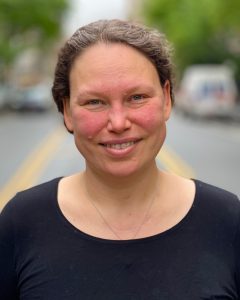
Rachel Israel: It’s good to meet you, Danielle. I’m doing great. I’m excited to do this.
I feel that films like The Floaters are especially important right now as they provide a source of Jewish joy at a time when antisemitism is the worst it has ever been in my lifetime.
Rachel Israel: Yeah, I’m so glad that you picked up on that and that you took that from the film. That’s definitely what we had in mind when we made it.
How honored are you to be premiering the film at Bentonville?
Rachel Israel: Oh, I’m so excited to be premiering it in Bentonville. It’s a great festival. It’s a festival that encourages female directors and diversity. I’m really very proud to be taking it there. And also, to take it as a Jewish film for a wider audience, which is our goal for the film, that it be something that people can appreciate, whether they’re Jewish or not.
How did you first come across the script and decide you had to direct the film?
Rachel Israel: I was connected to the producers through my agents so sort of a shidduch there.
I really connected to the material in that it was a story. It was funny. It was a great comedy. It was very specific and authentic. I love being able to dive into those kind of details in a world and have a film that feels alive through its authenticity.
I really cared about what the film had to say and express about what makes a strong community, that a strong community is made through allowance of individuality, that a strong community permits individualism.
Which was filmed first—The Floaters or Miracle on 74th Street?
Rachel Israel: I filmed The Floaters first and Miracle on 74th Street back-to-back. Yeah, but The Floaters was filmed first.
What are the challenges of going through post-production on two different films at what I assume is basically the same time?
Rachel Israel: (Laughs) I love post-production to me. It’s like a clay table and getting to see the film sculpted in a very physical way in post. I think I could do 3 films in post and more, and be happy.
What took so long to follow up on Keep the Change?
Rachel Israel: Oh, that’s a good question. Well, I don’t know. It’s said that sometimes it’s harder to get your second film made than it is your first. Since Keep the Change, I have been doing a lot of writing, and I’ve been figuring out more and more what stories I care about.
Did you attend summer camps growing up?
Rachel Israel: I actually did not. I did not go to summer camp, so making The Floaters was my initiation into that world.
Except for two weeks attending CLTC through BBYO, I did not have really have that experience of going to sleepaway summer camp. I just did the local JCC.
Rachel Israel: Yeah, yeah, yeah, yeah,
That kind of takes away my next question: if the film brought back any nostalgic memories from attending summer camp.
Rachel Israel: Right. Not having been to Summer Camp, I did not have those memories. I am a proud Jew, and this is a film about misfits. I was home-schooled, so I think I have always this sort of sense of outsiderness, and or maybe a heart for outsiderness. I guess I brought that to it in a personal way.
Yeah. How do you approach directing a film about summer camp when you don’t have that experience of attending summer camp while growing up?
Rachel Israel: Oh, man. There are so many movies that I want to make that I haven’t experienced those worlds personally. That’s the joy of filmmaking is that you get to dive into other characters’ lives.
It’s all about empathy—as a filmmaker, as an actor. I’m not an actor, but for actors, it’s about our capacity to tell these stories is about empathy, and it’s hopefully providing an experience for the audience that is an empathetic one where they’re learning about a world they didn’t know of, either.
What was the most challenging aspect of the production?
Rachel Israel: Oh, we were just asked this in a previous interview. We had our actor, Judah Lewis, in that interview, and we both at the same time, said “Bears.”
We were haunted by some bears on set. We shot at an actual camp. Tel Yehudah in Barryville, and when the camp is fully inhabited by campers and staff, and all that, bears stay away. But with a little bit more depleted population, the bears are a little more daring, and get closer looking for food.
No one was hurt, but it was an unexpected challenge.
I’m so used to people saying time or money. Bears is not one of the answers I usually hear.
Rachel Israel: I was very well treated as a director, and I didn’t have to worry about those things.
Was there any room for improv on set?
Rachel Israel: Yeah. The script was really strongly written. I did a lot of improv with my actors on Keep the Change and a lot less here. We mostly stuck to the page.
But we very deliberately left space for improv, particularly in certain key scenes where we felt it could embolden the scene, and in a lot of the materials in the film.
But also, I think sometimes, too, good improv is grounded in a strong story on the page, and it’s from that. Talented actors, we have that. Add then, a strong script is the 2 key ingredients for good improv.
Yeah. I liked the change in aspect ratio when you switched to the phone-style documentary footage.
Rachel Israel: The materials caught on the phone were all improv. That was the cast improvising.
When it came to casting the film, how important was it to have authentic representation?
Rachel Israel: Very important. As a starting place, not to say that Jewish characters can’t be played by non-Jewish actors, but we wanted this film to be an example of what it feels like for Jewish characters to all be played by Jewish actors. That’s what we did. And then, within that, it was very important to me—and us—to have to show a diversity of Jews, that what being Jewish looks like is not a stereotype.
Speaking of diversity, that’s definitely something I feel that’s important. In a lot of Jewish-related films, it’s usually Ashkenazis. Every now and then you might get one about Sephardic community, but it’s definitely something I hope we’re gonna see more and more of.
Rachel Israel: Absolutely. I think that’s really important.
What was it like to direct this cast and how much room was there for rehearsal before production?
Rachel Israel: It was an absolute pleasure to direct this cast, because we cast such great actors. A lot of good directing is whom you choose to work with, and we couldn’t have done better with this cast. They were really incredible.
In terms of rehearsal—as a director, I don’t prefer to do a lot of rehearsal, because I like to save the surprises for when the camera’s rolling. I did have ample time for conversations with the actors so we could explore questions, and discuss their characters in a way that I think prepared them—or us—for tackling those scenes, me, but both of us.
For me to understand the insights that the actors had into their characters, and to take that into my approach for how I was going to direct the scene, and then for whatever that dialogue means for the actors.
How long was principal photography?
Rachel Israel: Oh, it’s a little fuzzy in my head now. I think it was originally 4 weeks. Yeah. It was 4 weeks, 4 and a half weeks.
Thank you so much. Enjoy the premiere.
Rachel Israel: Thank you, Danielle. Really good to meet you.
The Floaters held its world premiere during the 2025 Bentonville Film Festival in the Narrative Competition. Upcoming screenings include the 2025 San Francisco Jewish Film Festival.
Please subscribe to Solzy on Buttondown and visit Dugout Dirt.