Danielle Solzman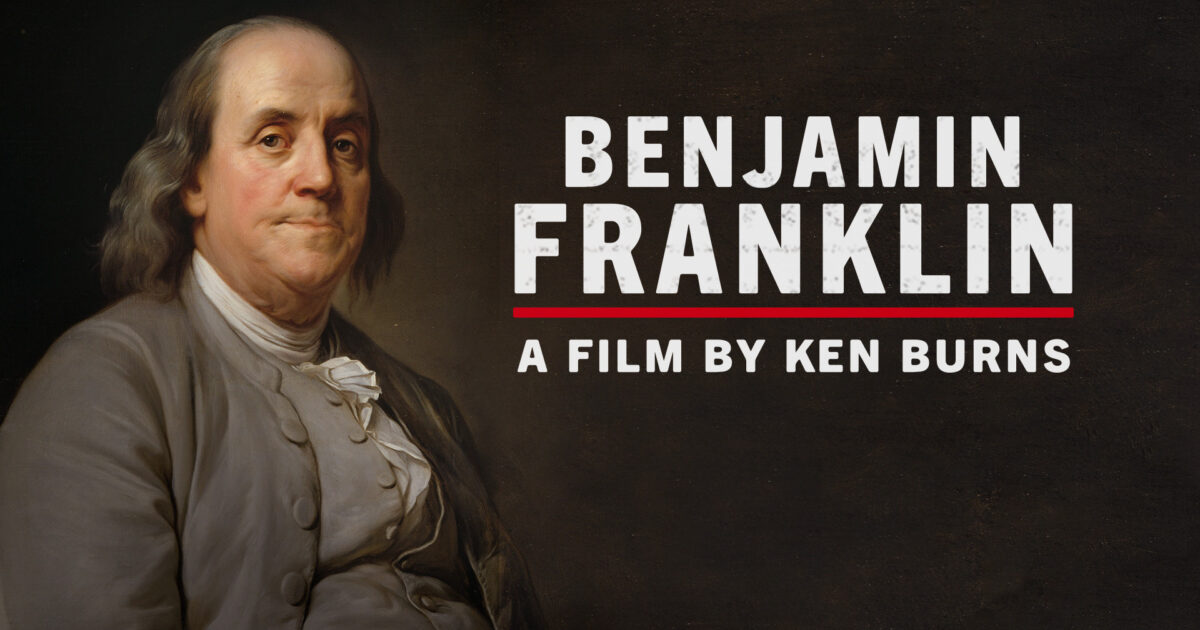
Ken Burns’ two-part documentary, Benjamin Franklin, explores the life of a writer, inventor, diplomat, and Founding Father who helped shape American history. Franklin was a signer of both the Declaration of Independence and the United States Constitution. His life has been profiled in acclaimed biographies by H.W. Brands and Walter Isaacson. Brands’ The First American (2000) is widely regarded as the authoritative biography, while Isaacson’s Benjamin Franklin: An American Life (2003) remains a definitive work as well.
After covering Founding Brothers last year, I had long planned for this year’s July 4th review to focus on Burns’ 2022 documentary on Benjamin Franklin. I previously reviewed Burns’ documentary on the nation’s third president and another complex Founding Father, Thomas Jefferson, earlier this year.
When Elizabeth Willing Powel asked Franklin whether the new nation would be a republic or a monarchy following the 1787 Constitutional Convention, Benjamin Franklin famously responded, “A republic, if you can keep it.” The source for this quote is the journal of Maryland delegate James McHenry. Unfortunately, I fear Dr. Franklin would be gravely disappointed in where America stands today. Our leaders have failed his vision—dragging the country toward fascist authoritarianism. America can no longer claim to be the leader of the free world.
Benjamin Franklin’s life has often been hailed as the quintessential American story, but his path was far from ordinary. Living through nearly the entire 18th century, Franklin was both a product and a driver of an era marked by dramatic shifts in science, politics, and culture. He helped establish America’s first public library, founded a volunteer fire company, and created an academy that would become the University of Pennsylvania. As a writer, his Poor Richard’s Almanack influenced generations of humorists and introduced sayings that remain familiar today. His groundbreaking work in electricity led to the invention of the lightning rod, solidifying his status as a visionary of the Enlightenment.
Yet Franklin was a man of deep contradictions. While he championed self-improvement and public service, he also embodied the complexities and moral failings of his time. He could be witty and philosophical, generous yet calculating, and open-minded in some respects while holding harmful prejudices in others. Despite his later advocacy for abolition, Franklin enslaved people for much of his life, and his newspaper ran ads for enslaved individuals and published notices about runaways. He denounced violence against Indigenous people but also supported westward expansion onto their lands. Franklin’s legacy is inseparable from both his remarkable achievements and the uncomfortable truths they coexist with.
Born in Boston in 1706, Benjamin Franklin would later make Philadelphia his permanent home. At 42 years old, Franklin turned his focus from the printing business to science and innovation. But no, he wasn’t done yet. He would further cement his legacy through entering politics. The man was a multi-hyphenate if there ever was one! Following his election to the Pennsylvania Assembly in 1757, Franklin would spend much of the next two decades in England. The growing rebellion in the leadup to the American Revolution would break his own family apart. Son William Franklin, appointed the Royal Governor of New Jersey, sided with the British and Loyalists over the Patriots.
Returning to America in 1775, the first shots at Lexington and Concord had been fired. Naturally, Benjamin Franklin joined up with the Second Continental Congress. His son’s aligning with the British led Franklin—one of the oldest members at 69 years old—to have his detractors, but the statesman won them over and later earned an assignment to the committee that drafted the Declaration of Independence.
Sometime thereafter, it was back to Europe—this time to France. Benjamin Franklin’s efforts paid off as France joined the American Revolution in 1778. But before this, but his efforts led to Casimir Pulaski, Friedrich Wilhelm von Steuben, and the Marquis de Lafayette becoming foreign-born heroes of the American Revolution when they joined the fight in 1777. Without the French support coming after the Battle of Saratoga, Franklin’s efforts would have failed in negotiating the Treaty of Paris, ultimately ending the war and gave America its independence.
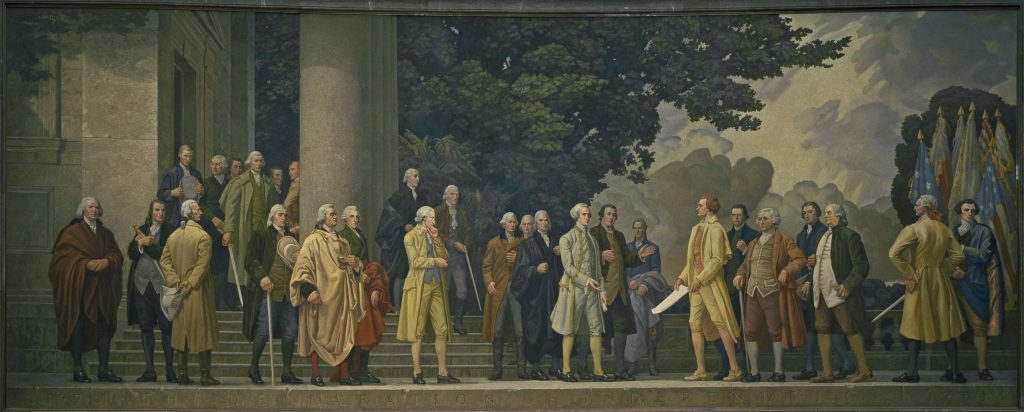
In 1785, Benjamin Franklin finally came back home to the United States. At 81 years old, he was the oldest delegate to be elected to the Constitutional Convention of 1787. He wasn’t in the best of health and he pushed for compromise whenever possible, for better or worse. America’s Original Sin was failing to ban slavery in 1787. The were those on the right side of the conversation and those who weren’t. Franklin came to be on the right side. It took him some time to get there but he got there.
After the convention ended, Franklin spent the remaining years of his life by being an abolitionist. He owned slaves earlier in his life, but his own thoughts had changed by this point. During the final months of his life, he made one last push by presenting a formal petition to Congress, only to see it be rejected. Unfortunately, it would take until the Civil War and even then, it didn’t solve America’s problem with racism–that’s still happening today. On April 17, 1790, the American statesman died at 84 years old.
Burns doesn’t rely solely on portraits to tell Benjamin Franklin’s story. Emmy-winning actor Peter Coyote narrates, while Mandy Patinkin voices Franklin himself. As with many of Burns’ films, the documentary draws heavily on archival imagery and voice performances, brought to life through expert historical context. Among the key voices are Isaacson, who served as senior creative consultant, and Brands, an advisor and one of the foremost experts on Franklin. A recent Brands book (still to be reviewed on my Buttondown linked below), Our First Civil War, spends plenty of time focusing on Franklin as it is. A good amount of what’s mentioned there is covered in the film, especially the family relationships during the American Revolution.
What Burns and company are able to do isn’t just look at the Founding Father, but break through the myths that have grown larger in the past 249 years. I read Brands’ book on Franklin over two decades ago but after watching the documentary, I’m due for a re-read, likely to take place this year. After all, he’s a fascinating figure, despite his imperfections. As Burns says in the documentary press release, Franklin’s on shortcomings are “a reminder of this country’s failure to address slavery at the time of its founding and the racial divisions that continue to impact our country today.”
Benjamin Franklin’s words—“A republic, if you can keep it”—were not a punchline. They were a warning. Burns’ documentary doesn’t just explore the life of a Founding Father; it interrogates the myth of American exceptionalism. In a time when democracy is on the ropes and truth itself feels fragile, revisiting Franklin’s legacy isn’t just an intellectual exercise—it’s a moral imperative.
DIRECTOR: Ken Burns
SCREENWRITER: Dayton Duncan
NARRATOR: Peter Coyote
FEATURING: Walter Isaacson, Bernard Bailyn, H.W. Brands, Christopher Leslie Brown, Joyce Chaplin, Ellen R. Cohn, Philip Dray, Erica Armstrong Dunbar, Joseph J. Ellis, Clay Jenkinson, William E. Leuchtenburg, Stacy Schiff, Sheila L. Skemp, Gordon S. Wood
VOICE CAST: Mandy Patinkin, Adam Arkin, Tony Beck, Paul Giamatti, Josh Lucas, Carolyn McCormick, Craig Mellish, Joe Morton, Liam Neeson, David Quay
PBS aired Benjamin Franklin on April 4-5, 2022. Grade: 5/5
Please subscribe to Solzy on Buttondown and visit Dugout Dirt.