Danielle Solzman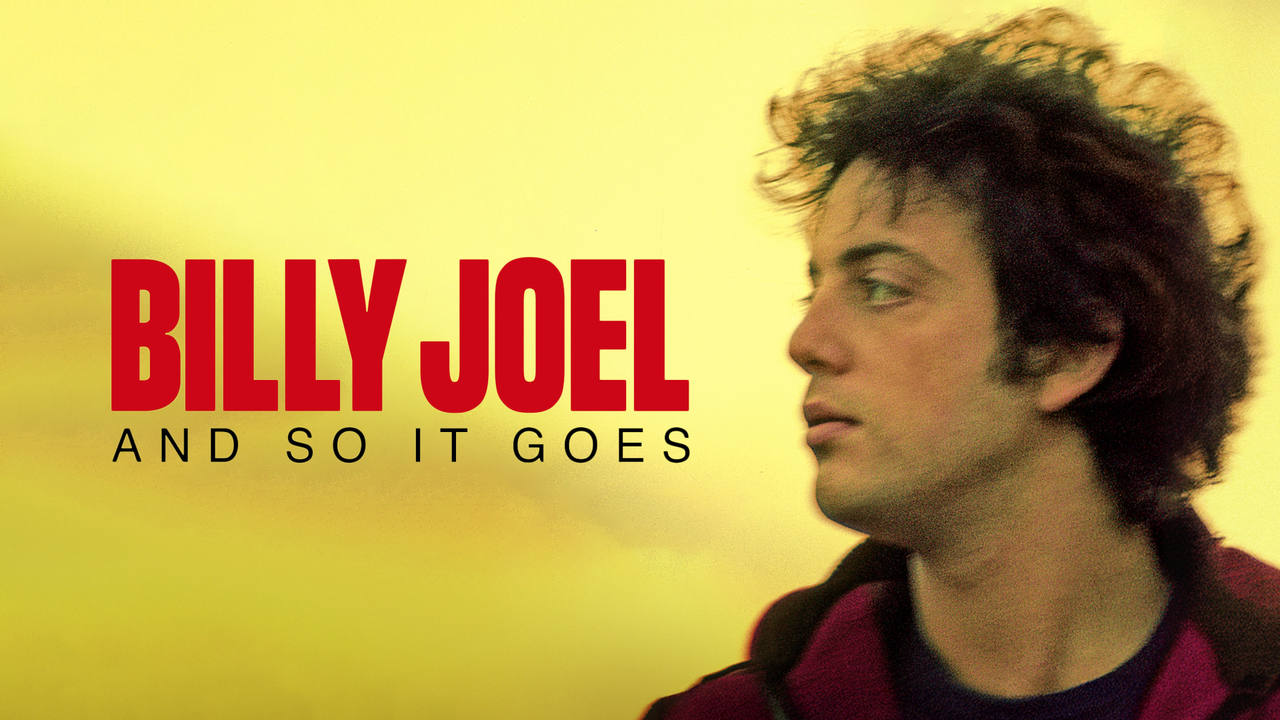
Billy Joel: And So It Goes is a revealing, career-spanning documentary that blends rare footage and personal stories to explore the man behind the music.
This two-part film offers an expansive yet intimate portrait of the legendary singer-songwriter, charting his path from a turbulent childhood on Long Island to international stardom. Featuring never-before-seen performances, home videos, and candid interviews with Joel, Billy Joel: And So It Goes delves into the personal relationships, creative influences, and private struggles that have shaped both his life and his music.
From a childhood marked by absence to the heights of global fame, the film explores how Joel’s relationships, collaborations, and inner conflicts have fueled his songwriting. By revisiting the romantic origins behind hits like “Just the Way You Are” and “Uptown Girl,” while also confronting betrayal, heartbreak, and reinvention, Billy Joel: And So It Goes reveals the deep connection between his life and work—offering fans a richer understanding of the music that has endured for generations.
Both parts of Billy Joel: And So It Goes run close to two and a half hours, covering a tremendous amount of ground—nearly 80 minutes longer than Martin Scorsese’s No Direction Home: Bob Dylan. While it’s possible to make it through in one sitting, the film lends itself to a break—not because it drags (it doesn’t), but because of how much it packs in. This isn’t just a music doc; it’s an emotional, reflective, and deeply personal journey.
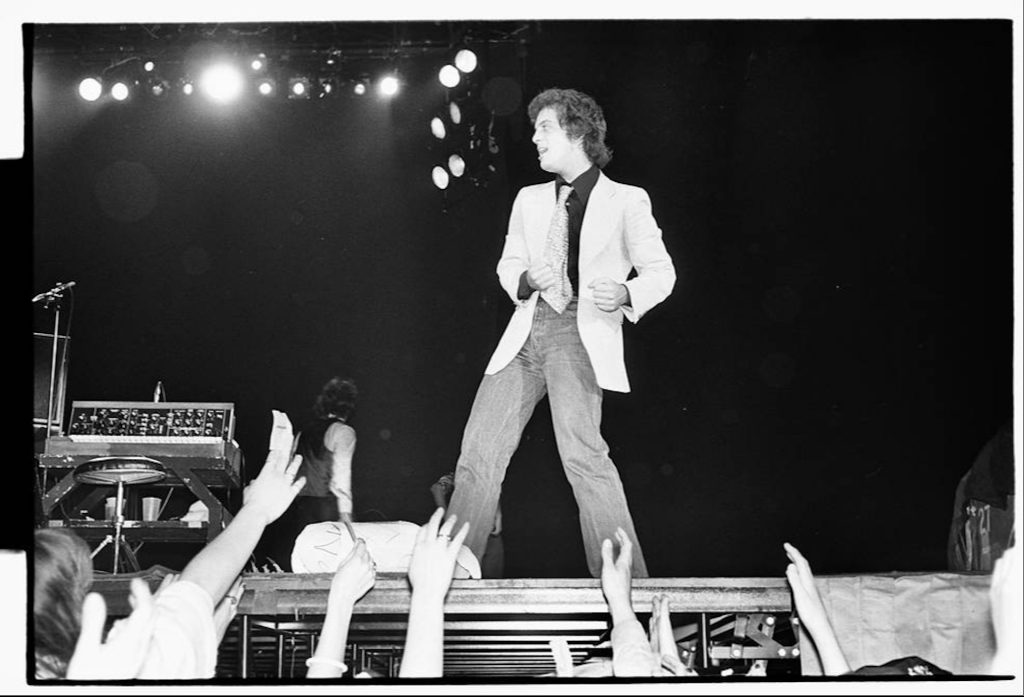
Billy Joel: And So It Goes gives the musician a chance to reflect on growing up the son of working-class parents on Long Island. His father left when he was just eight years old, a formative loss that cast a long shadow over his life and music. Joel freely acknowledges his own mistakes along the way, but consistently channeled his lived experiences into songwriting. He cycled through several bands beginning in high school—The Echoes, The Hassles, and the short-lived rock duo Attila. It was during his time in Attila that he met Elizabeth Weber, who would become his first wife. Their affair led to the band’s breakup and a period of emotional turmoil, including two suicide attempts.
Weber would go on to become Joel’s early muse, inspiring hits like “Just the Way You Are” and “She’s Always a Woman.” Billy Joel: And So It Goes shows how a live recording of “Captain Jack” became a breakout moment in 1972 when it was picked up by a Philadelphia radio station—an early turning point that led to his signing with Columbia Records.
Watching Billy Joel: And So It Goes, you get a real sense of just how tough it was for musicians trying to break into the industry. Joel’s rise to fame didn’t happen overnight, and his reflections on his early contracts paint a bleak picture of the music business in the 1970s.
“With my first record contract, I gave up my publishing, I gave up my copyrights, I gave up my record royalties—everything but my first-born child, I think,” Joel says. “Just signed it all away. And that was just kind of par for the course of the music business back in those days. It was pretty rough.”
After signing with Columbia in 1972, Joel moved from New York to California. He stayed until 1975, working for a time at the Executive Room piano bar on Wilshire Boulevard, performing under the name Bill Martin. Those six months behind the piano would eventually inspire the lyrics of what would become his signature hit: “Piano Man.”
One of the most fascinating sections of the film focuses on Joel’s fifth studio album, The Stranger, released in 1977. While the album was ultimately produced by Phil Ramone—invited to a Carnegie Hall show by Elizabeth Weber—Joel originally sought out George Martin, best known for producing Sgt. Pepper’s Lonely Hearts Club Band and many of The Beatles’ greatest works. Who wouldn’t want to work with him?
But the collaboration never materialized. Martin wanted to bring in his own studio musicians, while Joel was adamant about keeping his band. “Love me, love my band,” Joel says. We’ll never know what a George Martin–produced Stranger might have sounded like, but the album as released became a massive success, reaching No. 2 on the U.S. charts. While Joel had already seen some success, The Stranger marked a major turning point, cementing his place in pop music history. Critics weren’t always kind, but audiences never stopped showing up—something that would continue through decades of record-breaking tours.
One surprising new-to-me revelation (Chances are likely that I forgot from reading Fred Schruer’s definitive biography of Joel in 2014) from watching Billy Joel: And So It Goes: “Just the Way You Are” almost didn’t make it onto the album. Joel had doubts about the track, but Ramone brought Linda Ronstadt and Phoebe Snow into the studio to hear it. Their enthusiastic response helped convince him to keep the song, and it went on to become a No. 3 Billboard hit.
Billy Joel: And So It Goes also features appearances from major artists like Bruce Springsteen and Paul McCartney, who reflect on Joel’s legacy and artistry.
“When I first heard Billy, it was like, Oh, wait a minute, he’s good, who’s this?” says McCartney. “Like you do, your ears perk up. The song that really made me know that that was happening was ‘Just the Way You Are’ and when I get asked, is there a song that you wish you’d written, and I always, that’s the one I always say.”
“He was a bridge-and-tunnel artist,” says Springsteen, who was born a few months after Joel. “As am I. But Billy is more identified with New York, and that Tin Pan Alley influence is why his songs are better than mine.”
Part 1 of Billy Joel: And So It Goes concludes with a near-fatal motorcycle accident in 1982. Joel injured his hands but recovered quickly, returning to work on his eighth studio album, The Nylon Curtain. The injury came just months before his divorce from Elizabeth Weber—who opens up in the documentary about what ultimately led to the end of their marriage.
The Nylon Curtain doesn’t really come into focus until the second part of Billy Joel: And So It Goes. In composing songs for the album, Joel shifted his musical lens toward the grit, struggle, and aspirations of the Everyman. It’s one of the few points in the film where his peers—fellow musicians—open up about his songwriting process and its impact.
“His songs relate to people,” says McCartney. “He knows what will reach someone, because he’s felt it himself. He’s got the passion, and I think it starts in the purity of the music.”
A substantial portion of Part 2 is dedicated to Joel’s three later marriages, beginning with model and actress Christie Brinkley, whom he met in St. Barths. But before the documentary dives into that relationship, Billy Joel: And So It Goes takes a powerful detour into Joel’s family history and Jewish heritage—particularly his roots in Nuremberg, Germany. After the Unite the Right rally in Charlottesville, Joel made a public statement by wearing a yellow Magen David during a concert performance. The gesture echoed deeply personal history.
Joel’s father, Howard, was a classical pianist who was just ten years old when Hitler rose to power. Howard witnessed firsthand the effects of fascism. His father, Karl Joel, owned a successful mail-order textile business and was targeted directly by Julius Streicher and Der Stürmer. Despite the oppression, Karl remained an optimist. He was forced to sell the business to Josef Neckermann, but the agreed-upon payment was deposited into a Berlin trust that Joel couldn’t access. The family fled Germany, first to Switzerland, then through France and England, eventually making their way to Cuba and finally the United States in 1942. They were among the lucky ones; many other Jewish families were not.
A chilling sidenote to this discussion in Billy Joel: And So It Goes: the very company that Karl was forced to sell—under new management—eventually manufactured the striped pajamas worn at Nazi concentration camps. It wasn’t until 1957 that Karl Joel was finally compensated, and he returned to Nuremberg in 1964.
At around 21 or 22 years old, Billy Joel traveled to Europe in hopes of tracking down his estranged father. On the very day he was set to leave, he received a telegram revealing that Howard was living in Vienna. Their reunion revealed that Billy had a half-brother, Alexander, who was five years old at the time and would grow up to become a classical conductor. That meeting inspired the lyrics to “Vienna.”
Co-directors Susan Lacy, who directed Spielberg, and Jessica Levin structure Billy Joel: And So It Goes to include reflections from both musicians and music critics. Though not a formal roundtable, the editing allows for a lively back-and-forth. The musicians, in particular, argue that critics of the 1970s and ’80s didn’t fully appreciate Joel’s range. While I didn’t jot down exact lines, it’s a compelling theme that runs through this section. As a film and TV critic myself, I try to avoid becoming the type of writer who tears down the hard work of hundreds—if not thousands—of people.
Everyone’s tastes are different, but Billy Joel: And So It Goes makes a convincing case that critics misunderstood Joel’s versatility. He experimented with a wide array of genres: pop rock, soft rock, country rock, folk rock, progressive rock, jazz rock, new wave, doo-wop, soul, art rock, arena rock, and hard rock, among others. An Innocent Man served as a loving tribute to the American pop styles of the 1950s and ’60s. Critics may have wanted him to stick to one genre, but Joel followed his instincts—and his fans followed him.
Joel’s relationship with his father becomes a major throughline in Billy Joel: And So It Goes. Howard’s decision to return to Europe created long-standing abandonment issues, something Billy confronted head-on when he became a father himself. Alexa Ray Joel, his daughter with Brinkley, reflects on her father’s evolving bond with Howard. The film shows a conversation between Billy and his half-brother, Alexander, who by then had already been a professional conductor in Europe for a number of years. Howard’s death in 2011 clearly left a mark, even though Billy had long since forgiven him. Music, it seems, runs deep in the Joel family: Billy, Alexander, and Billy’s daughters—Alexa, Della, and Remy—all share that creative legacy.
Perhaps surprisingly, Billy Joel’s released his final studio album, Fantasies & Delusions, in 2001. It is a classical collection and his brother’s success as a conductor may have influenced the decision. For the album, Joel collaborated with longtime friend and pianist Hyung-Ki Joo. It’s a stark contrast from the rock-driven catalog that made him famous. Billy Joel: And So It Goes doesn’t dwell on his decision to stop releasing new albums, though Google searches will show that he grew tired of the recording process and the pressure of having every lyric dissected.
Billy Joel: And So It Goes briefly touches on Joel’s 2004 marriage to chef and author Katie Lee. She’s hesitant to speak about that period, and it’s easy to understand why. Their marriage lasted under five years, ending in 2009. Another car accident and a subsequent stay at the Betty Ford Center followed. Joel doesn’t dwell on it, but the implication is clear: age, fame, and personal challenges took a toll. While the age gap may have contributed to their split, Billy Joel: And So It Goes doesn’t editorialize—it simply presents the facts.
Billy Joel: And So It Goes then shifts focus to Joel’s triumphant return to the stage. He performed four songs at the 12-12-12: The Concert for Sandy Relief at Madison Square Garden, and despite his age, he absolutely delivered. It’s not a stretch to say this performance reignited interest in his live shows and helped launch his now-legendary MSG residency in January 2014. Joel initially thought it would run for six shows. Instead, ticket demand never dropped—CBS even aired his 100th Madison Square Garden concert in 2024. For Joel, returning to that stage decades after first performing there in 1978 was, as he put it, “a dream come true.”
Billy Joel: And So It Goes is more than a music documentary—it’s a revealing, deeply human portrait of an artist whose songs have defined and reflected American life for over half a century. Through rare footage, candid interviews, and an unflinching look at both the highs and lows, the film gives audiences not just a retrospective of Joel’s career, but a fuller understanding of the man behind the music. Whether you’re a lifelong fan or coming to his catalog anew, this two-part epic offers something rare: a rock legend willing to look back, reckon with his past, and still find meaning in the melodies that brought him—and us—this far.
DIRECTORS: Susan Lacy and Jessica Levin
FEATURING: Billy Joel, Jon Small, Elizabeth Weber, Sean Weber-Small, Christie Brinkley, Katie Lee, Alexa Ray Joel, Alexis Roderick Joel, Judy Molinari, Alexander Joel, Liberty Devitto, Russell Javors, Richie Cannata, Crystal Taliefero, David Rosenthal, Danny Kortchmar, Dennis Arfa, Bruce Springsteen, Don Henley, Sting, John Mellencamp, Nas, Pink, Garth Brooks, Paul McCartney, Itzhak Perlman, Hyung-Ki Joo
HBO will air part 1 of Billy Joel: And So It Goes on July 18, 2025 at 8-10:24 PM. Part 2 will air on July 25 at the same time. The documentary will be available to stream on HBO Max. Grade: 5/5
Please subscribe to Solzy on Buttondown and visit Dugout Dirt.