Danielle Solzman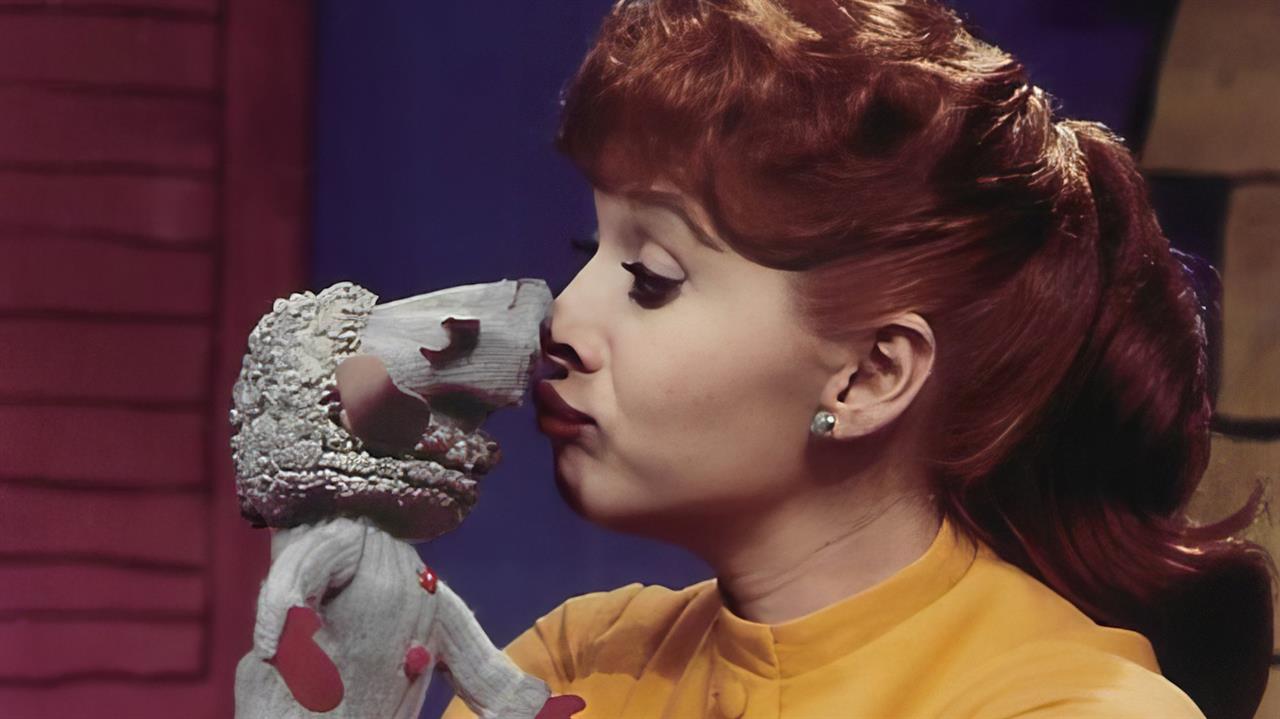
Filmmaker Lisa D’Apolito talks Shari & Lamb Chop, exploring Shari Lewis’s legacy, creative resilience, and the magic behind her iconic puppet characters.
In our conversation, director Lisa D’Apolito reflects on her creative process, from uncovering Shari Lewis’s emotional depth to navigating the challenges of documentary filmmaking and distribution. She discusses the vital role Jewish film festivals played in keeping the project alive, her personal journey from acting to directing, and the importance of celebrating joy and resilience in tough times. D’Apolito also teases future projects, including a documentary on music legend Laura Nyro.
Before Mr. Rogers and Sesame Street, there was Shari Lewis and her beloved puppet Lamb Chop. A trailblazer in children’s television, Lewis began her national career in the 1960s with The Shari Lewis Show, creating a joyful, empowering space for kids and adults alike. Through her puppets, she found a bold voice to challenge norms and speak truths women couldn’t openly express. Over five decades, she thrived in both children’s and adult entertainment, from Saturday morning TV to late-night talk shows. In her 60s, she made a remarkable comeback with Lamb Chop’s Play-Along, connecting with a new generation and using her platform to champion children’s education and self-worth.
Shari & Lamb Chop is now playing in New York with the LA opening to follow on July 25.

It’s so nice to meet you today. How are you doing?
Lisa D’Apolito: Good. Thank you for all your support of my work. It’s been pretty amazing, so thank you so much.
What was the genesis behind making a documentary on Shari Lewis and Lamp Chop?
Lisa D’Apolito: I was looking for—I did the film about Gilda and I’ve been searching for characters that were loved like Gilda. Shari was never on my list and then somebody came to me about Shari and Lamb Chop. I was like, oh, my G-d, Lamb Chop. I got all excited—Lamb Chop had the feeling that I was looking for, and then I started to research Shari.
I was like, she’s really amazing, amazing person, and so amazingly talented that I got hooked on her.
What was the most surprising thing you learned during the process of making the film?
Lisa D’Apolito: I guess I didn’t realize how resilient she was and how long her career was between her two television shows.
Also, I guess our editor realized this in post that Shari did use her puppets to talk about things that either she wanted to talk about either in her personal life or in issues. When everybody wanted Lamb Chop, Shari would put that into her performance and have Lamb Chop talk about it.
When Shari was going through some bad times with her husband, she was talking through Charlie Horse about his divorce so I think that was kind of interesting for me.
What was the most challenging aspect of making the film?
Lisa D’Apolito: I think the fact that Shari was very guarded in her interviews and didn’t really leave behind that much personal information about herself.
It wasn’t only until I found one interview—I can’t remember the name of the interviewer—where he asked her who the real Shari Lewis is. I started to get an idea of who she was because she’s more vulnerable in that interview than she was in any of her other interviews.
How long was the rough assembly cut?
Lisa D’Apolito: It’s interesting because my editor and I always kept it to what it was going to be in the end. A lot of directors start with a three-hour cut and we go down to an hour and a half.
We always kept it around maybe 1:45, 1:50. We didn’t always have a lot to cut, if that makes sense. We were always really tight with our story.
Magnolia Pictures announced its acquisition of Love, Gilda less than a month after its Tribeca premiere. Shari & Lamb Chop premiered at DOC NYC in fall 2023 without distribution and it’s just now getting a theatrical release. What took so long?
Lisa D’Apolito: Oh, I don’t know. (Laughs) I don’t know. I’m not really sure. I’m not sure if it’s because when Love, Gilda came out that it was the opening film at Tribeca and it got a lot of press.
I don’t know if it’s the subject matter, Shari versus Gilda. I don’t know if it was the market environment for films at the time. I’m not sure if people thought maybe it was more of a film about puppets and not Shari.
I think Shari was—you could tell me cause you watched the movie and maybe it’s not just me, that Shari is more than just a puppeteer. I thought maybe it was the subject matter. I don’t know, but it didn’t take a while, but I’m really grateful that it’s coming out now.
Yeah. I’m glad that you brought it to Jewish film festivals because otherwise, I might’ve missed it until this month.
Lisa D’Apolito: Well, you know what? That’s a good point that you brought up. It was very important for me to keep the film alive. The Jewish film festivals really supported the film and they kept it going.
Part of the fact that we have distribution now could be because of the support of all these festivals and I’m very, very grateful for that. You did a review and it kept going and I think that was part of it, keeping the film going.
I’m very grateful to the Jewish film festivals and the Jewish press that covered the film.
What’s the reception been like during the festival screenings, at least for the ones you were able to attend in person?
Lisa D’Apolito: I think people feel happy at the end of the film. I think people are blown away by the talent of Shari. I don’t think anyone really understood how amazingly talented she was until they watched the film.
I think it makes people happy, even though it’s sad because she passes away. I feel like it brings back a little bit of the magic of childhood. I’m hoping that’s what audiences get when they walk away from the film.
Yeah. Her second show had been on PBS and this film’s coming out at a time when PBS is getting hit with funding cuts by the administration.
Lisa D’Apolito: Yeah. It’s unfathomable what’s going on. It feels like censorship in so many different ways.
I think if Shari was around, she would be fighting like she did back in her day. She would be going to Congress and she would be speaking out about the power of public television and the impact it has on children and on the general population.
I don’t think Shari would be happy at all right now.
I was looking at your IMDb page and noticed a single acting listing for Goodfellas. What was it like to be directed by Martin Scorsese and why didn’t you continue a career in front of the camera?
Lisa D’Apolito: Well, it was pretty miraculous. I was very lucky. I was in a really key scene. It had Robert De Niro, Joe Pesci, and Ray Liotta. Martin Scorsese—I remember just learning what I learned from him. Even though there was a script, there was a lot of improvising.
I walk in with Joe Pesci and I didn’t really have lines, except the lines kind of created. I remember saying to him, because something happens, I’m like, Do I leave with Joe or do I stay with Joe? And he said, If you want to leave, leave. If you want to stay, stay. I thought that was pretty—he was just so easy. It was so easygoing.
I think that that’s probably the power of a great director with really great actors around them is just the not really directing, but developing the people around him.
Why didn’t I go further? I had a child and my ex-husband was an actor so we couldn’t both be actors. Somehow, I fell into this advertising job as a producer and I realized, Wow, this is so much better to be behind the camera than in front of it.
The pressure and you actually—I don’t know, I really loved it. I never really thought about being on the other side, but once I realized it, I could never go back in front of the camera.
What do you hope people take away from watching the film?
Lisa D’Apolito: I hope that they do feel the magic of childhood and the magic of a time—I think Shari has a lot of messages in the film about believing in yourself and being the best, that you’re great who you are, but be the best version of yourself.
I think that was Shari’s message, is that everybody is great, but be the best that you can be of who you are. Be yourself, but be the best version. I just love that.
I hope audiences take away that. I just hope that they feel happy. Times are pretty tough right now, and a lot going on in the world and in our country. I think if there’s an hour and a half where they can just enjoy themselves, that would make me happy.
Thank you so much. Have a good weekend.
Lisa D’Apolito: Thank you. Oh, do you want to hear? I have another I’m working on another film about an amazing Jewish woman, Laura Nyro. Do you know who she is?
Rock and Roll Hall of Fame inductee. I was looking at her Wikipedia page a few minutes ago.
Lisa D’Apolito: Okay. Yeah, she’s another amazing, amazing woman. Amazing. Hopefully, I’ll be coming back with you—you’ll be watching something in a year and a half.
I went on IMDb and I saw another film project that was listed.
Lisa D’Apolito: Oh, Albert Pyun. That’s finished. That’s a short film. It’s gone to Comic Con, and it’s gone to some alternative genre festivals. It’s living in this limbo right now, too, so hopefully something will happen with that at some point.
Take care.
Lisa D’Apolito: Okay, bye. Thank you.
Kino Lorber releases Shari & Lamb Chop in theaters on July 18, 2025.
Please subscribe to Solzy on Buttondown and visit Dugout Dirt.