Danielle Solzman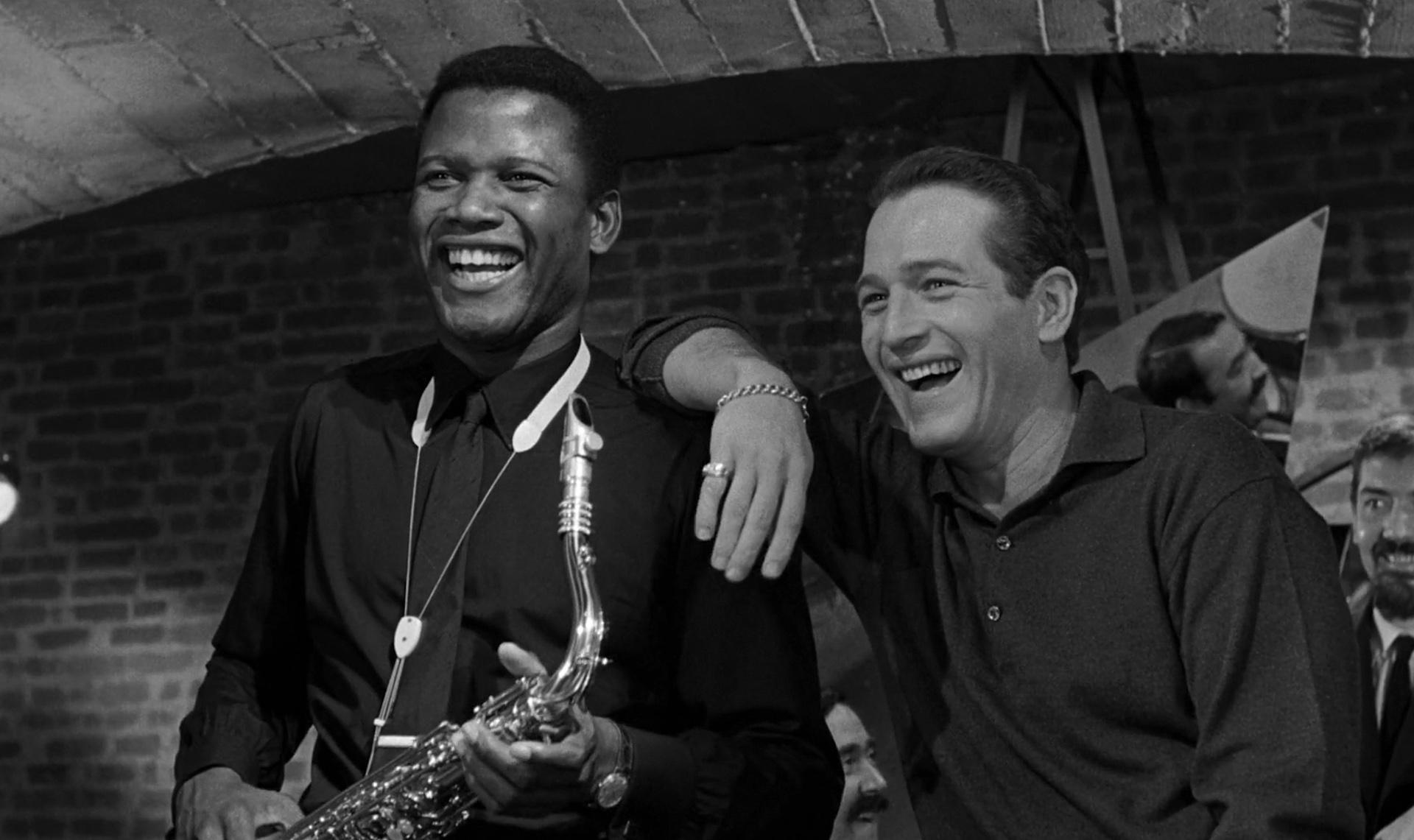
Ten years after receiving a Blu-ray release from Kino Lorber, musical romantic drama Paris Blues received a new Blu-ray printing last year. Not including any bonus features feels like a missed opportunity
Jazz musicians Ram Bowen (Paul Newman) and Eddie Cook (Sidney Poitier) live in Paris, enjoying freedom from the racism they faced in America. They meet visiting tourists Connie (Diahann Carroll) and Lillian (Joanne Woodward), romance blossoms. Ram and Lillian begin a passionate affair, while Eddie and Connie form a slower connection. Connie challenges Eddie’s choice to stay in Paris, arguing that real change requires fighting racism in the U.S. Eddie, however, feels at peace and successful abroad. Lillian urges Ram to return with her to start a new life, but he’s dedicated to his music and career.
As their relationships deepen, both couples face conflict. Connie and Eddie fall in love but split over Eddie’s refusal to live in America. Ram rejects Lillian’s offer of stability, choosing music over love. Heartbroken, Connie and Lillian plan to leave Paris early. Connie tries one last time to persuade Eddie to come home. He agrees to follow her but needs time to wrap up affairs.
In the end, Ram meets with producer René Bernard (André Luguet), who encourages him to pursue serious composition but rejects his current work. Unable to leave music behind, Ram chooses to remain in Paris. He misses the train and watches it pull away, carrying Lillian and Connie home. Ram and Eddie walk off together, framed by a city that offers freedom, but not without sacrifice.
I can’t blame Eddie for wanting to stay in Paris rather than go back to America at the end of Paris Blues. That Paris was openly accepting of Black people says everything about the differences between the U.S. and France at the time. Despite the Supreme Court ruling on Brown v. Board of Education (1954), racial discrimination in America was still terrible when Harold Flender penned his 1957 novel. Even when Paris Blues came out, the U.S. was two years away from the 1963 March on Washington for Jobs and Freedom. It wasn’t until 1964 that President Lyndon Baines Johnson signed the Civil Rights Act into law.
While the Production Code was dying a slow death, the MPAA was still years away from its ratings system. United Artists executives weren’t pleased with the first draft of Paris Blues because of the interracial romances. They didn’t think America was ready. In the end, Ram goes out with Lillian while Eddie goes out with Connie. Before the end of the decade, Poitier would later star in the Stanley Kramer’s 1967 classic, Guess Who’s Coming to Dinner.
I’m curious as to how different Flender’s book is from the film. A brief description of a Paris Blues reprint in 2022 mentions nothing of Ram or Lillian, only Eddie and Connie. Given how the studio complained about the first draft of the script, I still have questions. In perusing the internet, it leaves more to be desired on that end of things.
Whether or not one is interested in jazz music and beyond the acting performances, Paris Blues is worth checking out for Duke Ellington’s Oscar-nominated score. Ellington’s Orchestra is joined by Louis Armstrong, who plays Wild Man Moore, for two of the tracks. Anyway, Ellington didn’t have a chance at winning an Oscar for the film, not when he was up against the juggernaut that was West Side Story.
DIRECTOR: Martin Ritt
SCREENWRITERS: Jack Sher, Irene Kamp, and Walter Bernstein
CAST: Paul Newman, Joanne Woodward, Sidney Poitier, with Louis Armstrong, Diahann Carroll, Barbara Laage, André Luguet, Mari Versini, Moustache, Aaron Bridgers, Guy Pederson, and introducing Serge Reggiani
United Artists released Paris Blues in theaters on September 27, 1961. Grade: 3.5/5
Please subscribe to Solzy on Buttondown and visit Dugout Dirt.