Danielle Solzman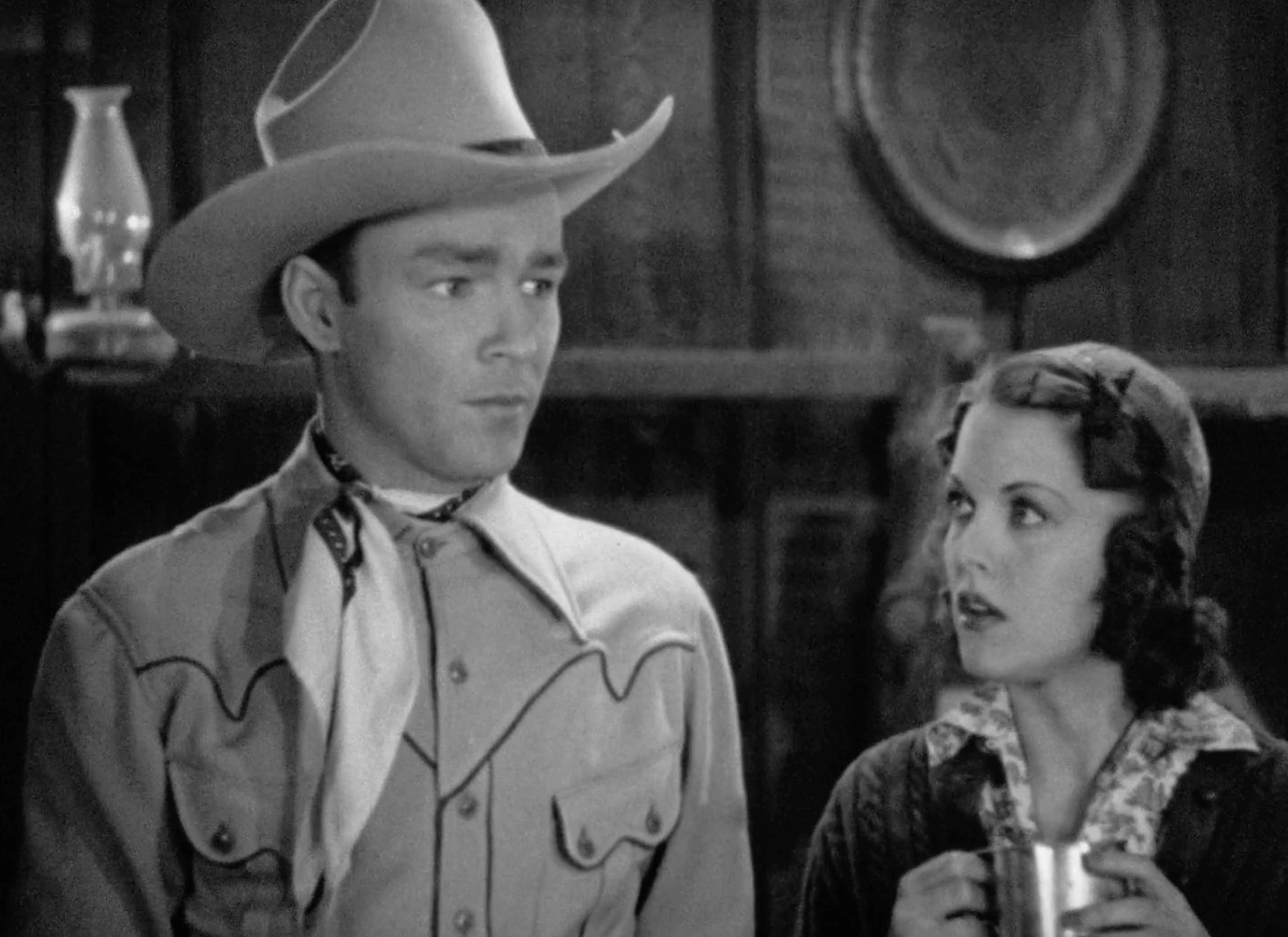
Roy Rogers made his debut as the singing cowboy in Under Western Stars, which was restored and remastered from a 16mm print a few years ago. Under Western Stars was initially released on Blu-ray in a two-disc box-set packaged together with Rogers’ final film, Mackintosh and T.J., in 2021. The film’s first solo Blu-ray release came in 2024 by way of the Film Masters Archive Collection. While the double feature featured bonus features, the solo release does not.
A relentless drought has left Sage County parched, devastating farmers and ranchers. When desperate cattlemen attempt to open the dam, Roy Rogers (Roy Rogers) and his friend Frog Millhouse (Smiley Burnette) help them. Though arrested, Roy is hailed as a hero. Mayor Briggs (Earle Hodgins), sympathetic to the cause, encourages Roy to run for Congress like his late father. The powerful water company, led by John D. Fairbanks (Guy Usher), supports incumbent William P. Scully (Dick Elliott). After Fairbanks fails to sway Roy, his daughter Eleanor (Carol Hughes), secretly opposed to her father’s actions, sends Roy an anonymous note supporting his campaign. Roy wins the election and vows to bring federal help to Sage County’s struggling citizens.
Before leaving for Washington in Under Western Stars, Roy receives another anonymous note—again from Eleanor—urging him to seek out Congressman Edward H. Marlowe (Tom Chatterton), who can help pass a water bill. A second tip leads Roy to a fox hunt, where he rescues Eleanor from a runaway horse and realizes she’s his mysterious supporter. At her suggestion, Roy throws an old-fashioned square dance to win over other politicians. There, he performs “Dust” and shows film of drought conditions. The footage stirs sympathy—until Fairbanks reveals it was shot in another state. Roy admits the location, but insists the suffering in Sage County is real, and plans a bold way to prove it.
Roy orchestrates a fake ambush, leaving Fairbanks, Marlowe, and others stranded with only horses in the dusty countryside. Exhausted and parched, they confront firsthand the lack of water and shelter. A dust storm forces them into a small farmhouse, where Marlowe realizes the ordeal was staged—but also sees its truth. Just then, Mayor Briggs arrives with news: angry ranchers are headed to destroy the dam. Marlowe warns that violence will kill the bill’s chances. Roy races to the site and diverts a wagon full of dynamite in time. With the crisis averted and federal support secured, Roy, Eleanor, and their friends ride off together, hopeful that real change—and water—are finally on the way.
Westerns didn’t typically deal with politics prior to Under Western Stars. Most focused on lawlessness, vengeance, or conflicts with Native Americans. This film breaks from tradition, touching on environmental concerns, public policy, and the need to uncover the truth. Make no mistake—it still includes a number of familiar Western tropes that audiences expect. But its focus on drought and water ownership gives it surprising weight. It’s worth noting that just a year and a half after this film’s release, Mr. Smith Goes to Washington would set the gold standard for portraying politics on screen. In its own way, Under Western Stars paved the trail.
It was largely a stroke of luck that filmgoers were introduced to Roy Rogers when they were. Gene Autry—the future founding owner of the California Angels—was on a contract dispute-related walkout from his role as Republic Pictures’ premier singing cowboy. Autry’s absence opened the door for Rogers to step into the spotlight in his first starring vehicle for Republic Pictures. This followed a number of previous uncredited roles during the 1930s. His performance in Under Western Stars wasn’t just a stopgap; it launched a career that would make him one of the most beloved cowboys in cinema history.
Under Western Stars offers an earnest blend of Western adventure and early political awareness, with Roy Rogers’ charm and timely themes standing out. While its pacing and some plot contrivances may feel dated, the film’s focus on environmental issues and public policy give it a unique angle for the genre’s time. It’s an engaging watch for fans of classic Westerns and historical curiosities alike, even if it doesn’t fully transcend its era.
DIRECTOR: Joseph Kane
SCREENWRITERS: Dorrell McGowan and Stuart E. McGowan and Betty Burbridge
CAST: Roy Rogers, Smiley Burnette, Carol Hughes, Maple City Four
Republic Pictures released Under Western Stars in theaters on April 30, 1938. Grade: 3/5
Please subscribe to Solzy on Buttondown and visit Dugout Dirt.