Danielle Solzman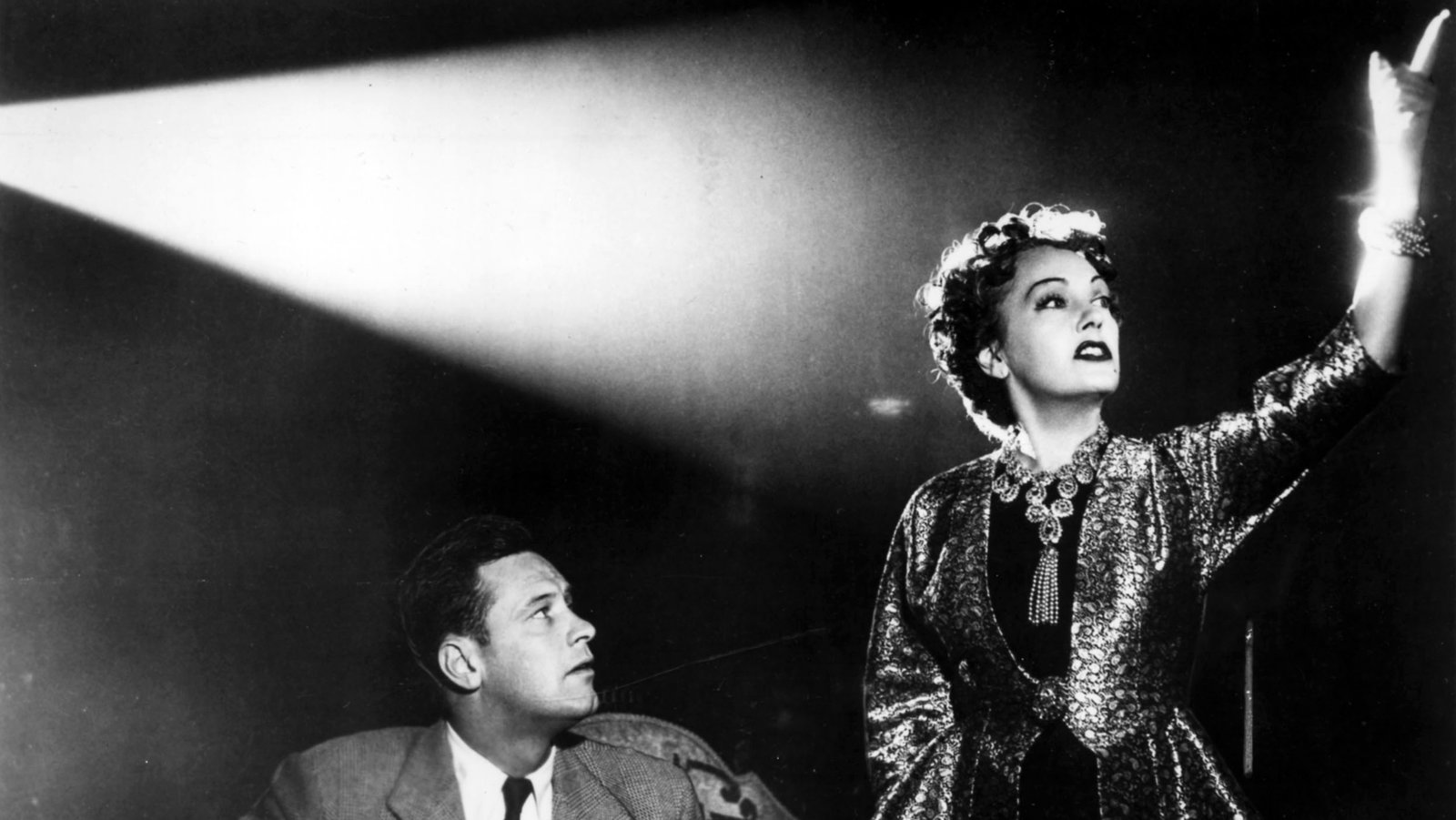
Billy Wilder’s Sunset Boulevard is newly restored and ready for its close-up in 4K Ultra HD following special screenings of the stunning restoration. The home release is packed with over two and a half hours of legacy bonus features.
What follows is an earlier review of the film with some minor revisions:
Sunset Boulevard isn’t only Billy Wilder at his finest but the film is easily the best film ever made about Hollywood in cinematic history.
The fate of Joe Gillis (William Holden) is doomed from the start. From the moment his body floats in a pool, we know it’s all downhill. Flashing back, we learn Joe is a struggling screenwriter with terrible luck. A meeting with studio exec Sheldrake (Fred Clark) goes nowhere, and script reader Betty Schaefer (Nancy Olson) critiques his work—unaware Joe is within earshot. Fleeing repo men, Joe stumbles into a seemingly abandoned mansion. (Ron Howard voice: It’s not.) A voice beckons from within, and soon Joe meets its occupant—silent film legend Norma Desmond (Gloria Swanson), who famously declares: “I am big. It’s the pictures that got small.”
Norma quickly enlists Joe to edit a screenplay she believes will launch her comeback. With nowhere else to go, Joe reluctantly moves in. Norma is fragile and delusional—already haunted by one suicide attempt. When Joe sneaks off to a New Year’s party, she slits her wrists. Still, he stays. Meanwhile, Joe reconnects with Betty, unaware this will alter his fate. Their growing bond becomes a lifeline—but also a ticking clock. Norma’s illusions, jealousy, and unraveling mental state mean that Joe’s future may be sealed no matter what he chooses.
Sunset Boulevard’s iconic Paramount sequence shows the ghost of Norma’s former glory. DeMille’s assistant contacts her only to borrow a vintage car—but Norma thinks it’s her return. Stagehands gather in awe as she sits under the lights on Stage 18. It’s tragic and unforgettable. In a strange twist of fate, Nancy Olson was once considered for DeMille’s Samson and Delilah—a part that went to Hedy Lamarr instead. Olson ended up here instead, and it’s impossible to imagine the film without her.
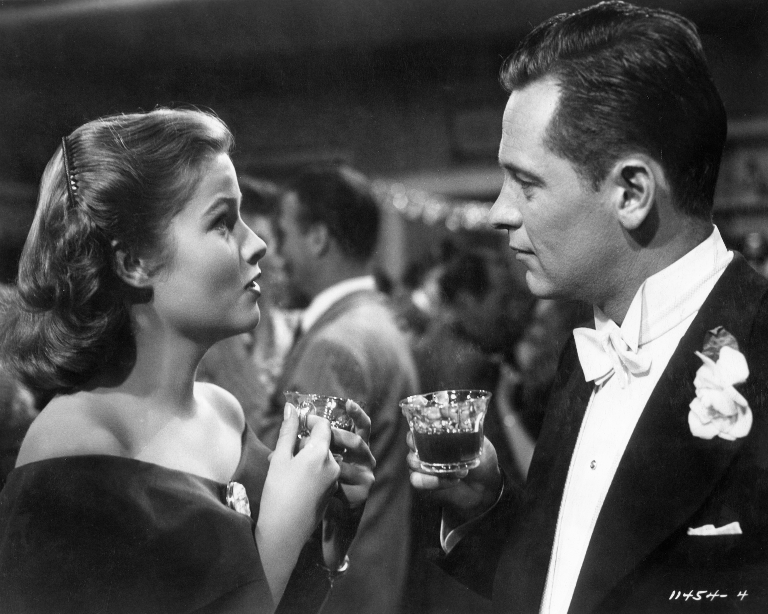
Each of the four main players is chasing something. Norma wants to reclaim stardom. Max (Erich von Stroheim), her devoted servant and ex-husband, longs to direct again. Joe and Betty simply want to break into the business. All four actors were nominated for Oscars but came up empty—making Sunset Boulevard the second film ever nominated in all four acting categories and losing them all. Holden would win later for Stalag 17, perhaps as compensation.
Swanson’s final monologue in Sunset Boulevard is among the most haunting scenes in cinema. With news cameras rolling, she descends fully into delusion. The line—“All right, Mr. DeMille, I’m ready for my close-up”—is rightly one of the most quoted in film history. That scene alone is enough to cement her legacy. But the tragedy runs even deeper when you realize who’s behind the camera: Max, who once directed her, now reduced to preserving her fantasy.
Von Stroheim’s casting adds a deeper irony. He directed Queen Kelly, the 1929 silent film Norma screens for Joe. His career as a director, like Norma’s, never fully recovered from the transition to sound. That moment—both meta and melancholy—wouldn’t work without the film’s rich understanding of old Hollywood. It’s a devastating portrait of an industry that discards its icons without a second thought.
Sunset Boulevard cinematographer John F. Seitz deserves immense credit for the film’s lasting power. His work here is as striking as in Double Indemnity. From the eerie mansion interiors to the famous pool shot, every frame enhances the film’s noir sensibility. That floating body shot? It’s so iconic that even Agents of S.H.I.E.L.D. referenced it decades later.
Sunset Boulevard defies easy classification. It’s noir, yes, but also satire, melodrama, and pitch-black comedy. It skewers the industry while empathizing with its casualties. Joe’s narration offers cynicism, but Wilder and co-writers Charles Brackett and D.M. Marshman Jr. give us a layered look at fame, failure, and ambition. It’s more than a noir. And no, unlike Wilder’s scrapped opening, it doesn’t begin with talking corpses in a morgue.
Though I have since seen All About Eve, I firmly place Sunset Boulevard alongside films like Network, All the President’s Men, and The Dark Knight—masterpieces that somehow didn’t win Best Picture. It remains the definitive film about classic Hollywood and a chilling preview of where the industry was headed. Seventy-five years later, it still cuts deep.
Bonus Features
- Audio Commentary with Ed Sikov, author of On Sunset Boulevard: The Life and Times of Billy Wilder
- Sunset Boulevard: The Beginning
- Sunset Boulevard: A Look Back
- The Noir Side of Sunset Boulevard
- Sunset Boulevard Becomes a Classic
- Two Sides of Ms. Swanson
- Stories of Sunset Boulevard
- Mad About the Boy: A Portrait of William Holden
- Recording Sunset Boulevard
- The City of Sunset Boulevard
- Franz Waxman and the Music of Sunset Boulevard
- Morgue Prologue Script Pages
- Deleted Scene: The Paramount Don’t Want Me Blues.
- Hollywood Location Map
- Behind the Gate: The Lot
- Edith Head: The Paramount Years
- Paramount in the ’50s
- Theatrical Trailer
DIRECTOR: Billy Wilder
SCREENWRITERS: Charles Brackett, Billy Wilder, and D.M. Marshman Jr.
CAST: William Holden, Gloria Swanson, Erich von Stroheim, Nancy Olson, Fred Clark, Lloyd Gough, Jack Webb, Cecil B. DeMille, Hedda Hopper, Buster Keaton, Anna Q. Nilsson, H. B. Warner, and Franklyn Farnum
Paramount Pictures opened Sunset Boulevard in theaters on August 10, 1950. Grade: 5/5
Please subscribe to Solzy on Buttondown and visit Dugout Dirt.