Danielle Solzman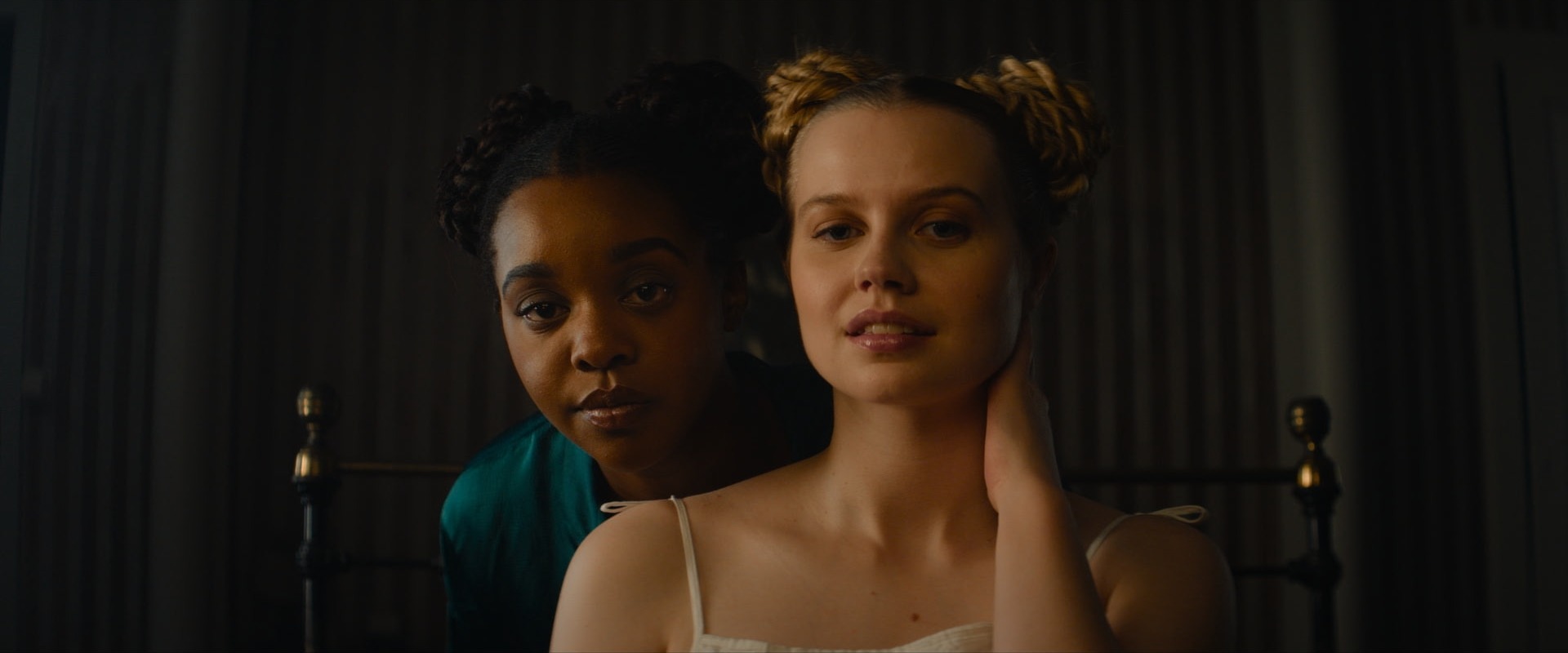
Clement Virgo returns to TIFF with Steal Away, a volatile psychosexual struggle between a debutante and refugee in an alternate Deep South reality.
The film is inspired by Karolyn Smardz Frost’s narrative non-fiction book Steal Away Home: One Woman’s Epic Flight to Freedom – And Her Long Road Back to the South, first published in 2017 and currently out of print. “Inspired” is key here: the movie takes the names of real people but places them in a world that evokes both the pre-Civil War South and postcolonial Western Europe.
When Cécile Millepied (Mallori Johnson), a regal young African traveler, moves into the home of Fanny (Angourie Rice), an awkward white teen raised in privilege, a dangerous attraction takes root. In a setting that recalls both the antebellum South and postcolonial Europe, Cécile falls for Rufus (Idrissa Sanogo Bamba), the gardener’s son. Her romance sparks Fanny’s own turbulent sexual awakening, pushing both girls toward desire, jealousy, and confrontation.
As their world’s true nature begins to unravel, the girls must outwit a domestic and political order designed to control them. Drawing on the often-overlooked role of women in upholding slavery, Steal Away unfolds as a psychological thriller and allegory, following two teenagers forced to resist a system built to crush them.
Screenwriters Tamara Faith Berger and Clement Virgo bring distinct perspectives to the writing process. Coming-of-age themes are familiar territory in Virgo’s work, but Steal Away approaches them through a female point of view. Virgo is no stranger to directing female-led films, yet his collaboration with Berger adds an authenticity to the film’s relationships.
Set in an alternate present that fuses the Deep South with postcolonial Europe, Steal Away layers in Afrofuturist elements to imagine a world both ruthless and liminal. In this reality, immigrants are policed, wealthy families live in seclusion, Black and biracial people endure as an underclass, and young women move through danger, desire, and disillusionment. The political forces shaping this society echo present-day anxieties, with the recent rise of fascism unmistakably informing the film’s vision.
In this setting, Fanny grows up in a white supremacist bubble run by women, surrounded by servants and slaves as if it were natural. Her mother Florence (Lauren Lee Smith) believes she is acting for the greater good by sheltering refugee girls, but in truth she reinforces the very structures of white supremacy. Cécile, a refugee from the Congo, enters this environment from a starkly different background, her presence forcing both young women to reckon with the truths they’ve been shielded from. The film highlights, in its own way, the underexamined role of white women in sustaining slavery.
Production took place not in the American South but in Belgium, where the 350-year-old Lozer Kasteel stands in for the Thruston House. Its surrounding farmland, forests, and nearby Caves of Han provide Steal Away with a mix of elegance and menace that underlines its thematic tension.
What I hadn’t known beforehand is how closely the inspiration ties back to history. Karolyn Smardz Frost’s book chronicles the story of Cecelia Jane Reynolds, a 15-year-old enslaved girl in Louisville, Kentucky, given to white debutante Fanny Thruston as a “handmaiden.” During a family trip to Niagara Falls in 1846, Cecelia escaped via the Underground Railroad.
In later years, Fanny quietly sent her money and clothing, even saving abolitionist press clippings, though she also insisted Cecelia would need to purchase her family’s freedom. Cecelia eventually settled in Toronto, married, and taught herself to read and write. She maintained a 20-year correspondence with Fanny before returning to Louisville, where she reconnected with her former companion and found work through her circle.
By drawing from its historical source but building a world of its own, Steal Away speaks to issues of race, gender, and power. Its unsettling setting may prove difficult for some viewers, but it also reminds us that resisting dark forces requires collective courage. Too often, people retreat to the safety of insularity—even among friends or supposed allies—only to discover prejudice where they least expected it. If a film like this pushes audiences to confront those blind spots, it has achieved something urgent.
DIRECTOR: Clement Virgo
SCREENWRITERS: Tamara Faith Berger & Clement Virgo
CAST: Angourie Rice, Mallori Johnson, Lauren Lee Smith, Idrissa Sanogo Bamba, Hilde Van Mieghem, Matteo Simoni, Arnold Pinnock, Isabelle Menal, Gloria Mampuya, Ronnie Rowe Jr.
Steal Away holds its world premiere during the 2025 Toronto International Film Festival in the Special Presentations program. Grade: 3.5/5
Please subscribe to Solzy on Buttondown and visit Dugout Dirt.