Danielle Solzman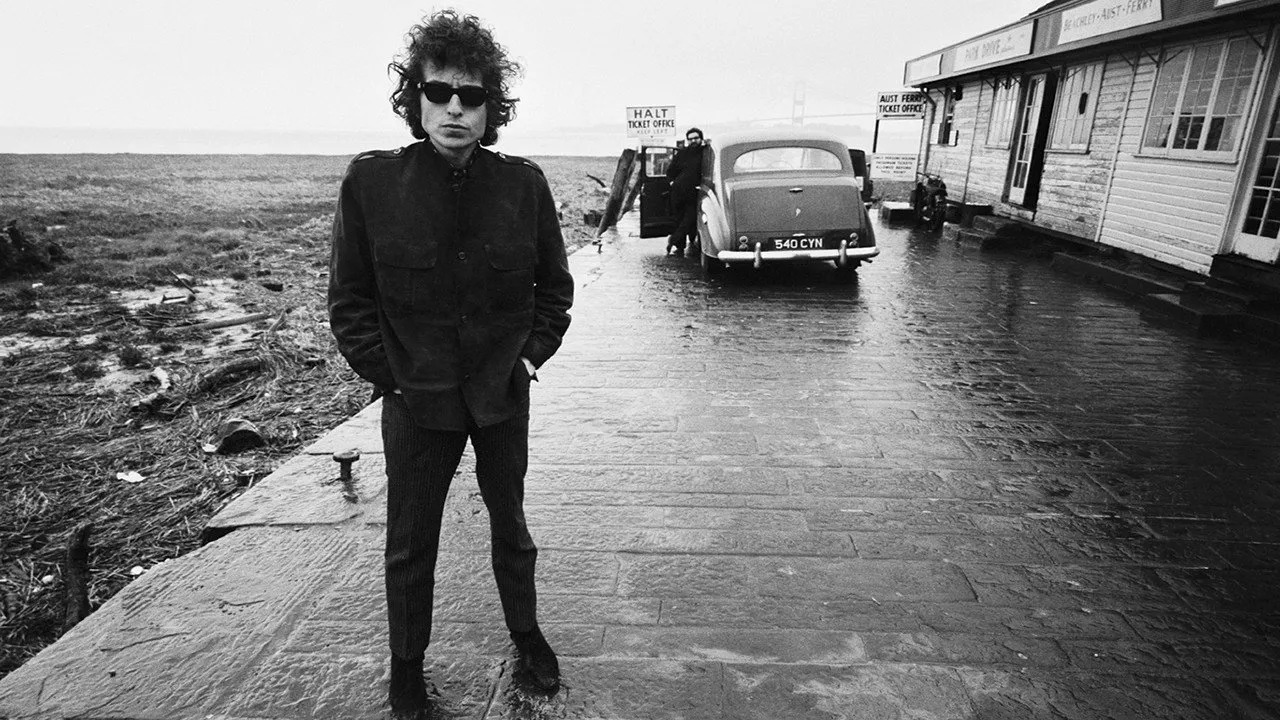
Martin Scorsese’s No Direction Home: Bob Dylan remains a landmark music documentary, even two decades after its 2005 PBS premiere. This two-part epic offers unparalleled insight into Bob Dylan’s meteoric rise—from his arrival in New York City to the 1966 motorcycle crash that marked the end of one era and the start of another. Clocking in at 208 minutes, it’s a deep dive into a pivotal period in American music history—and in Dylan’s own mythmaking.
Though Scorsese came on board in 2001, much of the interview material had already been gathered, some of it dating back to 1995. Dylan himself sat for at least ten hours of interviews with his longtime manager and archivist Jeff Rosen. Sadly, a few of the key interviewees passed away before the film’s broadcast, adding a layer of poignancy to their recollections.
No Direction Home: Bob Dylan tracks Dylan’s transformation from complete unknown to generational icon. The documentary captures his early days in the Greenwich Village folk scene, his explosive songwriting talent, and the infamous night he “went electric” at Newport. Along the way, we hear from an all-star roster of voices close to Dylan—Joan Baez, Pete Seeger, Peter Yarrow, Al Kooper, and others—who help contextualize his influence and evolution.
In some ways, watching No Direction Home: Bob Dylan now feels like a nonfiction companion to James Mangold’s recent biopic A Complete Unknown. But here, we get Dylan in his own words, along with rare archival footage that’s seamlessly woven throughout. The result is both revealing and reverent. The Blu-ray and DVD editions include bonus features, which I didn’t have time to explore but are likely worth a look for hardcore fans.
No Direction Home: Bob Dylan asks the big questions: How did Dylan become such a towering cultural figure? What makes his songwriting so enduring? Dylan offers a surprising level of candor when reflecting on his Minnesota upbringing, his early immersion into folk, and his eventual shift into folk-rock. His 1961 arrival in New York would prove transformative—not just for him, but for the entire genre. Whether or not viewers find his answers fully satisfying is up for debate, but his reflections are undeniably fascinating. The film, by design, doesn’t explore his religious journey post-1966—including his conversion away from Judaism or whether he ever returned—but it’s a minor omission in an otherwise rich portrait.
One of No Direction Home: Bob Dylan’s most compelling segments is its exploration of 1965 and the fallout from Dylan going electric. As Seeger and Yarrow explain, the Newport Folk Festival simply wasn’t prepared—for the sound, the volume, or the moment. Their behind-the-scenes anecdotes offer a clearer understanding of the now-legendary controversy. Meanwhile, session musician Al Kooper recounts how he came to play organ on “Like a Rolling Stone,” hilariously noting how he was a beat late on the chords but managed to leave a lasting impression.
No Direction Home: Bob Dylan also pays tribute to the filmmakers who documented Dylan’s early career. D.A. Pennebaker and Murray Lerner receive special thanks—Pennebaker’s Don’t Look Back followed Dylan’s 1965 England tour, while Lerner’s Festival captured his performances at the Newport Folk Festival from 1963 to 1965. Several of those appearances are featured here, including material previously unreleased before the film’s 2005 PBS premiere. The Bob Dylan Archives opened its vaults to Scorsese and his team, contributing rare footage, recordings, and photos. Fans around the world also provided items from their personal collections. Lerner would later revisit Newport in The Other Side of the Mirror, a 2007 documentary feature built around Dylan’s iconic sets from those pivotal years.
Behind the camera, Scorsese’s music documentary pedigree speaks for itself. From The Last Waltz to George Harrison: Living in the Material World, Rolling Thunder Revue, and most recently Beatles ’64, Scorsese has shown a masterful touch with music documentaries. Editor David Tedeschi, who also directed Beatles ’64, faced the daunting task of shaping hours upon hours of footage into a cohesive narrative—and he succeeds brilliantly.
Two decades on, No Direction Home: Bob Dylan is as vital and absorbing as ever—essential viewing for Dylan devotees and casual fans alike.
DIRECTOR: Martin Scorsese
FEATURING: Bob Dylan, Joan Baez, Liam Clancy, John Cohen, Lamar Fike, Allen Ginsberg, Tony Glover, Caroyn Hester, Bob Johnston, Mickey Jones, Dick Kangas, Al Kooper, Bruce Langhorne, Harold Leventhal, Greil Marcus, Mitch Miller, Artie Mogull, Maria Muldaur, Paul Nelson, Bobby Neuwirth, D.A. Pennebaker, Christopher Ricks, Manny Roth, B.J. Rolfzen, Suze Rotolo, Pete Seeger, Roy Silver, Mark Spoelstra, Marvis Staples, Dave Von Ronk, Sean Wilentz, Peter Yarrow, Izzy Young
PBS aired No Direction Home: Bob Dylan on September 27, 2005. Grade: 5/5
Please subscribe to Solzy on Buttondown and visit Dugout Dirt.