Danielle Solzman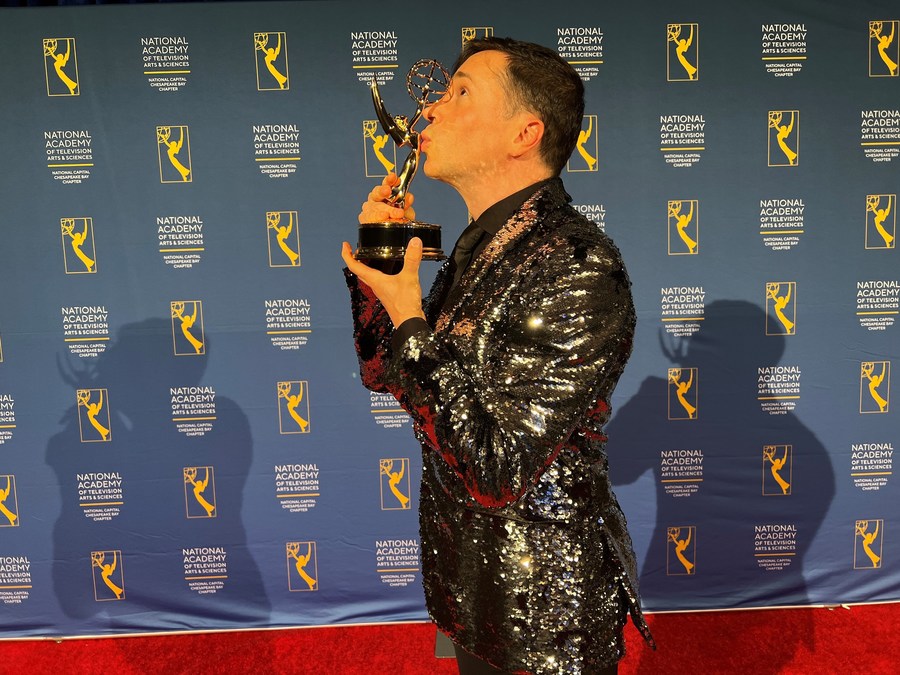
Yuval David discussed Jewish identity, Hollywood hypocrisy, selective activism, and the importance of speaking out against antisemitism during a recent conversation with Solzy at the Movies.
During our conversation, the multi-hyphenate discussed the challenges of navigating the entertainment industry as a Jewish activist. He critiques performative activism at award shows such as the Oscars and Emmys, highlights hypocrisy in selective outrage, and reflects on how recent events have intensified his advocacy. David also explores the importance of Jewish spaces, the intersection of LGBT and Jewish identities, and the responsibility of using his platform to address social and political issues impacting marginalized communities.
David has been making the media rounds following Hannah Einbinder’s comments during the Emmys ceremony in mid-September.
It’s so nice to talk with you. How are you doing?
Yuval David: Probably the same as you. No matter what we do, we become these full-time advocates and activists and speaking about the topics, issues, initiatives, and communities that matter to us, and it’s non-stop. I mean, do you agree?
Yeah. I was just in Toronto, and there were fellow film critics there that I haven’t spoken to for the better part of almost two years now.
Yuval David: Wow.
Yeah. After the Oscars earlier this year, were you expecting another incident at the Emmys?
Yuval David: Yes, I absolutely was expecting another incident at the Emmys. I wasn’t surprised. I wasn’t surprised at all by what we saw transpire at the Emmys. We’re seeing people within the entertainment industry practice performative activism. It just keeps happening where people in. We’re seeing people in Hollywood who celebrate this moral posturing, but they ignore their own hypocrisy.
I mean, what we saw with Hannah Einbinder, who jokes about hate, while Javier Bardem delivers these virtue signaling speeches, yet the industry stays silent when real hatred and violence are aimed at people who might not exactly fit their political leanings, especially when we see hatred and violence being aimed at people on the right or Jews or Israelis. We’re seeing this performative outrage coming from within the entertainment industry. But my question is: where’s the outrage when all different types of people are targeted? Hollywood seems to only condemn hate when it fits their script.
Yeah. What made this worse is that it’s coming from someone who’s Jewish.
Yuval David: And when she did the whole “as a Jew” statements, I’m just so tired of it because if she truly was informed about what it means to be Jewish, she would understand that our indigenous connection to the land of Israel is seen throughout our holidays, from Shabbat to every single Jewish holiday to all of our Jewish texts, where we refer to ourselves as Am Israel. the nation of Israel, and we’re connected to a specific land and a specific region.
She claimed and continues to double and triple down that as a Jew, she can separate herself from our indigeneity or from Israel or to be anti-Zionist. Well, Zionism has been part of Judaism throughout the course of millennia, even during Roman times when the Roman armies occupied the Judean lands. There was a movement called Kerut Zion, which means the freedom of Zion. That is Zionism as well.
Yeah. I know I can trace my ancestry directly back to King David.
Yuval David: Wow. Amazing.
Yeah. Well, I mean, I descend from Rashi, and it is said that he descends from King David, although during one of those expulsions, a lot of information was lost that had the family tree that traced Johanan HaSandlar all the way down to Rashi.
Yuval David: That’s amazing for you to be able to trace that and to understand that that’s part of your heritage and your family history. I think one of the problems is so many Jews have lost the connection to their heritage, to their family history, but also to our people’s history. And that’s one of the reasons we’re seeing so many Jews distance themselves from what the Jewish people are all about.
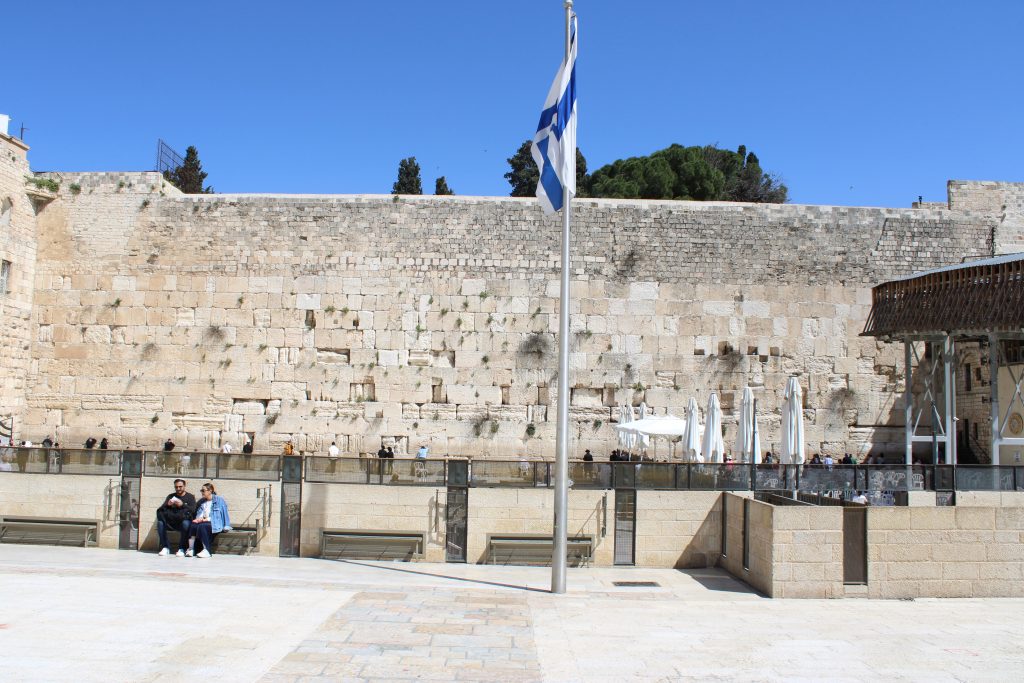
Yeah. I became more religious in college. After going on Birthright Israel and going to the Kotel for the first time, Tisha B’Av took on greater meaning for me.
Yuval David: Amazing. I wish more people would even be able to have the conversation the way you have it. Until more Jews and allies are able to actually speak intelligibly and from an educated and informed manner about our peoplehood, we’re going to continue to be in a very difficult place.
Yeah. On the acting side of things, have you seen an impact in job opportunities coming your way since October 7 and becoming more active about on social media?
Yuval David: Well, I’ve always been a Jewish activist and advocate. There are people who would tell me long ago, even many years before October 7, that that might limit my possibilities because I was being too Jewish, which by the way is a quote.
Since October 7, my Jewish activism definitely increased because there was a need for it. What used to be the Jewish advocacy and political and social advocacy that would take up anywhere from a third to half of my time before that ended up taking almost all of my time ever since then. That definitely affected the possibilities that might have come to me as an actor and as a filmmaker. In fact, there were specific contracts that were canceled because people were saying that I was being too political.
Meanwhile, for years, when I would talk about Republican and Democrat issues or LGBT issues, that was never considered too political. But a Jewish topic or the Israel topic is considered too political.
Yeah. Makes no sense!
Yuval David: It makes no sense. I mean, it reflects a hypocrisy and that’s a big problem in Hollywood. Even again, going back to the award shows, award shows have become these sermons of empty virtue and false moral superiority and applause for activism that actually ignores reality.
I think anytime people act from a place of moral superiority as if they are better than others, that’s actually fascism. That’s what fascism is about. The people who want to have the conversation and engage in debate, those are the things that we need to amplify and those are the people we need to amplify. We’re just seeing way too much of false activism or performative activism—to use the term again—from within Hollywood.
I think because I focus on facts, I like to call it “What the Fact” that it disturbs me because I’m not just following whatever is the most popular hashtag. I’m following, engaging, and speaking about what is actually important to me, coming from a place of experience, things that I’ve experienced, that my family, my friends have experienced, that my community has experienced. That’s where my activism comes from.
Yeah. I feel like one of my most used phrases during the past two years, especially as I’ve seen so much antisemitism coming from within the LGBTQ community, is: you cannot have my trans activism if you won’t accept me as a Jew and Zionist.
Yuval David: Absolutely. It pains me to hear you say that coming from a place of things that you’ve experienced. It doesn’t make sense for our own LGBT movements and community to allow for and in fact to normalize antisemitism being masked with anti-Zionism or anti-Israel sentiments.
Yeah. I knew there was a rot back in 2017 when we had the Chicago Dyke March.
Yuval David: Absolutely.
And then the day later, it didn’t make as much news, but the Trans Liberation Collective had a protest in the Chicago Pride Parade and then issued a platform that was pro-BDS.
Yuval David: Insane. It’s insane and it’s against what our LGBT movement is supposed to be about. So for you, being both in the LGBT movement and within the entertainment and arts industry, you’re just seeing that hypocrisy in every space in which you exist. Other than our Jewish spaces and that’s why I’m finding a lot of LGBT Jews are getting closer to their Jewish community and finding that that is more of a safe space for us or that is our safe space as opposed to the LGBT movement that only speaks about safe spaces. But a safe space apparently is not meant for all.
Yeah. I feel like since October 7, I’ve turned more insular. And you’re right, those Jewish spaces are way more safer.
Yuval David: Totally. Yeah, absolutely.
I’m still in the process of wrapping up TIFF coverage, but when I saw Joseph’s email, I’m like, I’ve got to. I’m using my platform as much as I can.
Yuval David: You are.
A number of films coming out this fall are inevitably are either produced, directed, or starring people who are boycotting the Israeli film industry and that’s just nuts.
Yuval David: Absolutely crazy.
Where’s their China boycott? Where’s their Russia boycott? Where’s their Sudan boycott?
Yuval David: Exactly. Congo. There are so many countries we can add to that list, except one of the issues is the false narratives and information coming from Islamist propaganda is what is proliferating more than actual, factual information of what is happening in the region.
When we compare, we say, what about Sudan? What about Congo? What about Iraq? What about all of these other countries? What about Afghanistan and what’s still happening there? People aren’t speaking about that. I don’t think that it’s a correct comparison. All it does show is that these people who claim to support the Palestinian cause and who are against Israel because of their moral compass, well, they’re silent about all of these other issues around the world. It’s not a comparison of those issues to Israel and Gaza. It’s just showing that they’re practicing selective activism only when it comes to being about Jews or involving Jews.
Yeah. I’m still waiting for them to announce a boycott of the American film industry, even though it has nothing to do with the current American government. I mean, that’s the way I look at it.
Yuval David: Right. I agree. I agree with you.
Anyway, those are a lot of the issues that we’re dealing with and challenged by. But one thing I really miss is truly being more involved in the entertainment industry. I’m so active within media, journalism, socio-political advocacy, and government relations. I miss those days. I was an actor, a filmmaker, being able to be much more playful with life. But there are serious things that are happening and I’m using the skills of being a storyteller to promote the important initiatives that are underrepresented and incorrectly spoken about.
I think that covered just about everything.
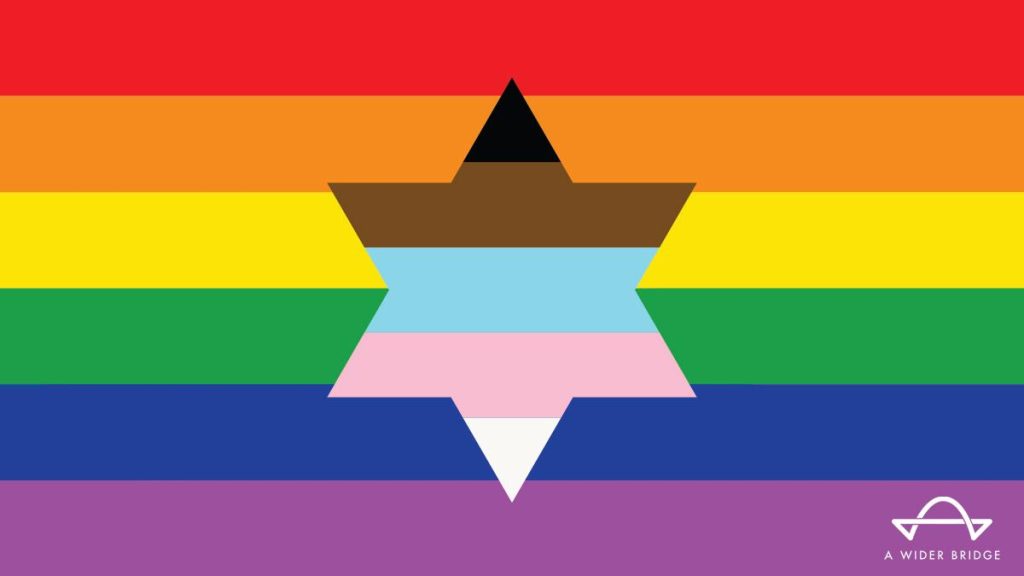
Yuval David: Perfect. I also appreciate your A Wider Bridge flag on the wall behind you.
I picked that up at the March for Israel.
Yuval David: Good. Important.
I was on the way back from the White House where I was getting a new photo there, and going to the White House Visitor’s Center, when I saw the Wider Bridge table in front of it, and then coincidentally—
Yuval David: Oh, you also have a shirt! Oh, that’s great. Good. Well, I really appreciate everything that you’re doing and for your having me on and joining me in conversation. We all need to have these conversations more often and help others have these conversations.
Too many people are afraid of the cancel culture mob, and we can’t be afraid of it. If we’re afraid of the mob or if we let the mob silence us, we’re letting them win.
I definitely will not allow myself to be silenced.
Yuval David: I appreciate that. Amen, amen, amen.
Thank you so much. Shanah tovah!
Yuval David: Shanah tovah! May it be a Shana tovah to you and to all of our people.
Please subscribe to Solzy on Buttondown and visit Dugout Dirt.