Danielle Solzman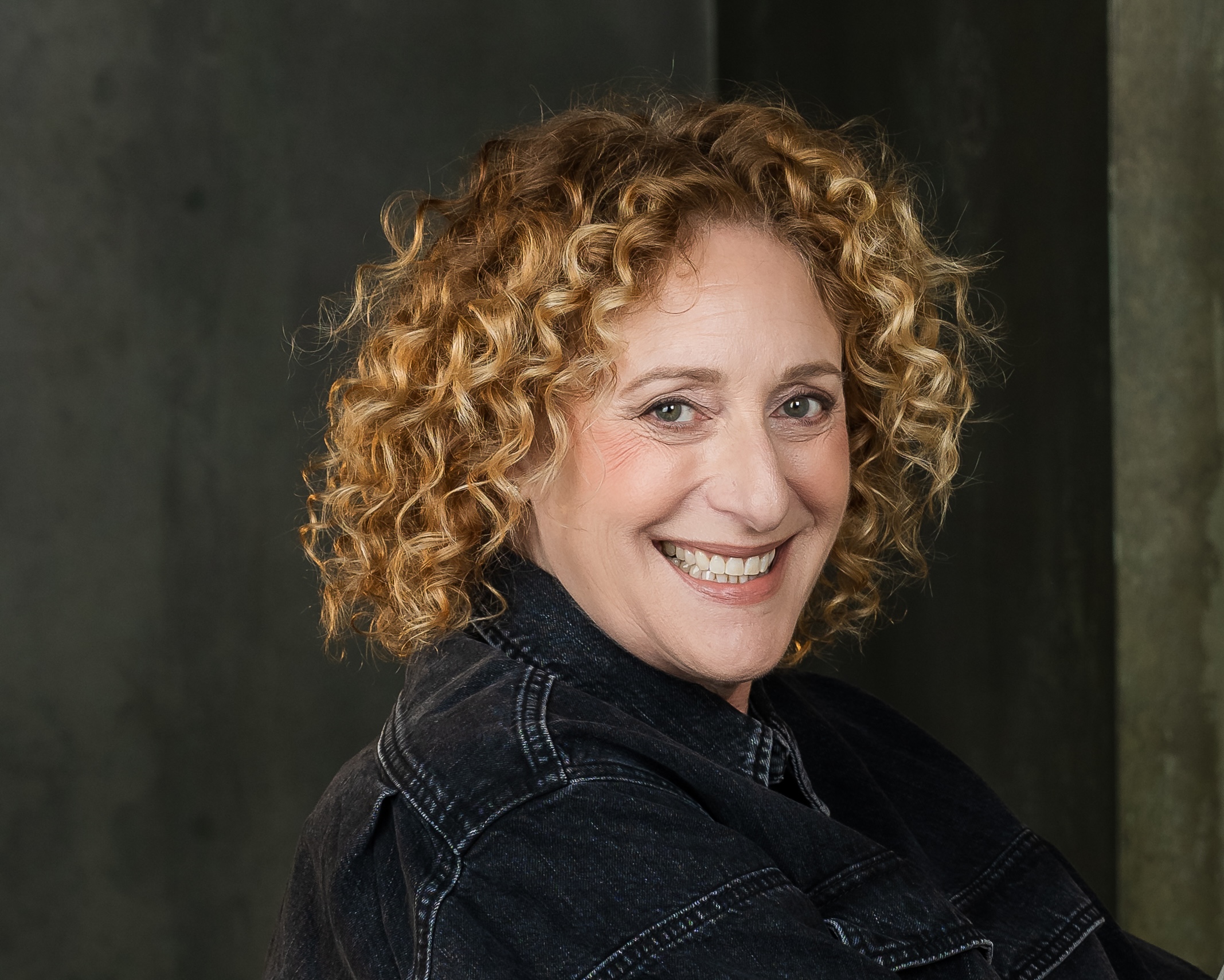
Jewish comedian Judy Gold reflects on Jewish comedy, mentorship, and free speech ahead of receiving the first Borscht Belt Film Fest Mensch Award. Among films playing directing the 2nd annual Borscht Belt Film Fest is When Comedy Went to School.
In this conversation, comedian Judy Gold reflects on receiving the first Mensch Award at the Borscht Belt Film Fest and the Catskills’ deep influence on her career. She discusses Jewish humor as both cultural identity and survival tool, recalls the support of mentors like Joan Rivers and Freddie Roman, and talks about her book on free speech in comedy. Gold also explains why Judaism nurtures great comedians—its tradition of questioning, arguing, and finding laughter in adversity—and offers practical advice for aspiring stand-ups: get on stage, tell the truth, and keep going.
The Borscht Belt Film Fest is presented by the Catskills Borscht Belt Museum in Ellenville. The museum is dedicated to preserving the legacy of the Borscht Belt resort era, and celebrating its history as a refuge from bigotry, the cradle of stand-up comedy and a cultural catalyst that left deep imprints on America.
It’s so nice to meet you today. How are you doing?
Judy Gold: Good. How are you?
I’m doing well now that we’ve gotten through the never-ending month-long Jewish holiday.
Judy Gold: Oh, I know. It’s a lot.
Yeah. Because of a challah shortage in the local neighborhood, I had to make an emergency run when we were initially scheduled to do this. So thank you for being flexible.
Judy Gold: No worries.
Mazel tov on receiving the first Borscht Belt Film Fest Mensch Award. How honored do you feel?
Judy Gold: It feels good. Awards to me are—it’s the work you do that really matters. But to get recognized for—I mean, I’m such a proud Jew, and I worked in the Catskills when I first started doing stand-up so yeah, it’s nice. It’s very nice.
How has the Borscht Belt shaped your career as a comedian?
Judy Gold: Well, first of all, I consider myself a Jewish comedian. I mean, I’m a comedian. I’m not a comedian who happens to be Jewish. I’m a Jewish comedian. I’m a comedian who happens to be gay, but I’m really a Jewish comedian.
And all of the people—the Catskills really was the breeding ground for Jewish comedy. It is a place that Jews established because we were othered and no one wanted us, so we created our own space. The comedy that came out of there and the fact that you could be uber-Jewish and tell jokes that we get, that we understand as a people, and then to be able to go take that material elsewhere for non-Jewish audiences, it really was the breeding ground for the greatest Jewish comedians.
When I started doing stand-up, they had a late show. They used to have the main stage, which was, it was like Vegas. It was huge and people would get dressed up and it was just a big shindig for everyone. When that show was over, I guess they’d have other activities, dessert, whatever. And then, they would have a midnight show, a very late show where you could be dirty, but it was the young comics and they didn’t pay for it. They were the toughest audience. Toughest! It had to be joke, joke, joke, joke. Or they’d get up and leave because they had nothing invested.
It really taught me a lot about timing and about just stand-up in general. To be part of that history and the people who performed there, yeah, it was really magical.
I guess it was the 80s or early 90s, I opened for Buddy Hackett. We were trying to do a big fundraiser. I think it was at the Concord to try to keep it going. But unfortunately, people started traveling in airplanes and stopped going to the Catskills.
Is there someone who served as a meaningful mentor as you came up through comedy?
Judy Gold: Well, Joan Rivers really was my mentor, but I think that as far as the Catskills are concerned, those guys—Freddie Roman, all the guys from, eventually, the Friars Club, which became like a mini-Catskills—those guys were so supportive and that was very meaningful.
Because here you have this group of men who are beyond talented and just hilarious, who work in this sort of bubble of Jewish comedy and they’re so supportive. And then, I’m also in the clubs dealing with non-Jewish, just general stand-up, raw, edgy, subversive stand-up. I got the best of both worlds because I had the support of these guys—and they were mostly guys—and that sort of parental acceptance in the world of Jewish comedy really helped with my confidence.
Yeah. I know you’ve written a book on free speech and that’s been in quite the news quite a bit lately, especially as it relates to comedians on TV.
Judy Gold: Right. Yeah. That book, I wrote it in 2020. Well, I didn’t write it in 2020. It came out in 2020. They just did a new printing.
I mean, who knew that five years later—someone actually just came up to me in Provincetown after my show and said, “I bought this book after what happened with Kimmel and Colbert and I started reading it and I was like, oh my G-d. After a while, I realized you wrote this in 2020 and it’s in Trump’s first term.” It was really sort of an impression book and story about what exactly I predicted would happen if he continued on this path.
Anything else you want to add?
Judy Gold: Go buy the book. It’s a great book. Yes, I Can Say That: When They Come for the Comedians, We Are All in Trouble.
It’s a really, really—it’s an easy read. The audiobook is me. You’ll learn a lot about free speech from the perspective of a comedian and why comedians are the last bastion of free speech.
Yeah. Why do you think so many Jews end up going into comedy?
Judy Gold: Well, we were not allowed to be in a lot of occupations. We weren’t welcome. But I think there are a lot of Jewish comedians because I think the Jewish religion teaches us to think out of the box, to look at things from all different perspectives.
I mean, you look at Talmudic scholars who sit every day and argue over the same passage for thousands of years. You think of your Bar, Bat, B mitzvah and the fact that you’re given a piece of text and you have to make it your own. You have to have your own perspective. The arguing and the okay and the playing devil’s advocate and that all and the way we talk and the fact that we’ve used comedy as a coping mechanism for thousands of years.
Judaism is a thinking person’s religion, and great comedy makes you laugh and also makes you think. And so, I think we are taught from early on that there’s not just one way of looking at something and that’s what a joke is: it’s a surprise. It’s seeing something from a completely different perspective or marrying two things together that you would never put together.
And so, yeah, it’s a buildup of tension and a release. I think that Judaism is a buildup of tension and no release. No, I’m kidding. It’s a release.
What advice would you give to someone wanting to break into stand-up comedy?
Judy Gold: Advice—you have to get on stage as much as possible. There’s no way to get better unless you get on stage. Tell the truth. But it’s really all about stage time.
It’s been so nice getting to chat with you today. Thank you so much. I would not be surprised if we have a number of mutuals, especially with my being Orthodox, trans, and also having come up through comedy before weirdly becoming a film critic along the way.
Judy Gold: Oh, wow. All right. Well, I’m sure. I see your A Wider Bridge flag.
Yeah, I picked that up at the March for Israel.
Judy Gold: Yeah, I was on the board, so I’m still on the board. Yeah. Okay.
Take care and mazel tov!
Judy Gold: You too. Thank you. Bye-bye.
The 2nd annual Borscht Belt Film Fest takes place October 31-November 2 in Ellenville, New York. Judy Gold will be honored on October 31.
Please subscribe to The Solzy Report and visit Dugout Dirt.