Danielle Solzman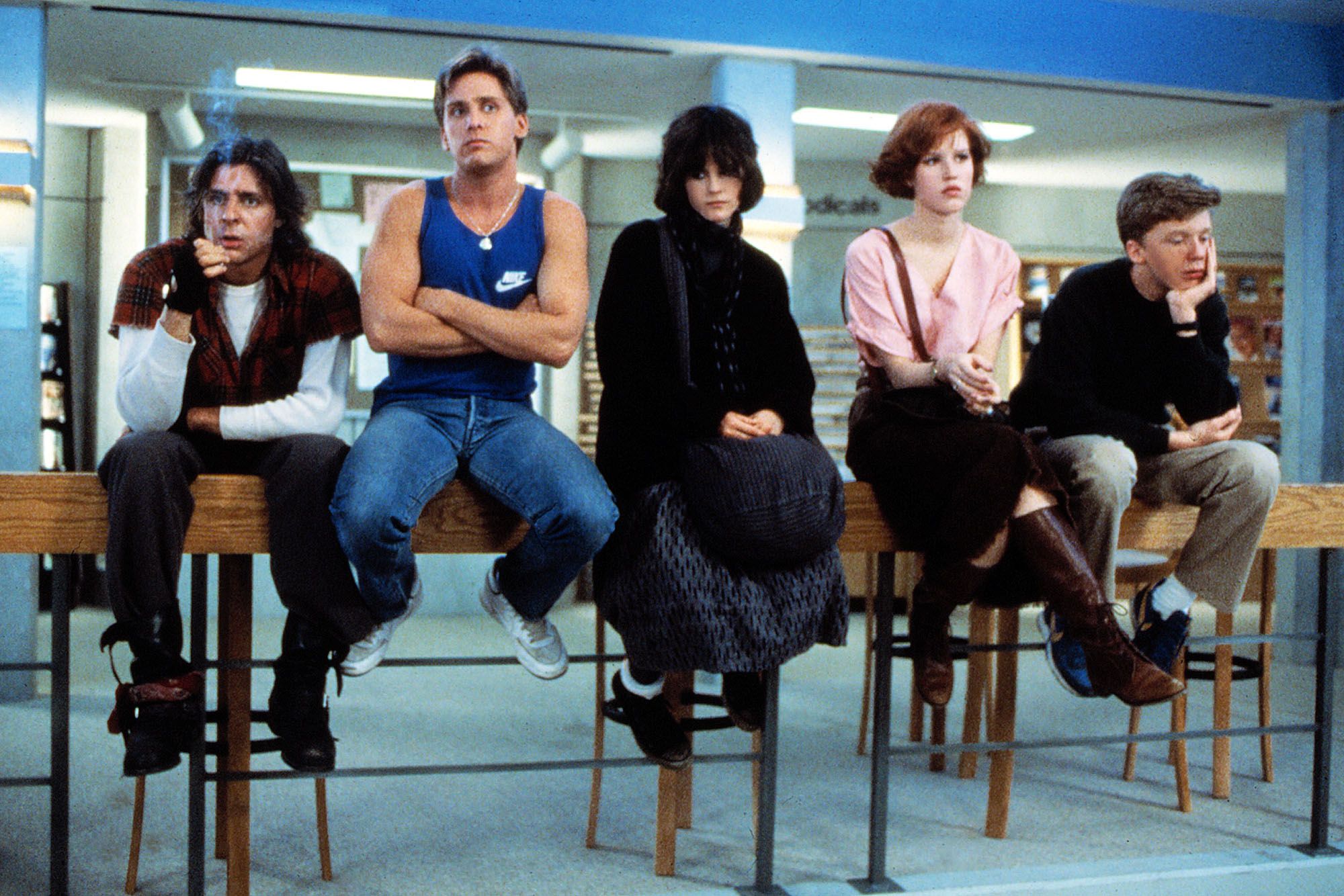
After marking the film’s 40th anniversary earlier this year, The Breakfast Club has since received a 4K Ultra HD release via The Criterion Collection. Presented in the 1:85.1 aspect ratio, the new 4K restoration was created from the 35mm original camera negative. A 35mm print was provided by Universal Pictures and was used as a reference. The original monaural soundtrack was remastered from the 35mm magnetic DME track.
As for the bonus features, only the 12-part Sincerely Yours appears on both the 4K UHD release and Universal’s earlier 30th Anniversary Blu-ray release. Neither The Most Convenient Definitions: The Origins of the Brat Pack nor Accepting the Facts: The Breakfast Club Trivia Track are carried over. With the existence of Brats, the former feels sort of moot.
What follows is my review from earlier this year:
John Hughes’ 1985 coming-of-age dramedy, The Breakfast Club, has marked the 40th anniversary of the teen film’s theatrical release.
Dear Mr. Vernon, we accept the fact that we had to sacrifice a whole Saturday in detention for whatever it was we did wrong. But we think you’re crazy to make us write an essay telling you who we think we are. You see us as you want to see us – in the simplest terms, in the most convenient definitions. But what we found out is that each one of us is a brain…and an athlete…and a basket case…a princess…and a criminal. Does that answer your question? Sincerely yours, the Breakfast Club.
An Athlete, Princess, Brain, Criminal, and Basket Case gathered for detention at Shermer High School on Saturday, March 24, 1984. It took 97 minutes but movies would never again be the same. Pop culture would never be the same. For many of the cast, their lives would never again be the same, especially after June 1985’s release of St. Elmo’s Fire and David Blum’s article in New York magazine. The article would later lead to Brats—featuring a number of actors from The Breakfast Club—reclaiming the narrative upon its Tribeca premiere and Hulu release.
The thing about John Hughes is that he had his finger on the pulse when it came to teenagers. Obviously, there are aspects about his films that may have aged terribly but you have to look at how teens were talking and behaving during this era of filmmaking. Hughes wrote the first draft of The Breakfast Club over a weekend in 1982. When production got underway in the Chicago suburbs for a few months in 1984, the filmmaker allowed his cast a few takes to improvise on set. The film followed 1984’s Sixteen Candles, which also starred Molly Ringwald and Anthony Michael Hall. Produced for just $1 million, the film went onto make $51.5 million at the box office.
Andrew Clark (Emilio Estevez), Brian Johnson (Anthony Michael Hall), John Bender (Judd Nelson), Claire Standish (Molly Ringwald), and Allison Reynolds (Ally Sheedy) all come from their own cliquish worlds. Until this particular detention on Saturday morning, none of them had ever hung out with each other. But by the end of The Breakfast Club, they have all become friends. If not friends, they at least understand each other in a better way. As the film ends, it looks like Andrew and Allison—given a makeover by Claire—are at the start of a potential relationship. The same, too, goes for Claire and Bender, which nobody could have predicted at the start of the film.
I watched The Breakfast Club for the first time in March 2010. I can’t answer as to why it took me so long to watch it. Funny enough, the release of Easy A later that year would lead to me watch a number of John Hughes movies, mostly for the first time. In any event, it’s an iconic film that, as actress Molly Ringwald notes in a 2018 essay for The New Yorker, did not age well in the age of #MeToo. Ringwald expands on her thoughts in the essay—a sequence involving both John Bender and Claire Standish, in particular. Bender gets under the table and looks up at Claire’s underwear.
Would I have appreciated the film better had I watched during my teen years? Probably. There’s certainly something to be said about The Breakfast Club and the theme of wanting to be understood by adults and your fellow teenagers. You can make the argument that the authoritarian Dean Richard Vernon (Paul Gleason) doesn’t understand any of the teenagers. I remember my own teen years—knowing something is off with me and not knowing the reasoning why I had the thoughts and feelings that I did. It was only during late 2014 into November 2015 where I spent a full year sorting through my feelings and coming to terms with being transgender.
The Breakfast Club is the type of film where you cannot ignore the soundtrack. I made no thought of it at the time in 2010 but this time around, I noticed how they all spontaneously start whistling the “Colonel Bogey March.” You’ll definitely recognize it if you’ve seen David Lean’s The Bridge on the River Kwai. But as far as music goes, the film’s popularity ensured that Simple Mind’s “Don’t You (Forget About Me)” would be an iconic classic for the ages. It’s enough that the song is featured in Brats (how could it not!) and it inspired the title of a 2006 documentary of the same name.
No list of the best teen films or best films of the 1980s is complete without including The Breakfast Club.
Bonus Features
- Audio commentary featuring actors Anthony Michael Hall and Judd Nelson
- Deleted and Extended Scenes
- Sincerely Yours: A 12-Part Documentary
- Cast and Crew: Interviews with actors Molly Ringwald, Ally Sheedy, Judd Nelson, Irene Brafstein, and Paul Gleason
- Excerpts from a 1985 American Film Institute seminar with Hughes
- Radio interview from Sound Opinions in 1999 with Hughes
- Electronic Press Kit
- Ensemble Profile
- John Hughes Profile
- Dede Allen Profile
- “Youth Picture”
- “Roller-Coaster”
- Featurette
- Trailer
- Today: Excerpt from a 1985 episode features host Jane Pauley interviewing Molly Ringwald, Judd Nelson, Anthony Michael Hall, Emilio Estevez, and Ally Sheedy
- Describe the Ruckus: Video essay featuring director John Hughes’s production notes for The Breakfast Club, read by Nelson
- Audio interview with Ringwald from an episode of This American Life
- PLUS: An essay by author and critic David Kamp
DIRECTOR/SCREENWRITER: John Hughes
CAST: Emilio Estevez, Paul Gleason, Anthony Michael Hall, John Kapelos, Judd Nelson, Molly Ringwald, Ally Sheedy
Universal Picture released The Breakfast Club in theaters on February 15, 1985.
Please subscribe to The Solzy Report and visit Dugout Dirt.