Danielle Solzman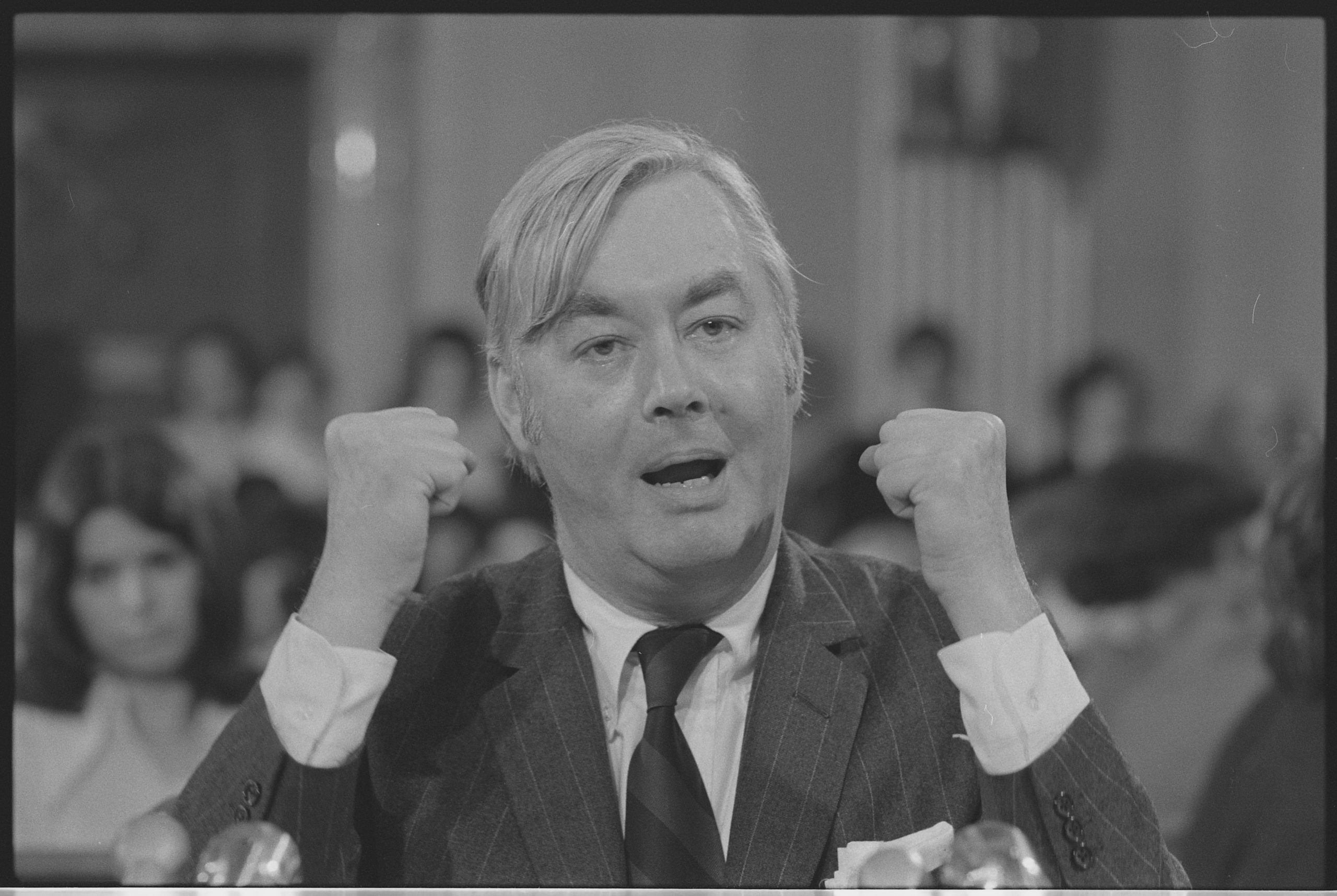
Though Moynihan premiered in 2018, today marks 50 years since Ambassador Daniel P. Moynihan delivered his historic U.N. speech on November 10, 1975—an address opposing the infamous U.N. Resolution 3379, which wrongly labeled Zionism as racism. The resolution was later repealed in the early 1990s.
What Moynihan does is offer an in-depth look at the life of Daniel Patrick Moynihan, the trailblazing intellectual, diplomat, and long-serving New York senator. When the documentary was released fifteen years after his passing, it presented Moynihan in a way never seen before.
Renowned for his wit, Moynihan is perhaps best remembered today for the oft-quoted line, “Everyone is entitled to his own opinion, but not his own facts”—a sentiment that resonates strongly in our era of misinformation. Yet he was much more than a quotable thinker. He authored the landmark Moynihan Report, exposing the systemic poverty in African American inner cities, and was among the first to highlight chronic unemployment in Black communities even during times of general prosperity. In the 1960s, as the fight for civil rights raged, Moynihan warned that freedom without equality would create generations of unrest, later helping shape President Johnson’s War on Poverty.
Despite his influence, Moynihan’s work was often misunderstood. Celebrated by conservatives for acknowledging the limits of government, he was simultaneously a fierce advocate for federal intervention to combat persistent racial inequality and poverty. By unpacking his ideas for a modern audience largely unfamiliar with his legacy, the film reignites conversations on issues he first addressed over fifty years ago.
The documentary situates Moynihan’s life and thinking within the major historical and political currents of his era—from the civil rights movement and the Wars on Poverty and Vietnam to the urban riots of the 1960s, the evolution of welfare policy, the rise of neoconservatism, and the collapse of the Soviet Union. Archival footage, along with interviews with family, friends, and political figures across the spectrum, paints a vivid portrait of a visionary thinker and dedicated public servant.
This was a man who inhabited two different worlds—an unusual duality that would serve him well throughout his career.
“One reason Moynihan is so interesting is because he inhabited two worlds at once,” said Sam Tanenhaus. “He inhabited the world of practical politics. He also inhabited the world of the liberal intellectual. And in his day, the people who wrote for small magazines, for little journals—which had an influence we almost can’t imagine today—a publication like Commentary or The Public Interest, which Moynihan really helped create—had tremendous intellectual cachet. That’s where the ideas would begin and then reverberate through society.”
It’s hard to imagine a time when small magazines carried such weight. Norman Podhoretz invited Moynihan to write for Commentary when they met in 1961. His collaboration with Nathan Glazer on Beyond the Melting Pot would later reshape how ethnicity was studied and understood in academic circles—something that might never have happened without Irving Kristol’s recommendation.
Sen. Chuck Schumer, then a Harvard freshman in 1967, would go on to succeed Moynihan as New York’s senior senator after his retirement at the end of the 106th Congress.
“He was a bridge to academic thought and government,” Schumer said. “And there were very few bridges as strong, as durable, and with as much of a foot in each camp as he did.”
One of the biggest shocks of Moynihan’s career came when he joined the Nixon administration as an urban affairs adviser. Many of his friends were outraged—how could a lifelong Democrat, a veteran of the Johnson administration, go to work for Nixon? But those who knew him best understood: Moynihan’s loyalty was to the presidency itself, not the party in power.
“Now, having an urban policy is no more a guarantor of success with cities than having a foreign policy is a guarantor of success in, say, world peace,” Moynihan once quipped.
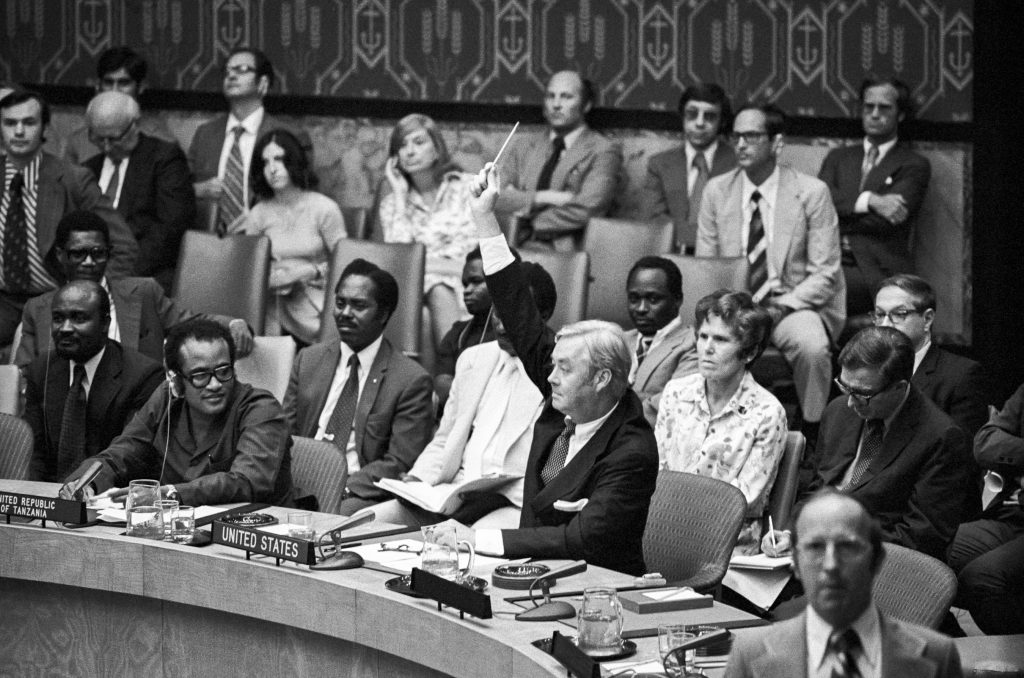
The film’s back half turns to his time at the United Nations, the events leading to his famous speech, and his later run for the U.S. Senate.
“The most hideous thing I’ve ever had to deal with over at the U.N. was that resolution which called Zionism a form of racism,” Moynihan said in a TV interview. “Somalia introduced it, but Somalia as a Soviet client. The Russians began that campaign in 1971—very open. When the Russians begin a propaganda campaign, there’s a three-part article in Pravda. And it said, Orwellian or horrible, that the Jews, far from being the victims of the Nazis, were the successors to them.”
“Any ambassador, no matter how able, operates within the framework of his mission,” said former Secretary of State Henry Kissinger. “The Secretary of State and the President have to take into account the entire range of foreign policy. And while the Zionism resolution was going through the U.N., we were conducting negotiations in the Middle East, engaged in détente with the Soviet Union. We had to judge an individual resolution in relation to these other initiatives.”
“Pat understood the importance of words,” said Suzanne Garment, special assistant to then–U.N. Ambassador Moynihan. “Every regime, like liberal democracy, depends not just on force but on principles that people accept as legitimating a regime. And by labeling Zionism as racism, you were saying that the homeland of the Jewish state was incompatible with liberal democracy. Whether such a statement has an effect tomorrow—probably not. But over the long run, does it undermine people’s allegiances and their willingness to act? Yes. That’s exactly how it happens.”
Fifty years ago today, Moynihan rose before the United Nations and declared:
“What we have at stake here is not merely the honor and the legitimacy of the state of Israel, although a challenge to the legitimacy of any member nation ought always to arouse the vigilance of all members of the United Nations. For a yet more important matter is at issue, which is the integrity of that whole body of moral and legal precepts which we know as human rights. […]
It is sufficient for the moment only to note one foreboding fact. A great evil has been loosed upon the world. The abomination of antisemitism has been given the appearance of international sanction.”
After his time at the U.N., Moynihan turned to electoral politics, running successfully for the U.S. Senate in New York. Many Black politicians withheld support in the Democratic primary, though he did win the backing of Bayard Rustin. He ultimately prevailed by 10%—or, as he joked, “a whopping 1%.”
“I once said rather mischievously that while he was in the Senate, he wrote more books than many of his colleagues read,” said columnist George Will.
“Senator Moynihan was viewed in the Senate with enormous respect—sometimes incomprehension, and sometimes a little fear,” recalled former Senator Bill Bradley. “And the fear, of course, came from not wanting to go up against him in debate, because he’d find something you hadn’t thought of—and you’d be in trouble.”
When you look at how politics functions today, Moynihan feels like a relic from another era—one who believed in collaboration over combat.
“He was not an ideologue,” Schumer reflected. “He was an ideas person, but not an ideologue. So he had great friends on the Republican side… One of my colleagues on the Republican side said, ‘You couldn’t have a Senate of 100 Moynihans, but you sure need a Senate with one or two.’”
As the nation continues to confront growing polarization and social media–fueled political chaos, Moynihan captures both the intellect and the ethos of a man—and a moment in history—when democratic debate and civic responsibility were taken seriously. The film stands as both an engaging history lesson and a timely reminder of a statesman who valued ideas over ideology. Revisiting his legacy on the 50th anniversary of his historic UN address, Moynihan reminds us how rare figures like Daniel Patrick Moynihan have become—thinkers who could bridge the worlds of academia and politics with equal fluency and integrity
DIRECTORS: Joseph Dorman & Toby Perl Freilich
SCREENWRITER: Joseph Dorman
NARRATOR: Jeffrey Wright
FEATURING: Michael Barone, President Joe Biden, Senator Bill Bradley, Tony Bullock, Ta-Nehisi Coates, Judge Richard Eaton, Kathryn J. Edin, Suzanne Garment, Nathan Glazer, Harry Hall, Ron Haskins, Stephen Hess, Godfrey Hodgson, Judge Robert Katzmann, Senator Bob Kerrey, Henry Kissinger, Senator Trent Lott, Thomas E. Mann, Dick Meryman, Ronald B. Mincy, Joel Motley, Elizabeth Moynihan, Maura Moynihan, Congresswoman Eleanor Holmes Norton, Lawrence O’Donnell, Norman Ornstein, James Patterson, Mark Patterson, Orlando Patterson, Robert Peck, Norman Podhoretz, John Price, Richard Ravitch, Senator Chuck Schumer, Sam Tanenhaus, Steven R. Weisman, George Will, William Julius Wilson
First Run Features released Moynihan in theaters on October 3, 2018. Grade: 4/5
Please subscribe to The Solzy Report and visit Dugout Dirt.