Danielle Solzman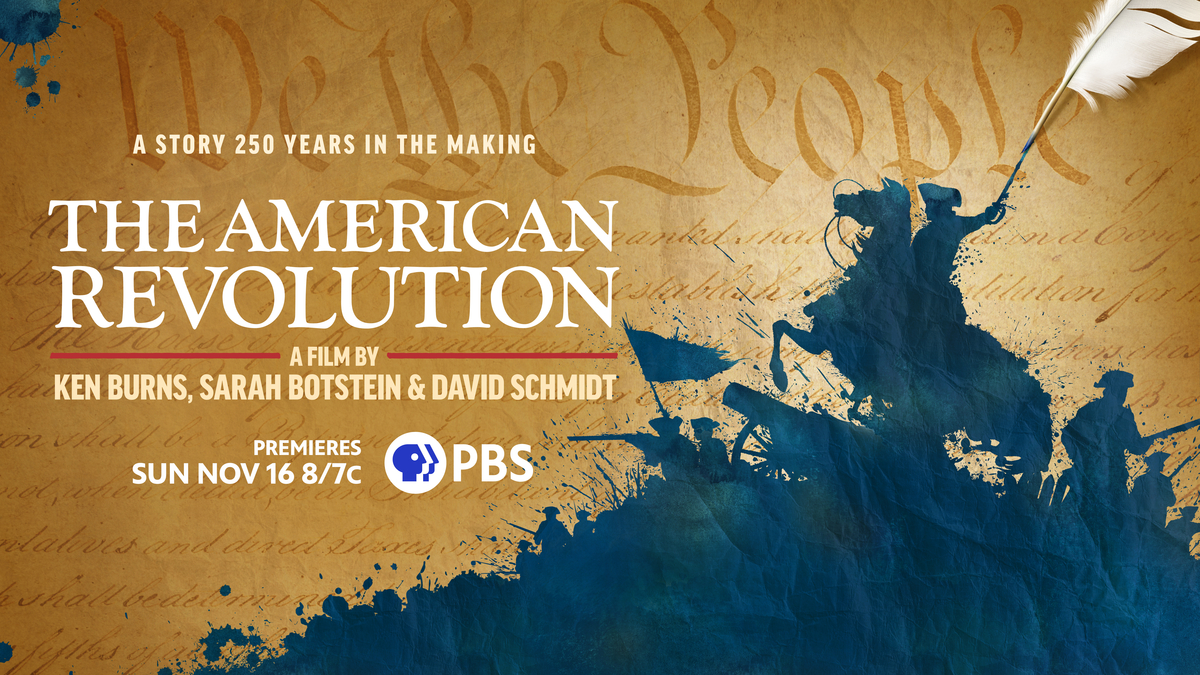
Ken Burns, Sarah Botstein, and David Schmidt have teamed up for The American Revolution, an epic 6-part, 12-hour documentary chronicling the eight-year War for Independence. A companion book, The American Revolution: An Intimate History, was recently released by Knopf. The American Revolution will also be released on Blu-ray and DVD on November 18.
“I think to believe in America, rooted in the American Revolution, is to believe in possibility. Everybody, on every side, including people who were denied even the ownership of themselves, had the sense of possibility worth fighting for.” — Jane Kamensky, historian
This review covers The American Revolution Parts 1-5. My thoughts on Part 6 will come after the series launches on the PBS app.
The epic documentary series offers an expansive look at the virtues and contradictions of the war and the birth of the United States, tracing how thirteen colonies defied the British crown, secured independence, and established a radical new system of government that reshaped a continent and inspired democratic movements worldwide for centuries to come.
When we think of America’s founding, we think of the Founding Fathers (or as historian Joseph J. Ellis put it, Founding Brothers). George Washington, Benjamin Franklin, Alexander Hamilton, Thomas Jefferson, John Adams, James Madison, and John Jay. Ellis includes Aaron Burr in this mix. But anyway, telling the story of America’s birth means to go beyond learning who signed the Declaration of Independence, Articles of Confederation, the United States Constitution, or fought in the American Revolution. It’s more than just the people—men, more likely than not—that would become leading American statesmen or military leaders.
Viewers will experience the American Revolution through the memories of those who lived it: rank-and-file Continental soldiers and American militiamen (some of them teenagers), Patriot political and military leaders, British Army officers, American Loyalists, Native soldiers and civilians, enslaved and free African Americans, German soldiers in the British service, French and Spanish allies, and civilians across North America, Loyalist as well as Patriot, including many made refugees by the war.
The American Revolution wasn’t just a fight for independence—it was a civil war and a global conflict that touched millions from Canada to the Caribbean and beyond. Few escaped its violence, as British forces occupied every major American city, holding New York for more than seven years.
One takeaway from the documentary is that the American colonies weren’t even the most profitable British colonies. Vincent Brown points out that the Caribbean colonies were profitable and had a higher importance because of slavery. The British offered Black slaves their freedom for fighting against the patriots, but they weren’t exactly the type to take an anti-slavery view. This later led to a crisis in Virginia with one side committed to slavery and another side unevenly committed. After being against their enlistment, Washington eventually changed his mind, and an estimated 5,000 Black troops served in the Continental Army.
Women did not earn the right to vote until the 19th amendment was ratified in 1920. Even so, they were every bit as vital to America’s birth. The American Revolution highlights the role they played during the lead-up and while the country was at war. When Britain began taxing colonists without representation, Kathleen DuVal points out that it was women who ensured that the boycotts succeeded. Their accomplishments were published in papers, and they stood front and center in the protest movement.
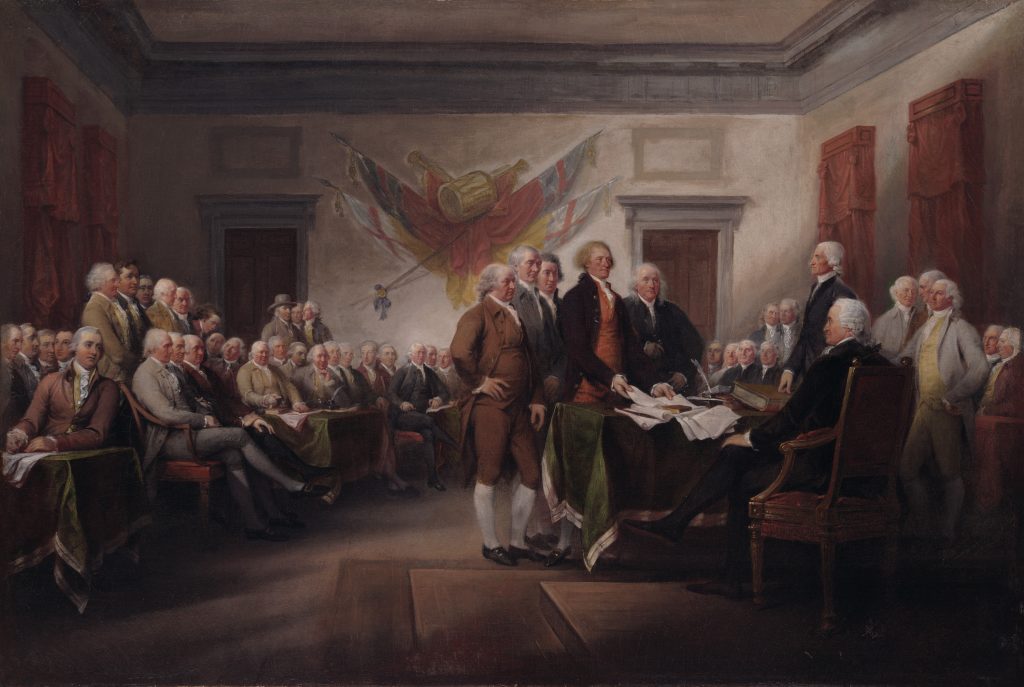
When Thomas Jefferson started penning the words of the Declaration of Independence during the American Revolution, the document was both new and radical. His words affirmed that the power came from the people themselves even as he was a slaveholder. Alan Taylor points out how most people only know the opening preamble, but the majority of the document is a list of crimes committed by the Crown.
Even when you think you know a lot about the American Revolution, there’s still more to learn. Conditions weren’t pretty for prisoners on either side of the war—thousands of American prisoners died by the end of 1776. While the Continental Army held Hessian troops as prisoners, they viewed them as innocent people, having been sold by their rulers for money. Like the Patriots taking on Britain, they too were victims of tyranny. After the war, about 25% of the surviving Hessians chose to stay in America. Many who returned home later came back with their families.
Part 4 sees America bracing for its third year in the War of Independence while Britain launches campaigns to take both Albany and Philadelphia. General Washington and the Continental Army suffer defeats at Brandywine and Germantown, while the Continental Congress is forced to flee Philadelphia. But it’s the victory at Saratoga that opens the door for France to officially support the United States.
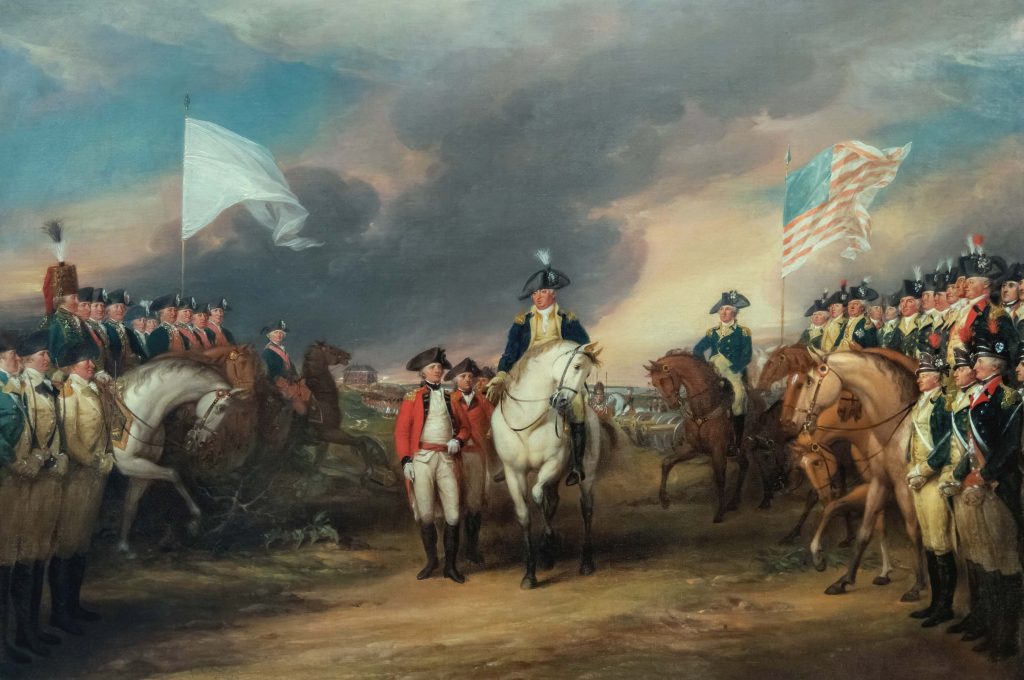
The French foreign minister at the time wanted revenge against England for their defeat in the Seven Years’ War. Until Saratoga, France had been willing to help in secret, but they did not want to formally enter the American Revolution until the United States proved it could defeat the British. Once it did, France recognized American independence and established commercial relations. And as we all know, the hero of Saratoga would later prove himself to be a traitor to the United States.
“Without the Continental Army, there would be no United States,” historian Stephen Conway says, putting it bluntly.
When smallpox struck Continental Army camps, General Washington ordered the inoculation of everyone. It might put soldiers out of commission for a time, but as Joseph J. Ellis says, “It was the single most important decision he made.”
Let’s sit on this for a moment: the French essentially offered aid worth what would be valued at $25–30 billion today. Without them, it would have been impossible to win the American Revolution.
Part 4 also touches on Joseph Brant, a Mohawk who fought with the British. The Six Nations leadership resented him because his involvement forced them into their own civil war, with the Oneida ready to fight alongside the Americans.
As we move into Part 5, Washington and the Continental Army emerged from their harsh six-month winter encampment at Valley Forge to fight the British at the Battle of Monmouth. The French alliance expanded the conflict beyond the mainland, with naval battles off England’s coast and in the Caribbean. The British Army advanced into both Indian Country and the southern states. Unfortunately, the British succeeded in their capture of Charleston.
It was at Valley Forge where the Continental Army truly became an army. Conditions were bleak, but morale rose as training improved. Meanwhile, the British soon realized they would not win the war in New England or the Mid-Atlantic. Their goal shifted to holding on to whatever they could, since America would not renounce its independence. They moved the war to the South, which they viewed as more economically valuable. The British also assumed Loyalists would join their side.
It’s important to tell American history as it is meant to be told—not the sanitized and revisionist history that some people would prefer we learn. If I hadn’t been on an H.W. Brands kick since January, I would have never known how Benjamin Franklin and son William Franklin were on different sides of the war, as pointed out in Our First Civil War: Patriots and Loyalists in the American Revolution. The elder Franklin, as we know, was a Patriot while his son was a Loyalist. Like many families, the wore tore them apart. You can’t help but feel for the son when he’s sitting in prison while his wife is sick and dying.
It’s not an understatement to say that no stone goes unturned during the documentary’s 12 hours. Burns, Botstein, and Schmidt work around the major challenge of not having any access to videos. None existed during this time. What they do here to make up for it is film reenactments and seamlessly edit those into The American Revolution. Otherwise, Peter Coyote’s narration and first-person historic accounts are delivered against the backdrop of paintings and video. They are appropriately weaved in between interviews with the many historians featured throughout the epic run time.
Don’t let the run time fool you. The American Revolution is a commitment but it’s a worthy one. PBS is rolling out the documentary by airing one part per night. This isn’t exactly the type of documentary that one should try to binge in a single setting. To be fair, I watched the first half in a single day and balanced the rest of the documentary with the World Series. I jotted down plenty of notes but let’s be honest: nothing I write will truly be able to do justice because there’s so much to discuss and digest. There’s a reason why we have book after book after book about this era in American history!
Over 250 years after the first shots were fired at Lexington and Concord, the twelve-hour The American Revolution is every bit as epic as it should be. It’s not just essential viewing for history buffs, but a reminder of how complex—and unfinished—the American story remains.
DIRECTORS: Ken Burns, Sarah Botstein, and David Schmidt
SCREENWRITER: Geoffrey C. Ward
NARRATOR: Peter Coyote
FEATURING: Rick Atkinson, Friederike Baer, Maggie Blackhawk, Ned Blackhawk, Darren Bonaparte, Christopher Leslie Brown, Vincent Brown, Colin G. Calloway, Stephen Conway, Iris de Rode, Philip J. Deloria, Erica Armstrong Dunbar, Kathleen DuVal, Joseph J. Ellis, Charles E. Frye, Annette Gordon-Reed, Don N. Hagist, William Hogeland, Maya Jasanoff, Jane Kamensky, Edward G. Lengel, William E. Leuchtenberg, Jennifer Loren, Holly A. Mayer, Nathaniel Philbrick, Jeffrey Rosen, Claudio Saunt, Barnet Schecter, Stacy Schiff, Alan Taylor, Michael John Witgen, Kevin J. Weddle, Gordon S. Wood, Serena Zabin, and Bernard Bailyn
VOICE CAST: Adam Arkin, Jeremiah Bitsui, Corbin Bleu, Kenneth Branagh, Josh Brolin, Bill Camp, Tantoo Cardinal, Josh Charles, Hugh Dancy, Claire Danes, Jeff Daniels, Keith David, Hope Davis, Marcus Davis-Orrom, Bruce Davison, Leon Dische Becker, Alden Ehrenreich, Craig Ferguson, Morgan Freeman, Christian Friedel, Paul Giamatti, Domhnall Gleeson, Amanda Gorman, Michael Greyeyes, Jonathan Groff, Charlotte Hacke, Tom Hanks, Ethan Hawke, Maya Hawke, Lucas Hedges, Josh Hutcherson, Samuel L. Jackson, Gene Jones, Michael Keaton, Joe Keery, Joel Kinnaman, Tracy Letts, Damian Lewis, Laura Linney, Josh Lucas, Michael Mando, Carolyn McCormick, Lindsay Mendez, Tobias Menzies, Joe Morton, Edward Norton, David Oyelowo, Mandy Patinkin, Wendell Pierce, Jon Proudstar, Matthew Rhys, LaTanya Richardson, Liev Schreiber, Chaske Spencer, Dan Stevens, Meryl Streep, and Yul Vazquez
The American Revolution will air November 16-21 at 8:00-10:00 PM ET (check local listings) on PBS. The full series will be available to stream beginning November 16 at PBS.org and on the PBS App. Grade: 5/5
Please subscribe to The Solzy Report and visit Dugout Dirt.