Danielle Solzman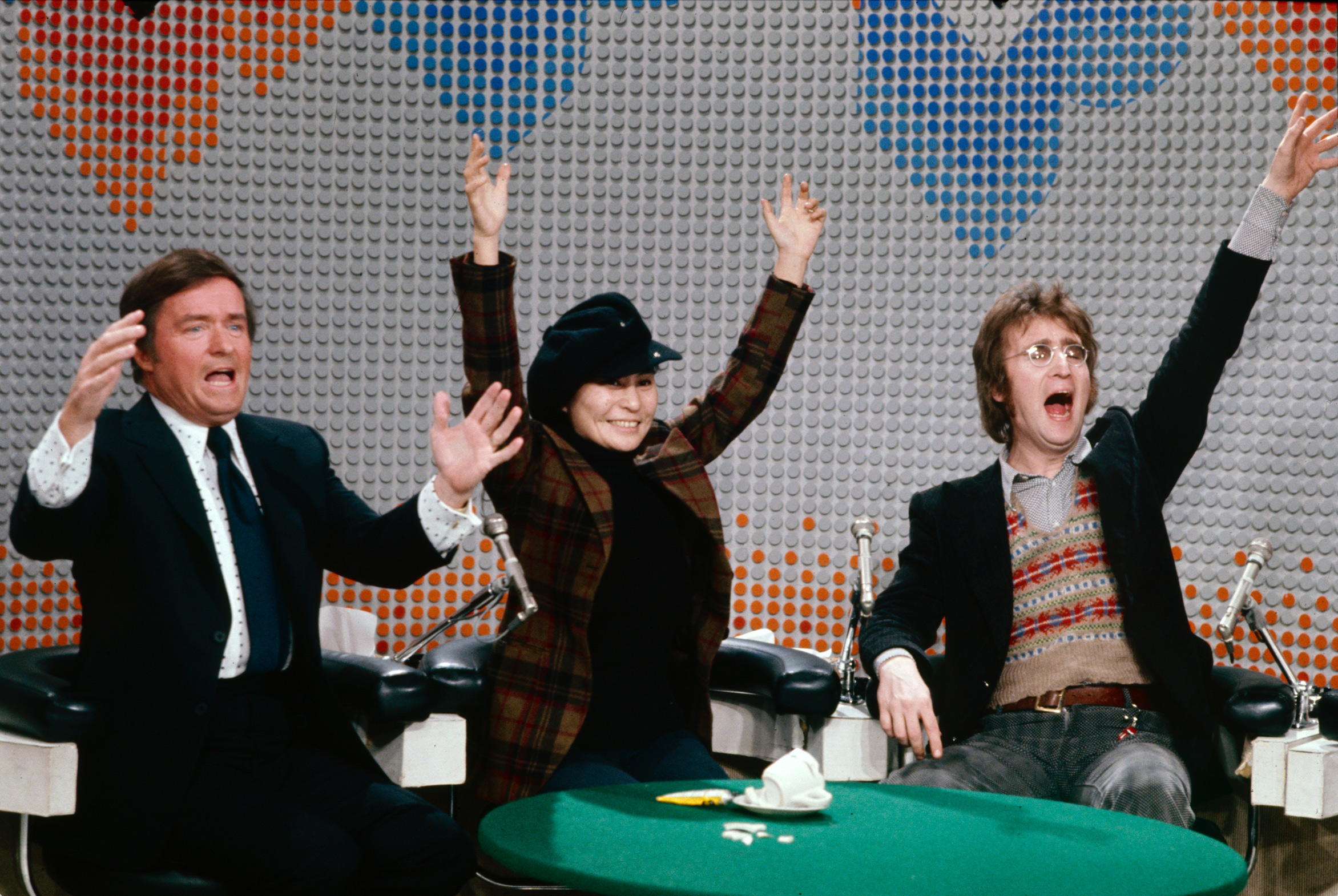
Daytime Revolution revisits one week in February 1972 when John Lennon and Yoko Ono co-hosted The Mike Douglas Show in Philadelphia. The documentary was released on Blu-ray last December.
To set the tone for Daytime Revolution, here’s what you need to know. John Lennon and Yoko Ono moved to New York City in 1971, settling first in Greenwich Village’s West Village before later relocating uptown to the Dakota. During this period, they became increasingly involved in radical politics, to the point that Yippies founder Jerry Rubin—tried as part of the Chicago 7—joined them both onstage and behind the scenes. After releasing the Imagine album in September 1971, Lennon and Ono began seeking venues where they could further their creative work and their political activism. The Mike Douglas Show ultimately became the perfect platform.
Daytime Revolution explores how Lennon and Ono took to Philadelphia and used their brief stint on the country’s most-watched daytime program to upend its familiar rhythms. Over five episodes, they stepped into the roles of both co-hosts and producers, inviting an eclectic mix of guests—among them Jerry Rubin, Black Panther Chairman Bobby Seale, political activist Ralph Nader, and comedian George Carlin—and pushing the show toward spirited conversations that daytime TV rarely saw in 1972. Mike Douglas, ever the steady presence, worked to keep the broadcast flowing amid the controlled chaos.
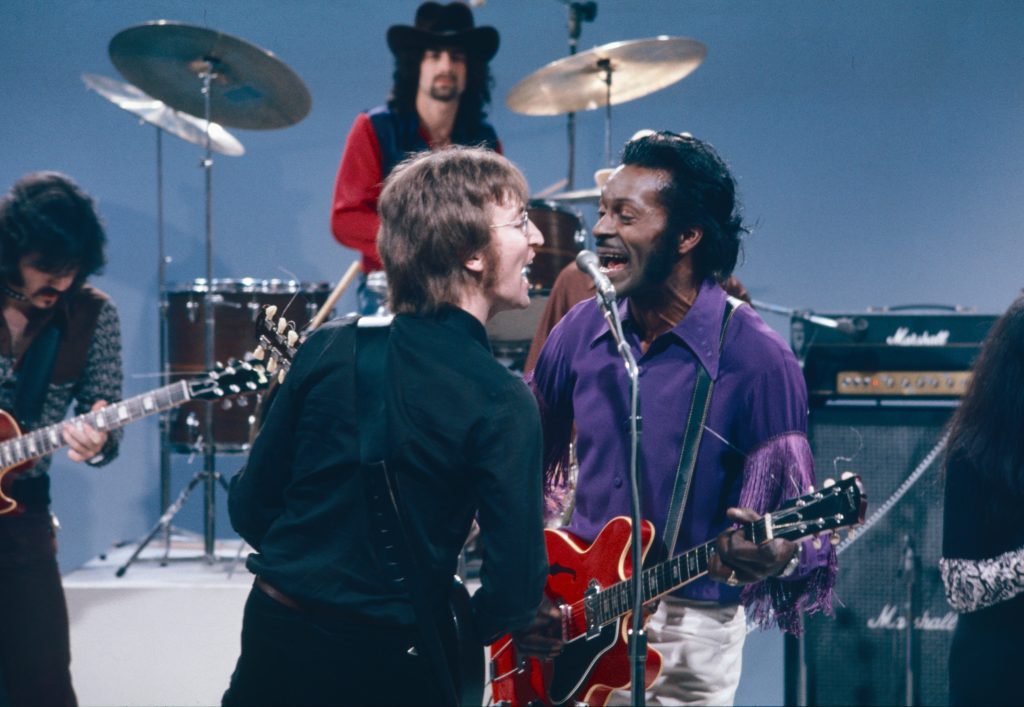
Their approach fused political dialogue, audience participation, conceptual art, and singular musical moments, including a lively duet with Chuck Berry and a moving rendition of “Imagine.” By tracing this unconventional broadcast experiment, Daytime Revolution highlights Lennon and Ono’s determination to broaden the cultural conversation and illustrates how their once-in-a-lifetime week on air continues to echo in today’s similarly turbulent climate.
Growing up a Beatles fan, I remember hearing about the week of shows on The Mike Douglas Show. It wasn’t until watching Daytime Revolution that I actually had an opportunity to watch lengthier segments from the show beyond interview clips featured in The Beatles Anthology or the upcoming Paul McCartney documentary, Man on the Run. Of course, archival footage is interwoven with contemporary interviews from those who were there at the time. Imagine going to one of the tapings and finding out that one of The Beatles is co-hosting the show. That’s just something that seems impossible to imagine, especially for a syndicated daytime show.
But what may be unfathomable to think about while watching Daytime Revolution, especially with what TV viewing looks like in 2025, is that these episodes were watched by 40 million Americans. There were fewer TV channels in existence in 1972. You either watched when it aired or you missed it altogether unless they opted for an encore broadcast. The episodes were not without their consequences. President Richard Nixon spent the next three years trying to deport John Lennon over his views—something that seems very prescient when one considers that the fascist-in-chief would likely do the same thing today. As a side note, future Nixon adviser Roger Ailes was a producer!
What I appreciate about director Erik Nelson’s approach in Daytime Revolution is that he allows the audience to experience The Mike Douglas Show episodes in chronological order. One is able to experience the growing chemistry and comfort on screen between Douglas, Lennon, and Ono. At the same time, we’re also privy to additional insight from those who were on the set at the time. There are no talking-head interviews with cultural historians discussing the importance of these episodes.
When they taped The Mike Douglas Show in 1972, they recorded directly to 2” Quadruplex videotape, which was copied and circulated throughout America for local broadcasts. But in the half-century that followed, the tapes vanished save for five archived copies, one for each broadcast episode. As with much media from that era, time has not been kind as tapes physically disintegrated. Two years prior to Daytime Revolution’s release, filmmakers digitally restored the footage frame by frame. The before-and-after shows an astonishing difference in what the restoration achieved. They weren’t able to remove the grain, but it’s a remarkable improvement nonetheless.
After restoring one week’s worth of episodes, the challenge soon became editing them into a 90-minute film, with room for additional interviews. The musical performances were also enhanced and upgraded by Yoko Ono and Sean Lennon’s in-house audio team. Ultimately, Daytime Revolution runs 107 minutes in all.
What I find so unbelievable is that this was the first time that Lennon met rock pioneer Chuck Berry. The two performed “Memphis, Tennessee” in a unique performance. You’d think that the two would have met at some point during Lennon’s years with The Beatles, but alas, this was not the case. Thankfully, the entire performance is one of three musical performances presented completely uncut in the documentary’s bonus features. There are a few seconds of the performance where the disintegration still shows in the picture.
Watching Daytime Revolution today feels like opening a time capsule you always knew existed but never really got to explore. The documentary doesn’t just preserve these episodes—it brings them back to life in a way that lets modern audiences understand why they mattered so much in 1972. Between the restoration work, the interviews, and the performances, it’s easy to appreciate just how wild, ambitious, and ahead of its time this week of television really was. For anyone who cares about The Beatles, TV history, or political art, this is a documentary well worth your time.
Bonus Features
- Uncut Musical Performances by John Lennon and Yoko Ono:
- IT’S SO HARD (February 14, 1972)
- MEMPHIS, TENNESSEE (w/ Chuck Berry, February 16, 1972)
- LUCK OF THE IRISH (February 18, 1972)
- Restoration Demonstration
Theatrical Trailer
DIRECTOR: Erik Nelson
FEATURING: John Lennon, Yoko Ono, Mike Douglas, Jerry Rubin, Bobby Seale, Ralph Nader, George Carlin, E.V. Di Massa, Nobuko Miyamoto, Ralph Nader, Hilary Redleaf Stillman, Vivian Reed, David Rosenboom, Gary Schwartz
Kino Lorber released Daytime Revolution in theaters on October 9, 2024. Grade: 4/5
Please subscribe to The Solzy Report and visit Dugout Dirt.