Danielle Solzman
Filmmaker Nick Davis discusses his new Holocaust documentary, This Ordinary Thing, celebrating the ordinary Europeans who risked their lives to rescue Jews and the enduring relevance of their stories today.
In this interview, Nick Davis shares insights into making This Ordinary Thing, from balancing its darkness with his work on the Godspell documentary to expanding the film from a short to a 63-minute feature with an acclaimed cast. He discusses sourcing vibrant archival footage, the emotional impact of the stories he uncovered, and the contemporary relevance of the film amid ongoing social divisions. Davis reflects on the moral questions it raises for viewers and the hope that audiences will consider their own responses to injustice, while recognizing the shared responsibility and common humanity that connect people across time and circumstance.
This Ordinary Thing weaves never-before seen archival footage with firsthand accounts from more than forty individuals who acted independently—often secretly and at great personal risk to both themselves and their families—to protect Jewish strangers from near-certain death. Narrated by an all-star cast, the documentary underscores how acts of decency can surface even in the bleakest moments, revealing ordinary people choosing humanity over fear.
This Ordinary Thing opened at the Cinema Village in New York on Friday. A nationwide VOD release will follow on March 31, 2026.
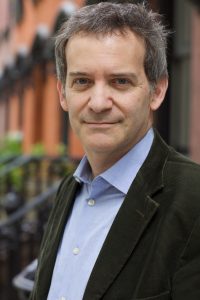
It’s so nice to chat again. How are you doing?
Nick Davis: Yes, it is. Great to see you and I read your review. I’m so glad you liked the film.
I can understand not wanting to make a Holocaust movie, especially being someone who would prefer more films about Jewish joy, given the past two years and change. How did you find yourself coming down this path and in what ways has it changed you?
Nick Davis: The more I think about it, the more I realize that how can you not make a film that is about people whose actions underscore the essential sameness of all human beings. These were people who—there’s a knock on the door. One of my favorite lines is, “He asked for help, he was a friend, and to our amazement, he was a Jew.” That spirit really just knocks me over, especially in a time that is where we are encouraged by not just politicians, but everything, the algorithms and the corporations. Everybody just wants to put us in these silos and on these teams—you’re on the blue team and you’re on the green team. I think many people have this thought sometimes where you’re walking down the street and you just think, I could have been born that person. It’s an accident of birth for the most part that puts you on these different teams.
When I really started researching these stories and seeing the scope of it, which also was totally unknown to me—I was familiar with Schindler from Schindler’s List and that’s pretty much it—I really didn’t know that so many people all across Europe working independently with no relation to each other. There’s no network, they’re not texting each other.
I think when I understood that, I just realized I have to tell this story. It’s not totally miserable. I mean, these are people doing things that are really inspiring and amazing. But also it’s not—I don’t want to sound too kumbaya about it, but I did feel like I have to tell these stories. It’s something I can do that I hope will contribute to breaking down the barriers that are dividing us all.
Were you working on this film simultaneously with the Godspell documentary?
Nick Davis: Yes. I think it took me a really long time—until I was finished with both of them—before I realized, oh, they actually made each other possible. You need the darkness in order to really just, oh, wow, the most joyful thing, the Godspell thing is so fun. What permits you to go into these other dark areas, at least for me, was I knew I had the other to return to.
But, yeah, I was working on both of them at the same time and there was definitely some emotional whiplash.
Yeah. I remember hearing about how Robin Williams would be calling Steven Spielberg to basically do a stand-up routine over the phone when he was directing Schindler’s List.
Nick Davis: Yeah. I think that the darkness of this story—what redeems it is I often think of it as a sea of evil. In this sea of evil that was the Holocaust, there are these pockets of goodness rising up and it’s like, yep, let’s focus on those. As somebody says in the film, we talk too much about the bad guys. We’ve heard enough about Hitler, Himmler, and Göring. Let’s focus on the good people who tried to help or did help.
That’s what made it tolerable is the extraordinary actions that these people were taking every day, risking their lives, risking the lives of their families. They knew the risks they were taking, but they just felt like, yeah, but it’s outweighed by the fact that this is what you have to do. As one of them said, we didn’t care whether they were Jews, Catholics, or Eskimos. They were persecuted people, and you had to help.
That’s extraordinary. They didn’t see it as extraordinary. They saw it as this is just what you have to do.
The film is rather short at 63 minutes. How long was the initial cut?
Nick Davis: Well, initially, it was going to be a short. It was going to be less than 40 minutes. The way it worked is I gathered all the transcripts, put them into an order, got it down to about 35ish minutes, and then got friends of mine—not even actors, hams, retired, collegiate actors to read them and built out the film from there.
The whole time we were doing that, by the way, my wife and partner in the production company Series of Dreams that we are now launching with these two films, she was saying, “Yeah, when are you going to get real actors? “She was really insistent because I liked the readings that my friends gave me.
We got it into about a 45-50 minute cut. I said, “Okay, you’re right. Let me listen to you, number one, and see what we can do.” For months, nothing happened and then got a phone call out of the blue. “Dame Helen Mirren wants to be in your film.”
It opened the floodgates and within a few weeks, we had this extraordinary cast with five Academy Award winners.
It goes beyond awards. They’re all tremendously talented and brilliant actors. They certainly didn’t do it for the money. I mean, we paid them scale, and it was unbelievable to work with each of them. So gifted.
It’s just the film got significantly better and more meaningful. Because I had them, I let things breathe more. I went back to old cuts. I gave them more of the script and the film expanded to 63 minutes. That was about as long as I felt it needed to be.
We watched and we cut it down, but it was never really any longer than 63.
I’m curious, did you ever get around to the seven other projects that you were initially going to propose at the lunch?
Nick Davis: No. Sorry New Coke, sorry puppets. Didn’t happen.
What was the most challenging aspect in putting the documentary together?
Nick Davis: Well, in some ways, I think one of the most challenging tasks was what I put to the archival producers who I worked with, which was find me ordinary Europeans in the 30s and 40s. Color footage that feels vibrant, that feels current.
One of the things that really hit me when I investigated this and then found this these incredible photos of the rescuers who we used, who had all been photographed by this wonderful photographer named Gay Block in the 80s. I was blown away by the fact that these photos were in color. I realized, oh yeah, the Holocaust was in color. World War II was in color.
I didn’t want to make your grandfather’s Holocaust film with sepia-toned images and maudlin cello music. I mean, those films can be great, but the immediacy of these stories, brought to life by these incredibly gifted actors, I felt we have to find footage that makes us feel like, whoa, this is happening. This is relevant, this is current, and very, very relevant. I mean, it feels like it’s happening now.
That’s the point of the film. Let’s hope.
Yeah. Even here in the US, we’re seeing people being deported or arrested for no reason.
Nick Davis: Yeah. As a filmmaker, you want your films to speak for themselves. I’m happy to bloviate about the film, what it might mean and what people might take from it, but I do think it’s hard to watch without thinking about our present situation.
I noticed how you incorporated footage from Charlottesville.
Nick Davis: Yeah, well, what was really striking is that these interviews were conducted in the late 1980s, but what they said is true today because they’re saying, we don’t seem to have learned the lesson, we’re still doing it. People are still dividing ourselves unnecessarily on these kinds of bases.
Even though they’re talking in the 1980s, you feel like they’re talking in 2025, 2026, and so it felt totally normal and natural, like, hey, we need footage that’s underscoring how we don’t seem to have learned the lesson. Well, Charlottesville—that’s pretty easy shorthand for we don’t seem to have progressed very far.
The other thing that I really was really struck by these people who had done this, even 30, 40 years later, many of them felt like, ugh, gosh, we haven’t learned anything. If we don’t learn from that war, how will we ever? And all this stuff.
But even so, the wonderful story that’s voiced by F. Murray Abraham, where he says, my wife and I got to talking, and we were like, what a crazy thing that we did helping total strangers. We’d never do that again, would we? Oh, no, of course not. And then, they just look at each other and start laughing because they know that they would do the same thing all over again.
That is so heartening. It just makes you feel like, okay, we’re not doomed. There is goodness in all of us.
That’s one that struck out to me a lot to where I even put it in my review.
Nick Davis: Oh, that’s right. Well, yeah, that was great. Thank you for doing that, for noticing. I love that one.
We’re about to head into the Winter Meetings. Any thoughts on the Mets going into next season?
Nick Davis: I’m always optimistic. I feel like we have not scratched the surface of what Juan Soto was going to do in a Mets uniform. I feel very bullish. I like our young pitchers. Who knows why what happened last year happened, but it’s not gonna happen again.
What’s going on with Pete Alonso? Is he coming back or just gonna walk?
Nick Davis: I don’t know. I have a feeling both Alonzo and Díaz will be back. I could be totally wrong, but yeah.
(Prior to publication, it was announced that the Los Angeles Dodgers and relief pitcher Edwin Díaz were in agreement on a three-year, $69 million deal.)
What do you hope people take away from watching the film?
Nick Davis: I hope people watch it and think, oh, what would I do? I hope people take away from it thinking about their own lives and thinking about how they might respond if faced with these kinds of decisions.
It edges us a little bit closer to realizing what I said before, the essential sameness of all human beings. I think we tend to focus so much on the differences. Okay, yeah, sure, we’re all different, and we’re all snowflakes, and that’s amazing, beautiful, each one is individual, and that’s terrific.
But therefore, we’re also all the same. Can we just please learn in this very brief life to inhabit the planet without killing each other for no reason?
It was so nice getting to talk again this year, which I had no idea was going to be a thing a few months ago.
Nick Davis: Neither did I, Danielle. Thank you. I wish I had yet another film so we could talk again in a few months, but I don’t. Not yet.
Series of Dreams released This Ordinary Thing in theaters on December 5, 2025. A nationwide VOD release will follow on March 31, 2026.
Please subscribe to The Solzy Report and visit Dugout Dirt.