Byron Burton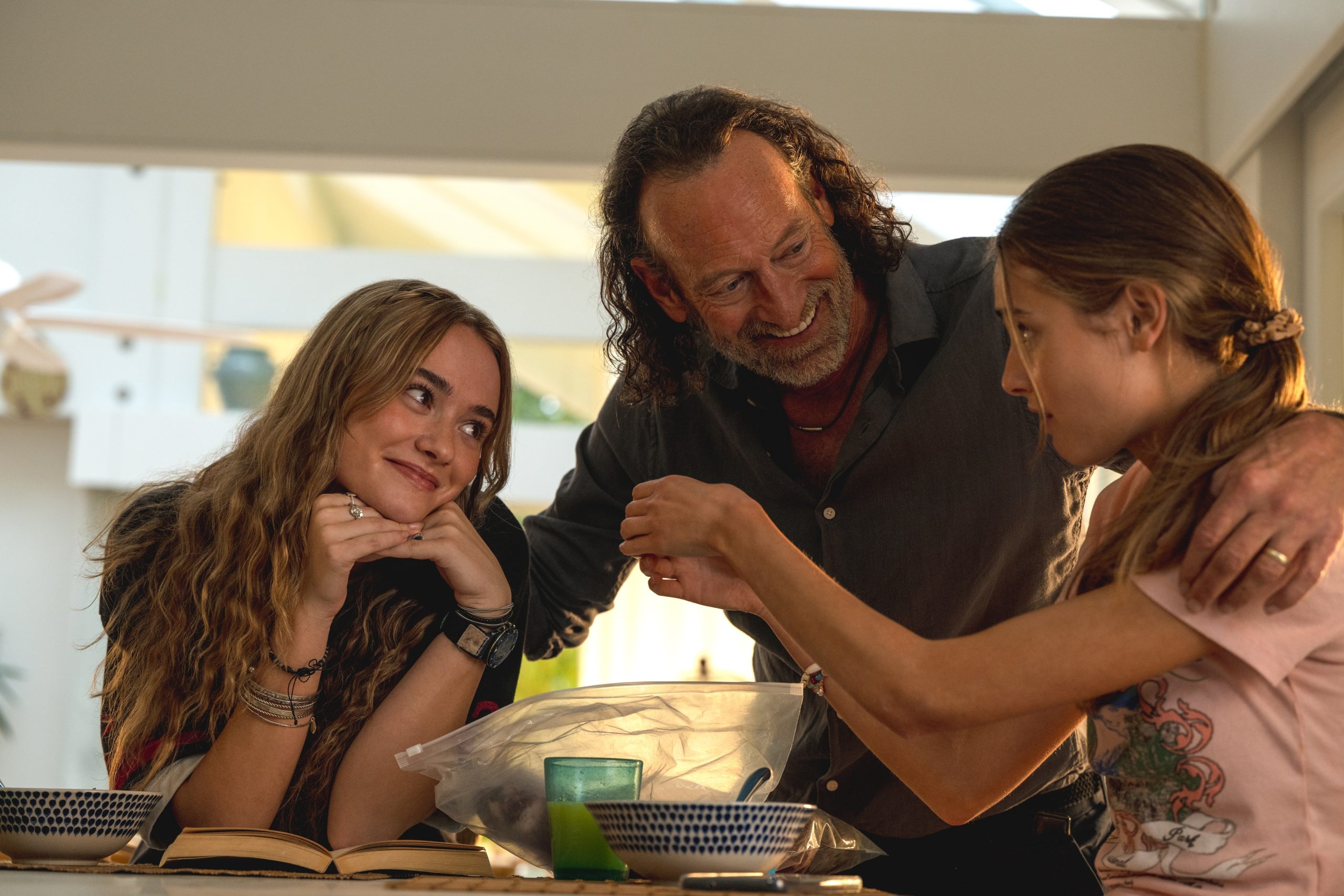
Johannes Roberts returns to creature feature genre with Primate post-Resident Evil. On the heels of 2021’s Resident Evil: Welcome to Raccoon City, Roberts delivers a serviceable B-movie mechanics within the bounds of this psychologically twisted material.
Despite January’s bad reputation for studio dumping of projects—Primate knows exactly what it is and delivers unpretentious mayhem anchored by convincing creature work from movement specialist Miguel Torres Umba and prosthetics supervisor Chris Fitzpatrick. While the film lacks the emotional depth that might elevate it beyond genre exercise, Roberts and co-writer Ernest Riera demonstrate clear understanding of their monster movie playbook and aren’t averse to having fun with it.
Roberts is best known for the 2017 Mandy Moore shark thriller 47 Meters Down, and he sticks to the creature feature template of perfunctory character introduction before unleashing virtually nonstop carnage. The question becomes whether audiences willing to accept a killer chimp premise will find enough thrills to justify the narrative shortcomings.
Lucy (Johnny Sequoyah) invites lifelong friend Kate (Victoria Wyant) to join her at the luxurious Hawaiian cliffside home of her writer father Adam (Troy Kotsur), surrounded by lush rainforests. Kate gives Lucy an unwelcome surprise by inviting along pushy Hannah (Jessica Alexander), who draws attention from rowdy frat boys Drew (Charlie Mann) and Brad (Tienne Simon) on the flight. Hannah gets under Lucy’s skin when she comes on strong with Kate’s brother Nick (Benjamin Chang), despite picking up on Lucy’s longtime crush on him.
The only relationship that truly matters is Lucy’s bond with younger sister Erin (Gia Hunter), who resents being left alone with their dad to grieve their late mother. Mom was a linguistics professor studying human-chimp communication ability, which explains how Ben became the family pet. But Ben gets a nasty bite from a mongoose found shredded on the floor of his enclosure and goes full freakout. With Adam away at an author event, the teens are left to fend for themselves as casualties quickly pile up.
Johnny Sequoyah carries the film as Lucy, providing enough grounded humanity to anchor the mayhem even when the screenplay fails to give her adequate psychological depth. Her chemistry with Gia Hunter creates believable sisterly dynamics that provide the film’s only genuine emotional stakes.
Troy Kotsur brings his Oscar-winning gravitas to Adam, though the role feels underwritten beyond providing touching vulnerability in sequences where his deafness prevents him from hearing the bloodthirsty chimp approaching. There’s a nail-biting sequence showcasing Kotsur’s physicality as Adam returns home unable to hear Ben loping up behind him, creating genuine suspense through his perspective.
Jessica Alexander makes Hannah appropriately irritating as the shady friend audiences await seeing punished, while Charlie Mann and Tienne Simon provide comic relief as dopey frat boys. Mann gets hilariously terrible dialogue when Ben pounces on him: “C’mon, take me out to dinner first.”
Miguel Torres Umba deserves significant credit for bringing Ben to life through movement and mime work in the monkey suit. The physicality convinces, as do the animal strength, agitated shrieking, and sudden explosions of violent rage—even if the masks and prosthetics often recall the headgear worn in 2024’s bizarre Robbie Williams bio-musical Better Man, requiring considerable suspension of disbelief.
Roberts works with cinematographer Stephen Murphy to create visual language that captures both the paradisiacal Hawaiian setting and claustrophobic terror as the teens become trapped in increasingly confined spaces. The photography makes excellent use of the luxurious home’s architecture, from louvered closet doors to the pool area where the kids take refuge knowing chimps can’t swim.
Production designer Simon Bowles creates an Architectural Digest-worthy home that becomes a demolition site as Ben rampages through, providing satisfying destruction of bourgeois comfort. Costume designer Verity Hawkes keeps the college kids appropriately dressed for tropical vacation turned survival horror.
Prosthetics supervisor Chris Fitzpatrick works with creature FX designers Neil Gorton and Kate Walshe to create Ben’s transformation from beloved pet to frothing maniac, with makeup effects that sell the rabies-induced rage. Special effects supervisor Jonathan Barass and on-set visual effects supervisor Dan Pearson coordinate practical and digital effects to create genuinely nasty kills as Ben tears chunks out of humans and finds increasingly gnarly disposal methods.
Editor Peter Gvozdas maintains swift pacing that builds toward formulaic showdown where the sacred family unit must defeat the drooling predator. The editing particularly shines during jump scares and attack sequences, though some scenes feel rushed when character development might have benefited from breathing room.
Adrian Johnston’s score supports the tension without overwhelming, hitting expected horror beats while occasionally finding moments of melancholy for the traumatized animal turned ruthless savage by factors beyond his control.
Roberts has cited Cujo as major inspiration, and just as many dog lovers found that Stephen King adaptation emotionally distressing, chimp sympathizers will likely flinch at this grisly bout of monkey madness. Audiences with sensitivity toward animals whose wild instincts have been stifled by human intervention might see this as a cross between James Marsh’s soulful Project Nim and the terrifying sitcom chimp incident in Jordan Peele’s Nope. But the screenplay fails to muster much compassion for Ben beyond Lucy and Erin’s initial horror at killing him.
The skillfully rebooted Planet of the Apes franchise has coaxed audiences to think of simian brethren as complex creatures with significant brain power, but Primate treats Ben strictly as a killing machine, as cunning as he is unrelenting. The script is too psychologically undernourished to make audiences invest in characters or feel sympathy for the beloved family member turned savage.
Setting the thriller in Hawaii—the only rabies-free U.S. state—represents clever thinking, though the cursory reaction of a laboratory veterinarian after Adam sends the mongoose for testing raises questions about how seriously animal authorities take maintaining that status.
There’s still fun to be had with Roberts’ film despite narrative weaknesses. Cute moments—both amusing and sinister—involving a speech-generating device Ben has been taught to use (“Lucy. Bad.”) provide dark comedy. Ben smashing through a louvered closet door where Lucy and Kate hide seems direct homage to Jack Nicholson’s “Here’s Johnny!” moment from The Shining or Michael Myers destroying the flimsy closet shielding Jamie Lee Curtis in Halloween.
The film gets its share of asinine wit, though unless you’re Jason Statham, it’s hard to get away with exclaiming “Oh, Donkey Kong!” to a ferocious beast intent on ending you. Brad approvingly yells “These girls sure know how to party!” while entering what looks like an Architectural Digest demolition site.
Primate delivers exactly what audiences expect from January creature features—unpretentious thrills, nasty kills, and B-movie energy that doesn’t pretend to be anything more. While it lacks the emotional sophistication to become memorable beyond genre exercises, Roberts demonstrates continued competence with horror mechanics and creature work that justifies the price of admission for audiences seeking bloody mayhem.
DIRECTOR: Johannes Roberts
SCREENWRITERS: Johannes Roberts & Ernest Riera
CAST: Johnny Sequoyah, Jessica Alexander, and Troy Kotsur, Victoria Wyant, Gia Hunter, Benjamin Cheng, Charlie Mann, Tienne Simon, Miguel Torres Umba