Danielle Solzman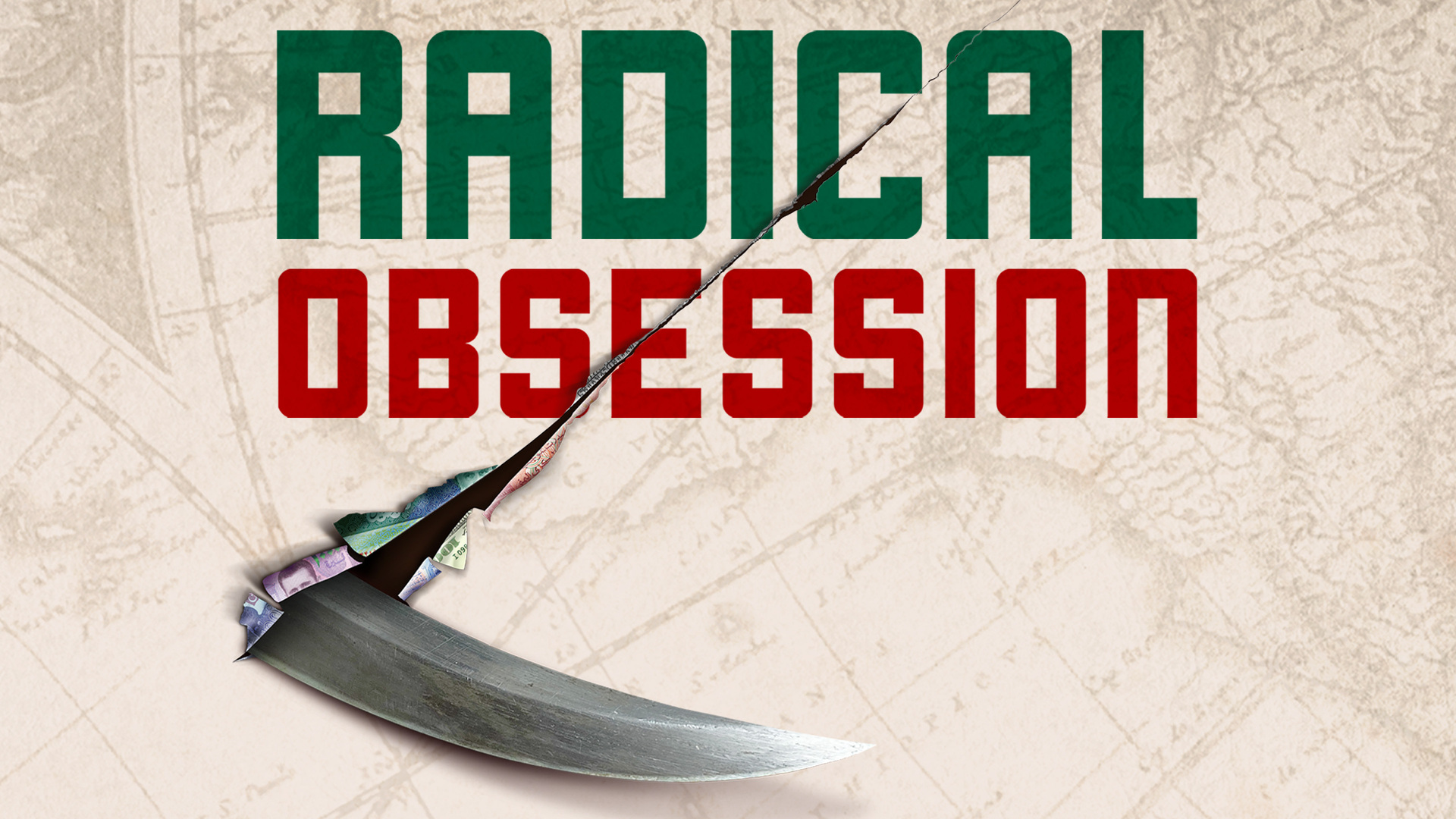
Barry Avrich’s 2020 documentary Radical Obsession explores Iran’s transformation into an Islamic theocracy and its mission of state-sponsored terrorism.
February 11, 1979 marked the moment the Iranian Revolution (or Islamic Revolution, if you will) hardened into the Islamic Republic of Iran, setting off a rapid transformation that would permanently alter global security. Under Ayatollah Khomeini, a regime rooted in clerical rule overturned regional power structures, reignited sectarian conflict across the Muslim world, and embraced terrorism as a central instrument of state policy—exporting fear and violence far beyond Iran’s borders.
Unlike most revolutions, Iran’s Islamic Revolution was not the result of economic collapse, military defeat, or a failed war. It emerged from dissatisfaction with a ruler who was replaced by something far worse. The real question is not how the revolution happened, but why the regime that followed has endured. Radical Obsession takes us back to the beginning.
Any serious accounting begins in the 1950s, when the United States and Britain helped overthrow democratically elected Prime Minister Mohammad Mossadegh after he nationalized the Anglo-Persian Oil Company. Radical Obsession explains how the Shah’s return brought modernization and Western alignment, but also repression, displacement, and growing resentment. By the late 1970s, unrest boiled over and many Iranians turned to exiled cleric Ruhollah Khomeini as an alternative, unaware of what his return would bring.
By September 1978, compromise was no longer possible. Black Friday saw the Iranian army fire on protesters. The Shah fled soon after, generals were executed, and the military was dismantled. Once the Islamic government consolidated power, there was no path back.
The revolution was widely believed to be democratic. Under Ayatollah Ruhollah Khomeini, it quickly became something else entirely. Religious conformity was enforced, women were forced to wear headscarves, and dissent was crushed. The illusion of democracy remained—presidents, parliament, councils—but real power rested solely with the Supreme Leader, chosen by the Assembly of Experts and exercising authority over the judiciary, Guardian Council, Expediency Council, military, and IRGC.
This concentration of power fueled an aggressively anti-Western and anti-American state ideology. In November 1979, Muslim Student Followers of the Imam’s Line seized the U.S. embassy in Tehran, holding hostages for 444 days (see Argo). Moderates were sidelined, and the revolution radicalized further.
Radical Obsession explains how the Sunni–Shia divide predates the modern Middle East, but the Islamic Republic has exploited it relentlessly. With roughly 85% of Muslims identifying as Sunni and 15% as Shia, sectarian competition has fueled wars in Syria and Yemen and destabilized countries including Egypt, Lebanon, Sudan, and Iraq. Iran has not merely taken sides—it has actively inflamed the conflict.
Geography explains much of the regional response. Radical Obsession shows Saudi Arabia and Israel have become focal points as Iran encircles them through proxy forces. The Islamic Republic remains the principal state backer of Hamas, Hezbollah, and the Houthis, exporting violence well beyond its borders.
According to Amb. Alberto Fernandez, Iran uses politics, corruption, money, war, and terrorism in order “to accomplish its foreign policy aims.”
“Iran is the godfather of state-sponsored terrorism,” argues historian Dr. David Crist.
Lebanon became a proving ground. During its civil war, the Islamic Republic aligned with Hezbollah in 1982, providing money, weapons, and training. The group waged a guerrilla war against Israel throughout the 1980s. The U.S. embassy in Beirut was bombed in 1983, followed by the destruction of a Marine barracks by a truck bomb—both directed by the Islamic Republic. What unfolded in Lebanon could fill an entire documentary on its own.
Radical Obsession shows how the pattern continued. The Iran-Contra affair saw arms exchanged for hostages. Hezbollah carried out the 1992 bombing of the Israeli embassy in Argentina and the 1994 AMIA attack, the deadliest terrorist attack in Argentine history. In 1996, Hezbollah killed U.S. Air Force personnel in Saudi Arabia.
Because Radical Obsession was released n 2020, it cannot address Hezbollah’s later weakening or the subsequent 2024 collapse of Bashar al-Assad’s regime in Syria. Hamas, though Sunni, receives Iranian backing due to its commitment to Israel’s destruction. The Egyptian Muslim Brotherhood also aligned with Tehran, as did Al-Qaeda, despite sectarian differences—a strategic partnership driven by shared hostility toward the United States. Osama bin Laden’s family later sought refuge in Iran.
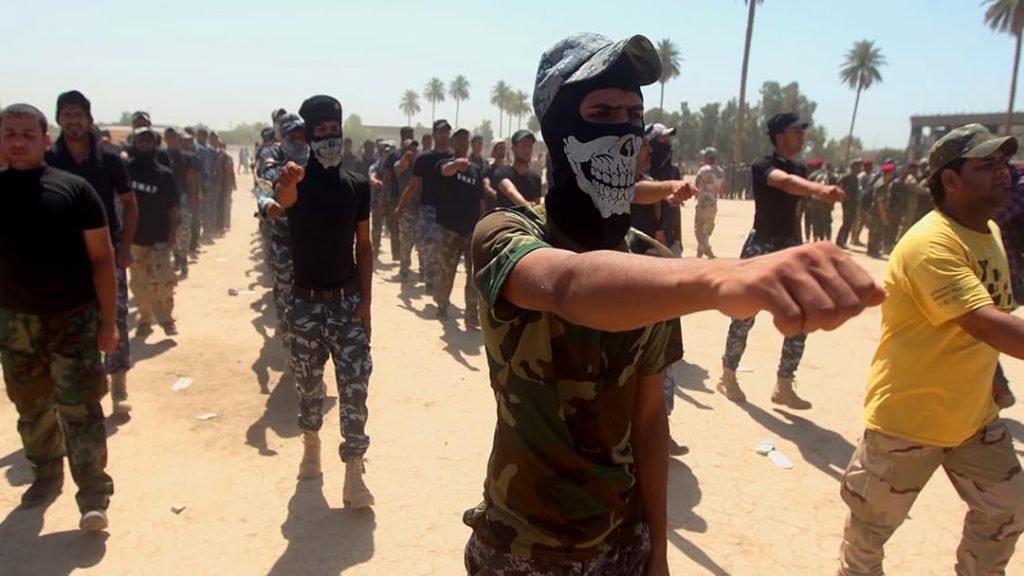
After 9/11 and its invasion of Afghanistan, the United States turned its focus to Iraq instead of Iran. Saddam Hussein was removed, the Sunni Iraqi Army dismantled, and power shifted to Shiite forces. The consequences were catastrophic. Al-Qaeda in Iraq emerged in 2004, later rebranding as ISIS, which seized a third of Iraq in a single day in 2014.
Iran’s proxy network extends well beyond the Middle East, reaching Argentina, Peru, Los Angeles, Detroit, New Jersey, and Toronto.
“When you have a large, aggressive power with hegemonic designs on the Middle East and beyond, we should be concerned about what it’s doing because its aspirations have shown what a danger it is,” says Amb. Alberto Fernandez.
What we know from watching Radical Obsession is that Iran has exerted influence over Iraq, Gaza, Lebanon, Syria, and Yemen, effectively surrounding Saudi Arabia. The Houthis—an insurgency representing a small fraction of Yemen’s population—received an estimated $25 million annually from the IRGC beginning in 2010, later disrupting global shipping in the Red Sea following October 7.
Radical Obsession does nor ignore how the 2015 Iran Nuclear Agreement was widely viewed as weak. Sanctions relief granted Iran access to roughly $100 billion in frozen assets. President Obama claimed it blocked Iran’s path to a nuclear weapon. Critics argued it merely delayed the inevitable.
The Trump administration designated the IRGC a terrorist organization in 2017 and withdrew from the deal in 2018. Whether this improved U.S. leverage remains an open question. Iran responded by intensifying internal repression as protests were met with lethal force.
Iranians continue to pay with their lives. Yet many voices that mobilized loudly for other causes have remained silent in support of Iranian protesters. The contrast is difficult to ignore, especially after two years of seeing anti-Israel protests on both the left and the right. The people you would think would say something about the current anti-government protests have… managed to lose their voice.
In Radical Obsession’s final moments, Robert Baer warned that “the only threat to Israel now is Hezbollah and Iran,” predicting another war in Lebanon. That war arrived after Hamas’s October 7 attack, which left 1,200 murdered and 251 taken hostage. Baer later described the worst-case scenario as “an Armageddon in the Middle East.”
Sam Faddis offered a similarly chilling forecast:
“The Iranians are vocally talking about how the next battlefield will be in Israel, not against Israel, but inside of Israel. There will be a war which will involve Shia forces, Hezbollah plus allies from Iraq that will invade Israel. I mean, they’re very explicit about their agenda. Their agenda is to exterminate the Jewish people and cleanse the earth of Israel, in their terminology.”
Radical Obsession’s copyright dates to 2018, underscoring how much has unfolded afterward. None of it occurred in a vacuum. One central actor continues to be minimized in discussions of why the region remains locked in perpetual conflict. Perhaps this is why so many leftists, feminists, etc. have gone silent while Iranians are protesting against the Islamic Republic regime.
Radical Obsession makes clear that the Islamic Republic endures because it has mastered both internal control and external influence. Its Supreme Leader wields absolute authority, its proxies spread violence across continents, and its ideology continues to inflame sectarian and geopolitical tensions. Radical Obsession is a stark reminder that the roots of today’s crises run decades deep and that the consequences of missteps—foreign and domestic—are still unfolding. How long can this regime maintain its grip? Who will hold it accountable? And how many more lives will be lost before the world reckons with the threat it poses?
FREE IRAN FROM THE AYATOLLAHS!
DIRECTOR: Barry Avrich
SCREENWRITER: Graeme Ball
NARRATOR: Colm Feore
FEATURING: Abbas Milani, Amb. Alberto Fernandez, As’ad Abukhalil, Banafsheh Keynoush, Dan Diker, Daniel Byman, David H. Ucko, Dr. Amichai Magen, Dr. David Crist, Dr. Karin von Hippel, Dr. Laila A. Wahedi, Gen. Wesley K. Clark, Graeme Wood, Janine Di Giovanni, Jeff Faux, Lesley Hazleton, Martha Crenshaw, Dr. Matthew Levitt, Meir Javedanfar, Nazila Fathi, Phil Gurski, Prof. Tahir Abbas, R.P. Eddy, Raffaello Pantucci, Robert Baer, Sam Faddis, Sebastian Rotella, Timothy Naftali, Yossi Melman
Melbar Entertainment Group released Radical Obsession on digital on July 21, 2020. Grade: 4.5/5
Please subscribe to The Solzy Report and visit Dugout Dirt.