Danielle Solzman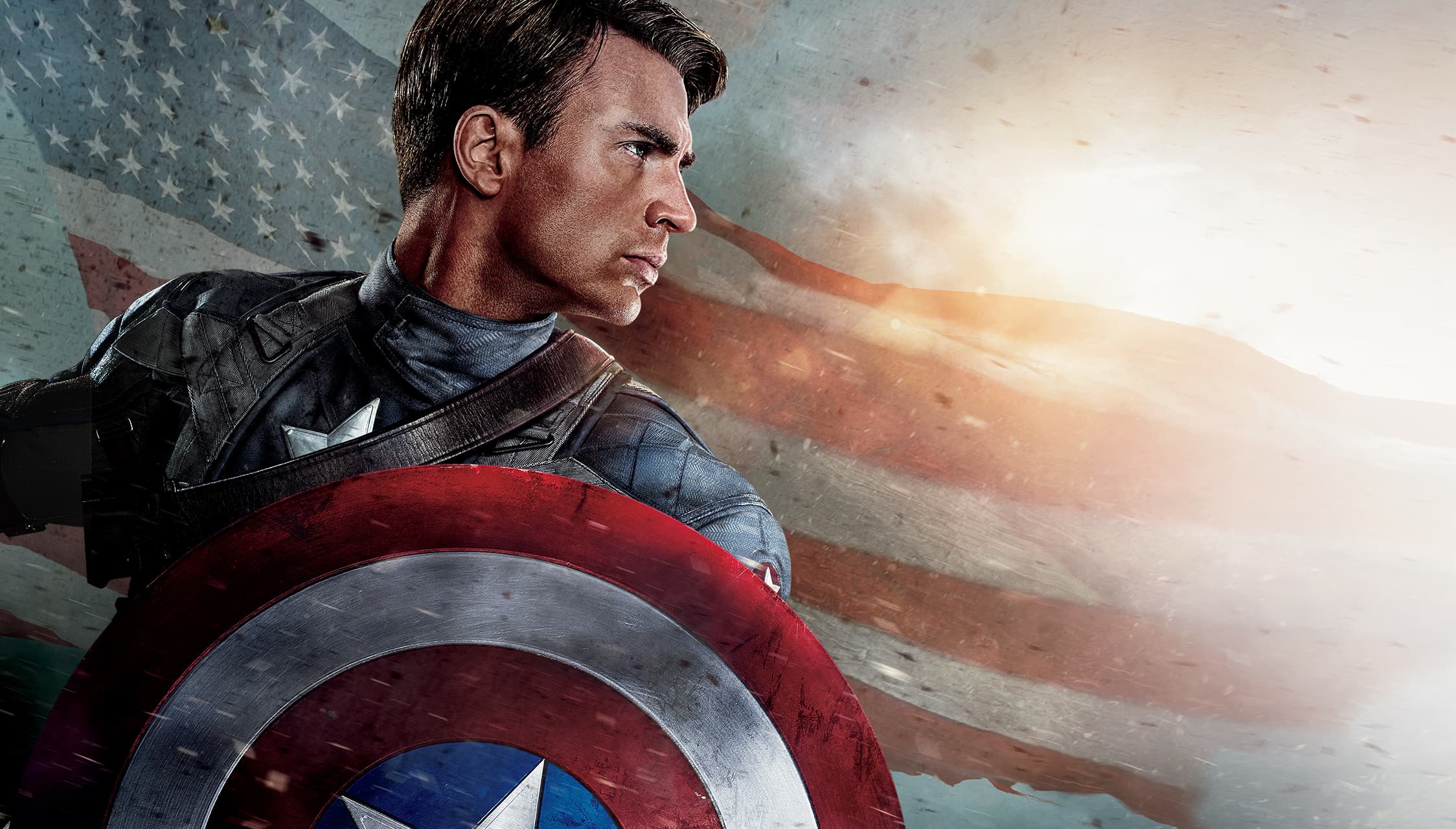
I didn’t grow up reading comic books or even watching the cartoons, but I later grew up to embrace heroes like Captain America.
I grew up watching Lois & Clark: The New Adventures of Superman on television, loving the idea of the hero long before I understood the history behind the panels. It goes without saying that Dean Cain would only let me down years after the fact. But this is where others rose up and filed the void.
It wasn’t until high school and college—after the early 2000s Marvel movies pulled me into the library and comic book stores—that I started reading the stories themselves.
By the time I finished my master’s thesis, I wasn’t just a fan. I was studying comic books against the backdrop of American political culture—how heroes rise, who they answer to, and what they say about the country imagining them.
That’s when Captain America and Superman stopped being just characters to me.
I’ve watched Captain America: The First Avenger, Captain America: The Winter Soldier, and Captain America: Civil War more times than I can count—even meeting Chris Evans when he attended C2E2 2023. Even outside the suit and far from the set, he embodies what it means to be Captain America. This is why I rewatched Captain America: The First Avenger last night.
And somewhere between the panels, the screenings, and the real people who carry these symbols into the world, those heroes became something else to me.
They became questions.
When the Shield Stops Being a Shield
This week, another American is dead after an encounter with federal immigration agents in Minneapolis.
Alex Pretti was 37 years old. A nurse. A U.S. citizen. According to witness videos verified by NBC News, he was holding a phone, not a weapon, when he stepped in to help someone who had been pushed to the ground by masked agents conducting an operation on Nicollet Avenue.
Federal officials said their agents acted in self-defense.
But at least four eyewitness videos tell a different story. The footage shows Pretti filming, speaking to officers, and physically placing himself between an agent and a person who had fallen on the curb. It shows pepper spray being used. It shows a scuffle on the pavement. It shows an officer reaching into the scrum and emerging with a gun moments before shots are fired. Pretti collapses. He does not get back up.
This was the second killing involving federal immigration agents in Minneapolis in a matter of days. The first was when Renée Good was murdered after she was shot multiple times while clearly driving away from ICE agents.
Why This Is Personal
My second great-grandmother was murdered by the Nazis. So were both of my paternal great-grandfather’s sisters and in some cases, their children.
My family history is not abstract. It is not a metaphor. It is a record of what happens when state power stops seeing people and starts seeing categories—when force stops being a last resort and becomes a tool of policy.
That doesn’t mean America is Nazi Germany. History is not a copy-and-paste exercise. But it does mean I recognize the warning signs of something dangerous: secrecy, lack of accountability, shifting public narratives, and the normalization of civilian deaths as collateral to an “operation.”
When witness videos and official statements tell two completely different stories, the problem is not just what happened on the street. The problem is what happens to trust. And that’s what brought me here.
When ICE starts acting in ways that draw comparisons to the Gestapo, something fundamental has broken. What we are seeing in America right now is not normal. It’s time to cut ICE’s funding and demand real accountability—because no more American lives should be lost to federal agents.
Shortly after Pretti’s death, Attorney General of the United States Pam Bondi sent a letter to Minnesota’s governor demanding an end to sanctuary policies, access to voter rolls, and records from public assistance programs. Is this really necessary or is it just another way for Trump and his administration to pursue political enemies?
Minneapolis Mayor Jacob Frey embodied the ideals of Captain America when he responded with a different kind of message:
“I just saw a video of more than six masked agents pummeling one of our constituents and shooting him to death. How many more residents, how many more Americans need to die or get badly hurt for this operation to end? How many more lives need to be lost before this administration realizes that a political and partisan narrative is not as important as American values?
“How many times must local and national leaders plead with you, Donald Trump, to end this operation and recognize that this is not creating safety in our city? We have seen these kinds of operations in other places, in other countries, but not here in America, not in a way where a great American city is being invaded by its own federal government. […]
“So, to everyone listening, stand with Minneapolis. Stand up for America. Recognize that your children will ask you what side you were on. Your grandchildren will ask you what you did to act to prevent this from happening again, to make sure that the foundational elements of our democracy were rock solid. What did you do to protect your city? What did you do to protect your nation? This is not what America is about. This is not a partisan issue. This is an American issue.
“This administration and everyone involved in this operation should be reflecting. They should be reflecting right now and asking themselves, what exactly are you accomplishing?
“If the goal was to achieve peace and safety, this is doing exactly the opposite. If the goal was to achieve calm and prosperity, this is doing exactly the opposite. Are you standing up for American families right now or are we tearing them apartment?
“The invasion of these heavily armed, masked agents roaming around on our streets of Minneapolis, emboldened with a sense of impunity, it has to end. This is not how it has to be.
“So to President Trump, this is a moment to act like a leader. Put Minneapolis, put America first in this moment. Let’s achieve peace. Let’s end this operation and, I’m telling you, our city will come back. Safety will be restored. We’re asking for you to take action now to remove these federal agents.”

What Heroes Are Supposed to Represent
Captain America’s shield is not a weapon. It’s a promise. It says: I will stand between you and harm. Even if that harm comes from my own side.
Superman’s greatest power isn’t flight or strength. It’s restraint. He could impose order. He chooses to protect freedom instead.
Those aren’t comic book values. They’re civic ones. They’re the difference between a government that exists to serve the people and a force that exists to control them.
The Line We Don’t Cross
No matter where you stand on immigration policy, borders, or enforcement, there is a line that should not blur.
No operation is routine when it leaves civilians dead in its wake.
Witnesses should not be dismissed when their cameras contradict official statements.
Federal power should not operate without meaningful oversight, transparency, and accountability.
This is not about left versus right. It’s about whether we still believe that the strongest among us are measured by what they won’t do.

Choosing the Better Story
Every country tells itself a story about who it is. Ours has always liked to cast itself as the hero. But the real test of that story isn’t how we act when we’re afraid of an enemy. It’s how we act when we hold all the power.
Steve Rogers once said, “I don’t like bullies. I don’t care where they’re from.” That line works because it isn’t patriotic. It’s moral. And morality doesn’t wear a uniform. It doesn’t carry a badge. It doesn’t answer to a press secretary. It lives—or dies—in the choices we make when someone weaker is on the ground, and someone stronger is standing over them.
Steve Rogers/Captain America will return in Avengers: Doomsday on December 18, 2026.
Please subscribe to The Solzy Report and visit Dugout Dirt.