Danielle Solzman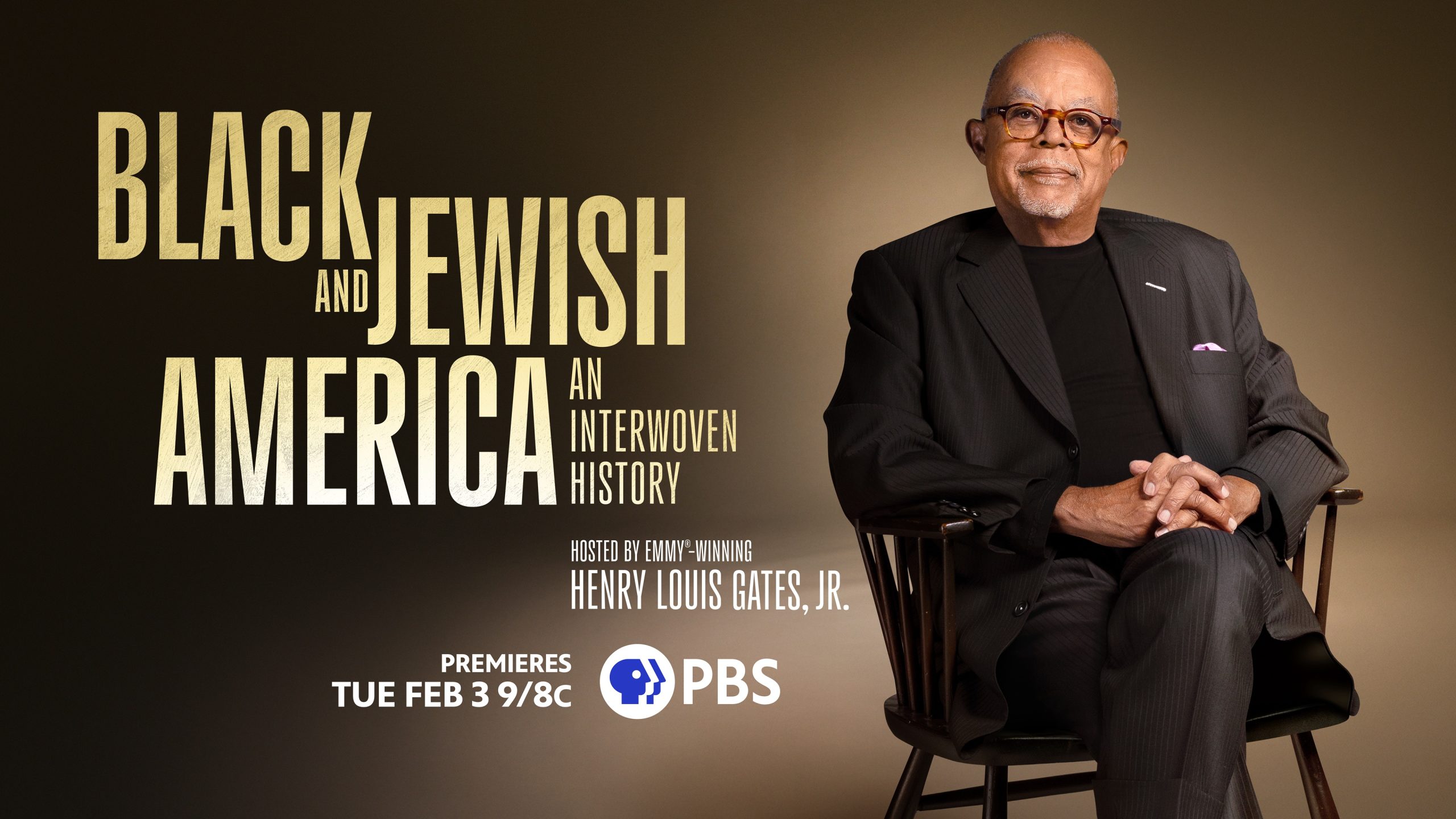
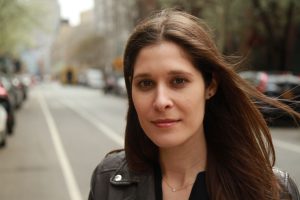
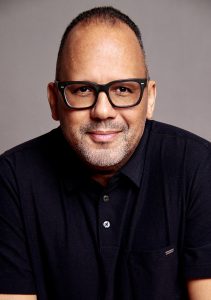
Co-executive producers and directors Phil Bertelsen and Sara Wolitzky shared insights about their work on Black and Jewish America: An Interwoven History.
They discussed how they became involved with the project, the production process, and the careful curation of stories highlighting intersections between Black and Jewish histories. Phil and Sara shared examples from the series, including immigration, jazz, Billie Holiday, and civil rights moments, and reflected on the challenges of fitting complex histories into the limited runtime. They also described outreach efforts and their goal of engaging broader audiences, providing context, representation, and deeper understanding of these intertwined communities.
Black and Jewish America: An Interwoven History is a four-part PBS documentary series examining the complex relationship between Black and Jewish Americans. United by shared struggles against racism and antisemitism, they built civic and cultural connections, particularly during the civil rights era. The series highlights both the challenges and enduring promise of this alliance.
Black and Jewish America: An Interwoven History premieres February 3, 2026, at 9:00 PM ET on PBS, PBS.org, and the PBS app. The four-part series will run for three consecutive Tuesdays through February 17.
It’s so nice to meet you. How are you doing?
Phil Bertelsen: Good. Danielle, how are you?
A bit on the chilly side.
Sara Wolitzky: Yes.
Phil Bertelsen: Yeah, that’s true.
Sara Wolitzky: We all are here in New York.
Yeah, I’m in Chicago. It’s not much better.
Sara Wolitzky: Oh, even worse, I’m sure, yeah. Maybe worse, yeah.
Yeah, the lake just makes it really worse. How did you first become attached to working on Black and Jewish America?
Phil Bertelsen: Well, we both have had history with Dr. Gates and his earlier work. Sara, in particular, with his executive producer, Dyllan McGee. I, with some of his history series, as well as Finding Your Roots, and so when the opportunity came to tell these distinct histories in the same—shall we call it dual biography—I leapt at the chance.
So, that’s how I came to be involved.
Sara Wolitzky: Yeah, same. I have a long history working with our executive producer, Dyllan McGee, and sometimes with Dr. Gates. This was just a perfect project, combining the long-standing Black History series he does with this new aspect of it, with the relationship with Jewish Americans, and with something close to my heart, so I was very excited to have the chance to be a part of it.
When did the production process, or pre-production, I guess, really get underway?
Sara Wolitzky: Pre-production, probably winter of 2023 was even when we started working on—maybe not pre-production, but the research process started, and then got it into more earnest in maybe the spring of 2024. Spring of 2024 is when Phil came on board, and put together the rest of our production team, which we intentionally designed to be both Black and Jewish team members in pairs. We started filming in the fall of 2024.
Yeah. There’s a lot of ground to cover in the Black and Jewish America. What was the decision process that went into what got covered, and what ultimately ends up getting left out?
Phil Bertelsen: Well, the curation of the stories had everything to do with these flashpoints in our histories. The ones we gave favor to, had some intersection between Black and Jewish communities, or a reflection of the experience of Blacks and Jews. You take immigration, for example, and the wave of Jewish immigrants that came out of Europe in the early 20th century was matched by the wave of migration of African Americans coming out of the South.
We tell those distinct but parallel stories, and then focus on how it impacted particularly urban centers in America, and the subsequent 20th century history that where our histories were really tightly woven, up until this day. It had everything to do with both reflective and intersectional histories of our communities.
Sara Wolitzky: Yeah, and like anything—for instance, in episode 2, when we talk about jazz and the early American songbook and film—you could tell 20 different stories or mention 100 different figures there. But at the end of the day, it’s also, which have the best stories that are representative of the larger whole, have archival materials, right?
Our scholars who we’re interviewing have the most to say to flesh out certain ones, but we hope—there’s a lot on the cutting room floor, either in research or even from the filming and interviewing, but, we hope that what’s left is representative of the whole, and the most both important milestone ones and lesser-known interesting ones that are surprises.
You could probably have a gazillion books or other documentaries on film and music alone.
Sara Wolitzky: Alone, yes.
Phil Bertelsen: This is true.
Sara Wolitzky: That’s how we felt.
Yeah.
Phil Bertelsen: A lot of that’s on the cutting room—
Sara Wolitzky: Four hours is not as long in the end as you think, yeah. (Laughs) That was a big challenge.
On that note, this was the first time I heard about Billy Crystal having any kind of connection to Billie Holiday.
Sara Wolitzky: Sure.
Phil Bertelsen: Yeah, it’s a wild story, and one of my favorite stories of the whole series. His uncle, Milt Gabler, and his courage to produce a record that nobody wanted to touch, even though Billie was just ensconced the RCA label at the time. He had to create his own independent label in order to do it.
And then to promote it in this club, Cafe Society, which I just wish I could have transported myself to that period and spent a night listening to that song, sung by her, in this thoroughly integrated crowd. It was just such a time.
Is there something that everyone wanted to keep in, but couldn’t find that right place in the series?
Phil Bertelsen: That’s a great question. I know, for me, I was eager to tell the story of how historically Black colleges and universities made a place for Jewish intelligentsia who had to leave Europe, leave their careers as educators and academics behind, and were not accepted in traditional universities to teach, but were widely accepted at HBCUs.
That story was one I wish we could have told more effectively, and it gets to the curatorial piece of it. If we didn’t have the right story, the right witnesses, it just was hard to kind of tell it in its fullness. And so rather than tell just a piece of it, we had to leave it behind.
Sara Wolitzky: A great example.
Once you get into 1967 and then 1975 with that awful UN resolution, some of the pivotal years—if I didn’t see the Bayard Rustin biopic a few years ago, I probably wouldn’t have ever heard of him until seeing his name pop up when I was watching the screeners this week.
Phil Bertelsen: Oh, so you did get to see—were you seeing clips? You saw clips? Or what did you—
They have all four episodes available.
Sara Wolitzky: Oh, good. Oh, okay.
Phil Bertelsen: Oh, great. Yeah.
Sara Wolitzky: Yeah. That piece of history, that stretch of history in the 70s, and the Black Americans in Support of Israel Committee, and Rustin and this old guard of the Civil Rights Movement’s attempt to stand up for Israel at that point is really, I think, an interesting and lost piece of history.
Even just the resolution itself and history repeating itself. And so, yeah, I think this whole purpose of this whole series is excavating all of the—we tend to have these conversations in the present moment in this really kind of siloed way, where we’re only thinking about what’s happening now, but all of these layers of history is what’s underlying all these really complex conversations we’re having.
It was really important to us in this moment in particular to provide audiences with this much deeper, hundreds of years’ worth of sense of how we got to where we are, and hopefully that helps inspire where we can move in the future.
Yeah. Given my own lived experience over these last two years and change, is there any worry about the people that need to watch this and aren’t gonna watch this because it has the word Jewish in the title?
Sara Wolitzky: Well, there’s a huge outreach component of this. There’s even separate funding for the engagement, community engagement, schools, organizational piece of this. Luckily, Dr. Gates comes with a built-in audience and sense of trust that he’s developed over the years doing these series, doing Finding Your Roots.
I think some early reactions we’ve seen when the series was announced was sort of, I’m skeptical, but I’m gonna withhold judgment until I watch. You trust your work from the past, so I think we’re hoping that, given that, we’ll have a big reach to begin with.
Our team at large is doing a lot of work to bring this into as many real spaces as possible to reach some younger people that might not be PBS’s traditional audience through some different type of social media products, and so we’ll see. But we’re certainly hoping to, yes, not just to preach to the choir, but to reach a much broader audience.
Black and Jewish America: An Interwoven History premieres February 3, 2026, at 9:00 PM ET on PBS, PBS.org, and the PBS app, and it will run for three consecutive Tuesdays through February 17.
Please subscribe to The Solzy Report and visit Dugout Dirt.