Danielle Solzman
Loosely inspired by the 1949 British film Kind Hearts and Coronets, one man puts a long-laid plan into motion to claim his inheritance in How to Make a Killing.
Out of favor with his family from before he was even born, Becket Redfellow (Glen Powell) is determined to claim his $28 billion inheritance—no matter how many relatives stand in the way.
When Becket’s mother, Mary (Nell Williams), told her father Whitelaw (Ed Harris) that she was pregnant out of wedlock with a cellist’s (Damien Wantenaar) child, the authoritarian head of the Redfellow family gave her a stark choice: give up the unborn baby and remain in the family’s good graces, or keep the child and be forever disowned. Mary’s decision set the stage for a decades-long revenge scheme, one that would eventually allow Becket to claim the family inheritance. Despite these circumstances, Mary made sure to raise Becket with the grace, education, and refinement of the aristocrat he could have been, planting the seeds for his eventual plan.
I’ve yet to watch Kind Hearts and Coronets, but with the recent 4K UHD release as part of the Alec Guinness Masterpiece Collection, I’m long overdue for a viewing. That earlier film was based on the 1907 novel Israel Rank: The Autobiography of a Criminal by Roy Horniman. While the original story concerned a dukedom, this modern adaptation is all about the money—and about just how far Becket is willing to go to stake his claim. I’ve avoided watching the trailer as has become customary over the years, although the film’s poster already hints at its darkly comic premise.
How to Make a Killing places Glen Powell squarely in morally gray territory, a role unlike anything we’ve seen from him in Top Gun: Maverick, Hit Man, or Anyone but You. With undeniable acting chops and commanding screen presence, it’s only a matter of time before he’s on the same level as the likes of Tom Hanks or George Clooney. Even when Becket is navigating the most morally questionable—and at times deadly—situations, Powell manages to make him relatable enough that the audience finds themselves rooting for him anyway.
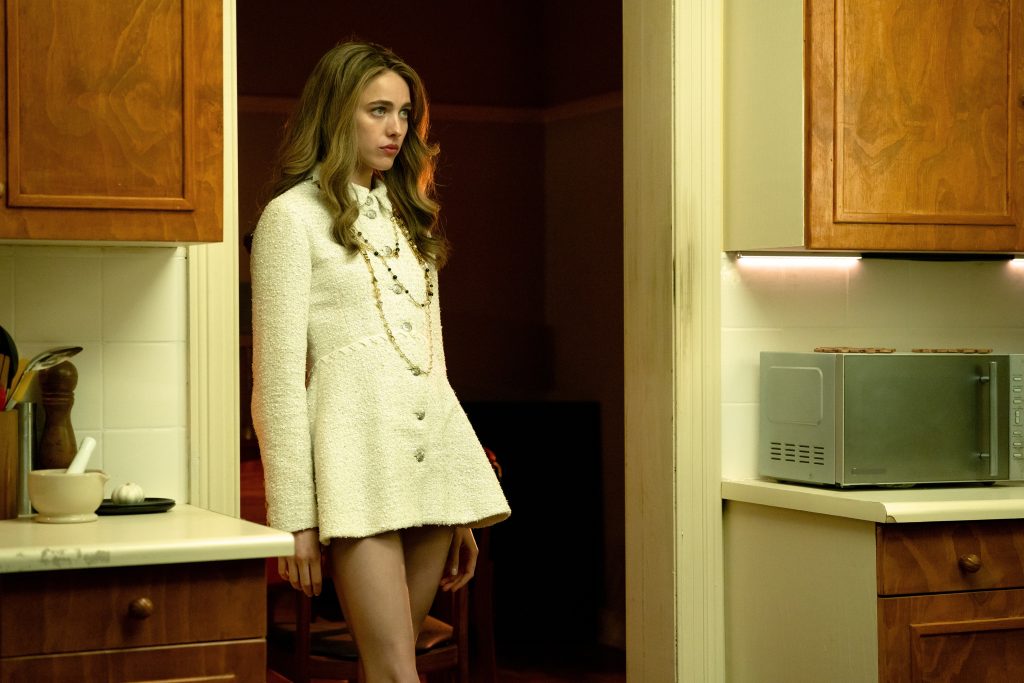
On-screen, Powell has strong chemistry with his costars. Julia Steinway (Margaret Qualley) reenters Becket’s life years later, engaged to another man, while he also encounters Ruth (Jessica Henwick). Julia behaves like a classic femme fatale (updated for present day), her manipulations making Becket’s flaws seem almost forgivable in comparison. For much of the film, it’s easy to forget just how morally ambiguous Becket’s actions are, because Qualley’s Julia is so entertainingly complex.
From the opening scenes, the film has the audience rooting for Becket to succeed—sometimes against the very people who stand in his way. Are his uncles, aunts, and cousins equally guilty of marginalizing him after his mother’s disownment, or does Whitelaw bear sole responsibility for the circumstances that shaped Becket’s life? These questions simmer beneath the surface throughout How to Make a Killing’s 105-minute runtime, keeping viewers engaged and morally conflicted.
John Patton Ford’s screenplay first appeared on The Black List over a decade ago under the title Rothchild, a choice that was problematic given its antisemitic undertones. Early casting plans with Shia LaBeouf and antisemitic bigot Mel Gibson thankfully did not materialize, and in the post-pandemic years, How to Make a Killing ultimately found its footing with a strong ensemble cast, giving life to what might have otherwise been a more controversial project.
How to Make a Killing is a darkly comic thriller with plenty of laughs, suspense, and morally gray fun. Glen Powell carries the film with charm and precision, and the supporting cast adds depth to a story that’s as entertaining as it is twisted.
DIRECTOR/SCREENWRITER: John Patton Ford
CAST: Glen Powell, Margaret Qualley, Jessica Henwick, Bill Camp, Zach Woods, with Topher Grace and Ed Harris
A24 will release How to Make a Killing in theaters on February 20, 2026. Grade: 3.5/5
Please subscribe to The Solzy Report and visit Dugout Dirt.