Danielle Solzman
There’s a moment in the recent New Yorker interview with John Lithgow where he tries to explain away the controversy surrounding his decision to join HBO’s upcoming Harry Potter series. According to Lithgow, the issue of J.K. Rowling’s views “came up after everything was already underway.” It’s a neat, convenient framing—one that suggests unfortunate timing rather than conscious choice.
It’s also incredibly difficult to believe.
By now, Rowling’s anti-trans rhetoric is not niche knowledge. It hasn’t been buried in obscure essays or confined to fringe platforms. Since her widely circulated 2020 essay, her views have been the subject of sustained global coverage, industry debate, and public backlash. This isn’t a story that flared up and disappeared—it’s one that has persisted, escalated, and remained impossible to ignore for anyone even casually engaged with media, let alone someone working at the highest levels of the entertainment industry.
John Lithgow is not an emerging actor disconnected from cultural discourse. John Lithgow is an 80-year-old veteran of stage and screen, a thoughtful performer who has built a reputation on intelligence and intentionality. He reads scripts carefully and evaluates roles deeply. He absolutely understands the cultural weight of the projects he takes on.
Which is precisely why his explanation doesn’t hold up.
Because the timeline matters.
Rowling’s views became widely known in 2020. The backlash wasn’t fleeting—it included sustained criticism, advocacy responses, and, notably, public statements from key actors associated with the original Harry Potter films. Figures like Daniel Radcliffe, Emma Watson, and Rupert Grint all spoke out in support of trans people, implicitly or explicitly distancing themselves from Rowling’s rhetoric.
That cultural rupture didn’t happen quietly. It was headline news.
And yet, development on HBO’s reboot moved forward after all of this. Casting didn’t seriously begin until 2024—years after Rowling’s views had become a defining part of her public identity. By that point, choosing to participate in a new Harry Potter project wasn’t a neutral act. It was a decision made in full view of the controversy, not in ignorance of it.
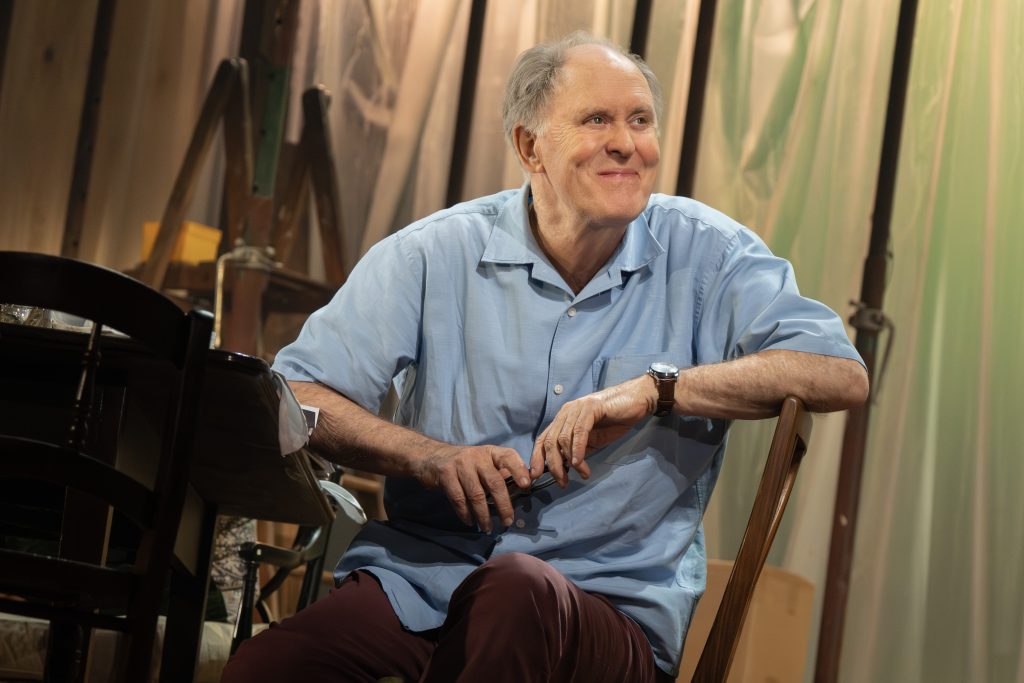
John Lithgow Knew Exactly What This Meant
Even Lithgow’s own words undermine the idea that he was somehow unaware. He admits he was urged to walk away. He acknowledges disagreement with Rowling. But ultimately, John Lithgow decided that the “reasons to do it were much, much stronger than the reasons to protest.”
That’s not ignorance. That’s a value judgment.
And it’s one worth interrogating.
Because this isn’t simply an abstract debate about separating art from artist. That argument has existed for decades, applied to antisemitic figures like Roald Dahl or even Richard Wagner—artists whose harmful views, while reprehensible, are part of history. The difference here is immediacy. Rowling is alive. Rowling is active. Rowling continues to use her platform and resources in ways that many see as directly harmful to trans people.
Supporting a new Harry Potter adaptation in 2026 isn’t engaging with a completed body of work from a complicated historical figure. It is actively contributing to the ongoing expansion of a franchise whose creator remains deeply involved—and financially benefited.
That context matters.
It also makes the existence of this series feel less like a creative necessity and more like a corporate inevitability. Warner Bros. is not reviving Harry Potter because the story demands retelling. The original films were massively successful, culturally dominant, and remain widely accessible. This new series exists because intellectual property is king, and familiar brands are safer investments than new ideas.
But even within that reality, individuals still make choices.
John Lithgow made a choice.
And that choice carries weight—not just because of the project itself, but because of who John Lithgow is. This is an actor whose career has been defined by thoughtful performances, moral complexity, and a certain level of artistic credibility. When John Lithgow signs onto something, it lends the project legitimacy. It signals that this is more than just another franchise extension.
Which is why his involvement matters—and why it disappoints.
This decision doesn’t erase John Lithgow’s legacy. Decades of extraordinary work don’t simply disappear. But it does complicate that legacy in a way that feels entirely avoidable. It ties his name, however indirectly, to a cultural moment that many trans people and allies experience not as abstract debate, but as something personal and ongoing.
And that’s the part that’s hardest to ignore.
No one involved in this series gets to claim surprise—not in 2024 when casting started, not after years of coverage, not after colleagues and peers spoke out. The information was there. The conversation was loud. The stakes were clear.
John Lithgow didn’t miss it.
He chose to move forward anyway.
Please subscribe to The Solzy Report and visit Dugout Dirt.