Danielle Solzman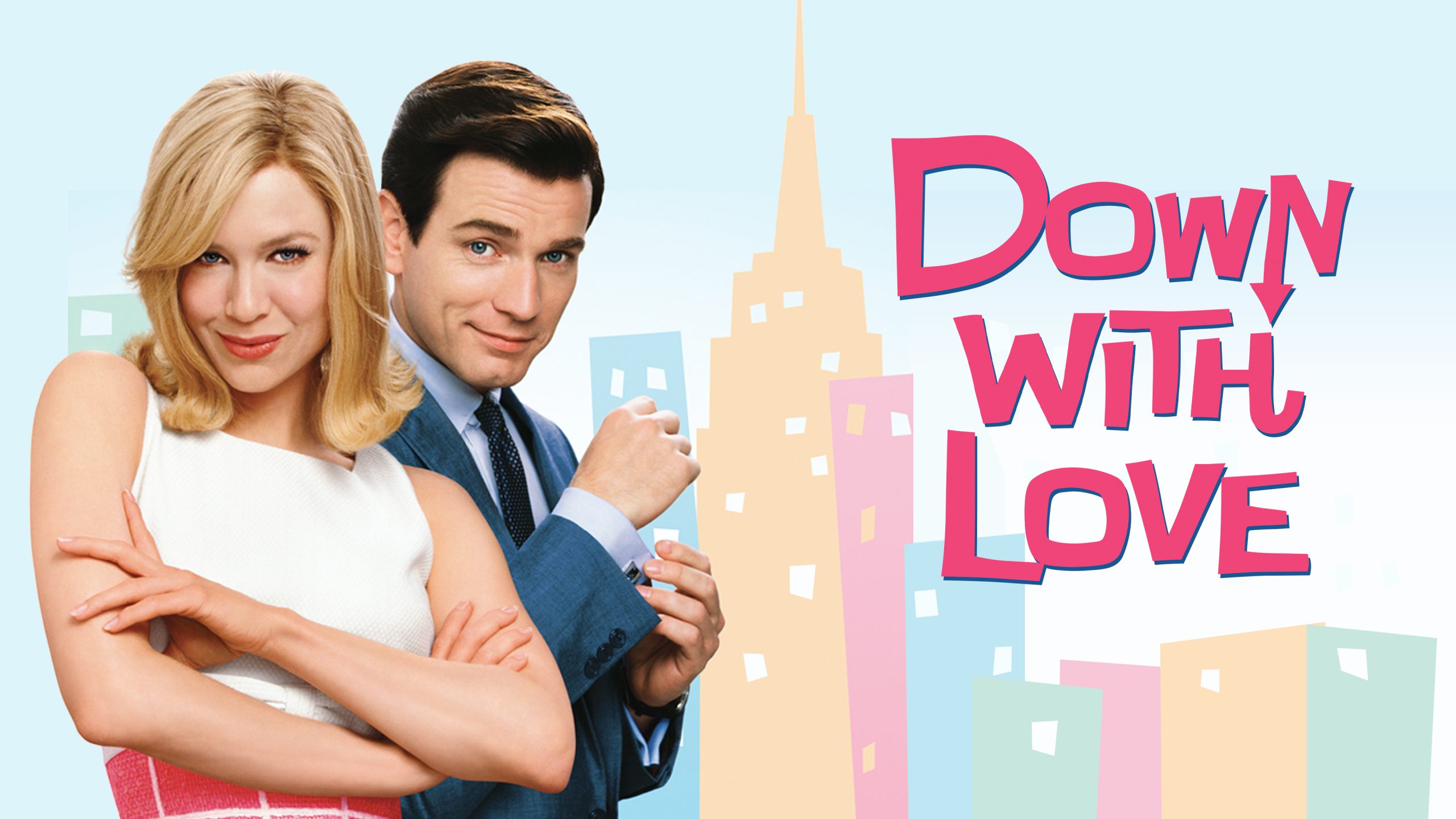
Renée Zellweger and Ewan McGregor teamed up in 2003 for Peyton Reed’s Down with Love, a glossy homage to the no-sex sex comedies of the 1960s.
Set in 1962 New York, Down with Love follows aspiring author Barbara Novak (Renée Zellweger), who arrives at Banner House Publishing to promote a provocative book encouraging women to reject love, embrace independence, and pursue sex without commitment. With help from her editor Vikki Hiller (Sarah Paulson), Barbara engineers a media breakthrough that turns her into a cultural phenomenon, sparking a nationwide shift in gender dynamics. As women adopt her philosophy, men—especially notorious ladies’ man and journalist Catcher Block (Ewan McGregor)—find themselves suddenly on the defensive.
Determined to expose Barbara as a romantic at heart, Catcher adopts a false identity: the naive Southern astronaut “Zip Martin.” As Zip, he courts Barbara under the guise of innocence, hoping to trick her into confessing her true feelings. However, the scheme becomes complicated when genuine emotions begin to surface. Meanwhile, Vikki and Catcher’s boss Peter MacMannus (David Hyde Pierce) navigate their own hesitant romance, shaped by misunderstandings and insecurities.
Catcher’s deception inevitably unravels, prompting Barbara to reveal a secret of her own—her entire persona was part of a calculated plan rooted in her past with him. As both confront the consequences of their manipulations, their battle of the sexes gives way to mutual understanding. In the end, they find a middle ground between love and independence, culminating in a whirlwind romance that inspires those around them to follow suit.
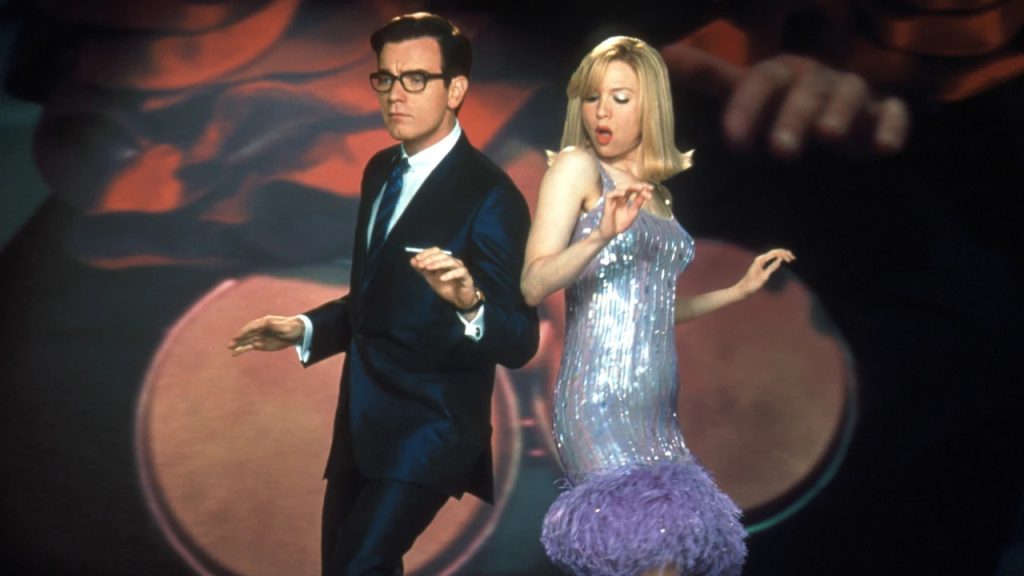
To understand Down with Love, one does not need to be too familiar with the Doris Day and Rock Hudson comedies. However, it would help to fully see what Eve Ahlert and Dennis Drake’s screenplay is going for. While seeing Pillow Talk and Lover Come Back would probably help, not having seen them might have actually played to my advantage because I didn’t see all the plot points coming outside of typical romantic comedy tropes.
“Here’s to Love” plays during the end credits, and this song doesn’t happen without Ewan McGregor suggesting it. After all, he had appeared in Moulin Rouge!, while Renée Zellweger earned her second Best Actress nomination for her performance in Chicago. Marc Shaiman and Scott Wittman did a stupendous job writing the song, even winking at what Down with Love is doing, with McGregor dropping to one knee to sing the line: “I’ll be your Rock if you’ll be my Doris.”
The script itself is full of hysterical moments. There’s a moment early on when Peter is measuring Catcher’s socks, only for his secretary to assume their conversation is about something else as she eavesdrops. She ultimately faints after Catcher tells Peter that he has “32 inches of confidence in every step” and stresses that he has two of them.
There are other lines, too, such as Vikki telling Peter:
“At one point, I had even convinced myself that life was all one big zany sex comedy and you had switched keys with the lead to use his swinging pad to snare me.”
Where Down with Love mirrors the 1960s no-sex sex comedies is in its setup: a woman advocating for female independence while combatting a lothario. On screen, the film reflects pre-sexual revolution attitudes and behavior. However, the script ultimately lands closer to modern, post-feminist ideas and attitudes of the early 2000s in how it ends. And yet, Zellweger and McGregor do their thing, elevating the film every step of the way.
As a nod to the period films that Down with Love is paying homage to, Tony Randall appears as publishing executive Theodore Banner, who is no fan of Novak’s book due to how his mistress now treats him. Randall thought the part was too short, so he was given additional material. Stepping into the neurotic best-friend role—previously occupied by actors like Randall or Gig Young—is David Hyde Pierce, whose character Vikki assumes to be gay. Jack Plotnick even spoofs the role that Chet Stratton played in Lover Come Back.
To bring early 1960s New York back to life, the filmmakers utilized green screens while filming Down with Love on the Universal Studios backlot, later replacing them with digital mattes. At other times, they used green screens and later inserted footage that they had planned to use by way of rear-screen projection to pay homage to 1960s filmmaking techniques. The initial plan didn’t work out, but they still incorporated footage from That Touch of Mink and My Man Godfrey in the background. The New York skyline seen at the end of the film was entirely created with CGI. To say that I loved the montage set to “Fly Me to the Moon” is not an understatement.
Peyton Reed describes the film as having “one foot in reality and one foot in sort of hyper-reality. It’s not the New York City of today, and it’s not even the New York City of the early ’60s.” What audiences see in the film is “New York City as seen through a Hollywood movie of that period.” In designing the sets across four stages from the ground up, production designer Andrew Laws wasn’t bound by spatial logic or realism. The key was to make it look like it had been produced in 1963.
The script includes specific references to the designers influencing the film’s wardrobe. Daniel Orlandi designed all the costumes for the principal cast, with every piece custom-made. The clothing is nothing short of stupendous—while technically new, it convincingly evokes vintage style. As an homage, Down with Love absolutely succeeds on the fashion front. Having Renée step out of Grand Central Station in bright pink ensures she stands out amid a sea of muted tones.
Marc Shaiman found Down with Love to be right up his alley. His score becomes a character in its own right, enhancing both the comedy and romance. In the early 1960s, scores were integral to storytelling, and the film embraces that tradition. Characters have their own musical themes, alongside the recurring “Down with Love” motif.
Phone calls are presented through split-screen technology, another stylistic homage to early 1960s cinema, complete with double entendres. Scheduling changes meant that Renée filmed her side first, with Ewan following weeks later. As a result, he had to carry the burden of bringing the same magic to his performance.
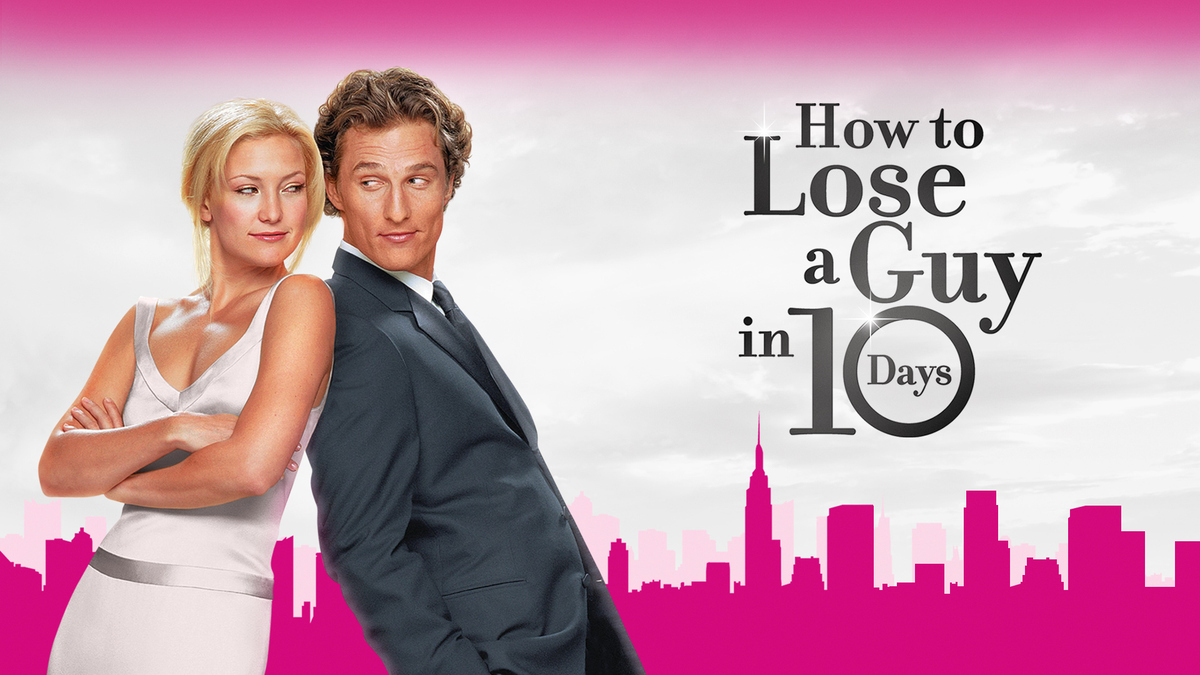
As far as 2003 rom-coms go, Down with Love didn’t perform as well as How to Lose a Guy in 10 Days or Something’s Gotta Give. While it earned $39.5 million against a $35 million budget, the film has since developed a cult following. I’m glad I’m discovering it now because I appreciate it even more after watching a number of classic comedies.
In the end, Down with Love is more than just an homage—it’s a film that fully understands the genre it’s celebrating and finds a way to make it feel fresh for a modern audience. Between its sharp screenplay, inspired performances, and meticulous attention to style, the film succeeds on every level it sets out to achieve. What could have been a simple throwback instead becomes something special, balancing satire and sincerity with ease. Simply put, Down with Love works, and it works beautifully.
DIRECTOR: Peyton Reed
SCREENWRITERS: Eve Ahlert & Dennis Drake
CAST: Renée Zellweger, Ewan McGregor, David Hyde Pierce, Sarah Paulson, and Tony Randall, Jeri Ryan, Ivana Miličević, Melissa George, Rachel Dratch, Florence Stanley, Chris Parnell, John Aylward, Jude Ciccoella
Fox 2000 released Down with Love in theaters on May 16, 2003. Grade: 5/5
Please subscribe to The Solzy Report and visit Dugout Dirt.