Danielle Solzman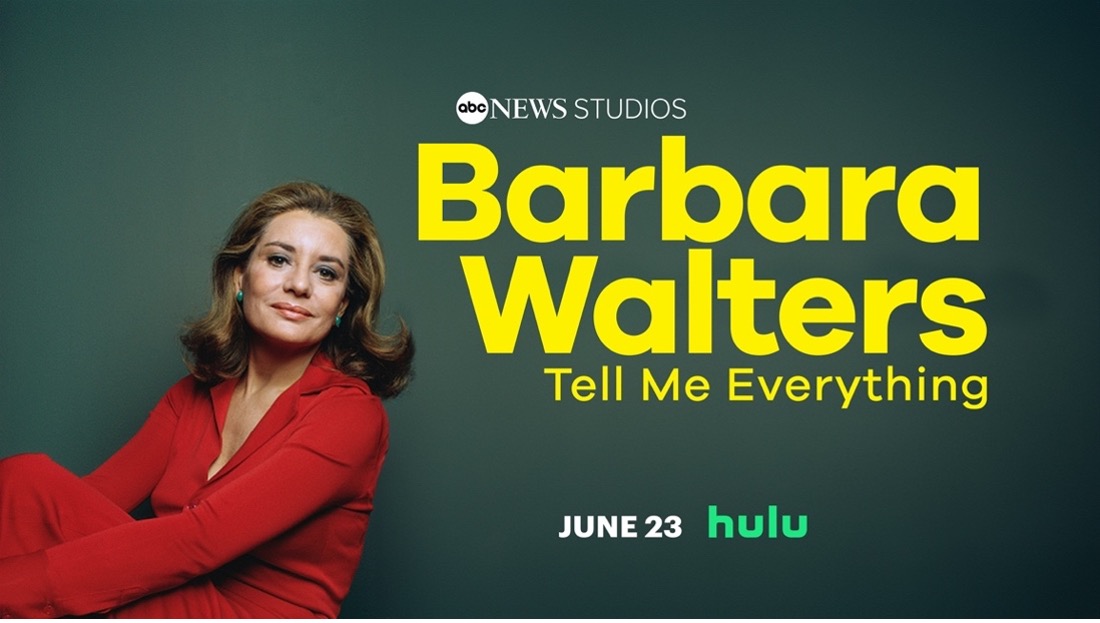
Barbara Walters: Tell Me Everything is a revealing and deeply personal portrait of a journalism icon who reshaped the media landscape and paid the price for it.
Barbara Walters was more than a journalist — she was a newsmaker and a pioneer who opened doors for women in television journalism. Barbara Walters: Tell Me Everything offers a candid, behind-the-scenes look at her remarkable career and personal journey, highlighting the struggles she faced while navigating life and work in a male-dominated field. Featuring Walters’ own reflections, the film explores the sacrifices that came with fame and the lasting impact she hoped to leave behind.
When Walters first joined The Today Show, she wasn’t hired to report the news but to write “women’s features.” As she recalls in the film:
“I was not what they were putting in front of the cameras. They were looking for models, actresses, and it was a male-dominated shop. It never occurred to me that I would be in front of the camera. I wasn’t beautiful, and I didn’t pronounce my Rs. But they needed someone they could hire cheap. I worked cheap.”
Her promotion from behind-the-scenes writer to on-air talent is one of the early turning points chronicled in Barbara Walters: Tell Me Everything, where we see how her ambition began to take shape. It wasn’t long before Walters was promoted to on-air reporter — a move that would eventually lead her to become one of the most recognized and respected names in news. As Katie Couric notes in the documentary, Barbara started with the so-called “soft” stories — the women’s stories — but she fought hard to be taken seriously. She wanted to be respected for her intelligence, not just her delivery.
If Barbara Walters hadn’t made that push, she might never have become the broadcast journalism legend we know today and Barbara Walters: Tell Me Everything would not exist. She fought to write her own questions, edit her own stories, and take on the kinds of interviews typically reserved for her male colleagues. But the downside of being a trailblazer in the 1960s and ’70s was living through constant sexism — and having no real outlet to speak up. Instead, Walters quietly endured, building a legacy for future generations of women journalists, whether she realized it at the time or not.
Her personal life, especially her relationship with her daughter, is only briefly touched on. Jackie declined to appear in the film, which is understandable, though it leaves a small emotional gap in an otherwise thorough portrait. Barbara Walters was a working mother at a time when that choice was still taboo. Barbara Walters: Tell Me Everything doesn’t shy away from these complications.
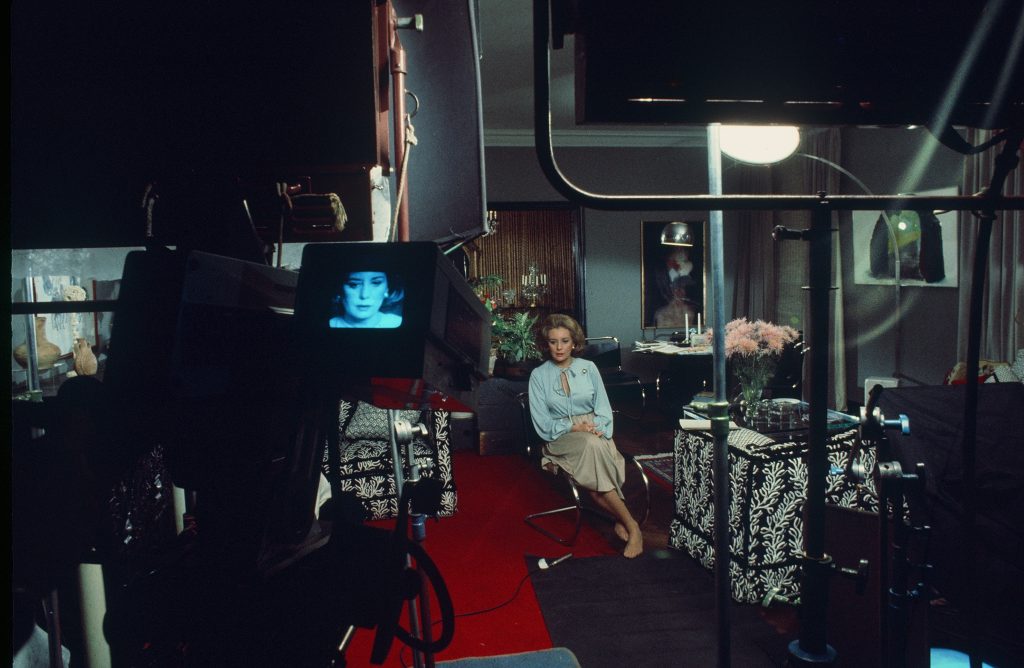
Barbara Walters: Tell Me Everything tracks her groundbreaking move to ABC in 1976, where she became the first woman to co-anchor the ABC Evening News, joining Harry Reasoner, on a five-year, $5 million contract. The chemistry wasn’t there, and the partnership ended in 1978 — but the damage to her reputation could have been worse if not for Roone Arledge, who gave her a second life as a roving correspondent. She soon made headlines of her own by securing interviews with Egyptian President Anwar Sadat and Israeli Prime Minister Menachem Begin — outmaneuvering Cronkite and Chancellor in the process.
That ability to land major interviews would become her calling card. Barbara Walters: Tell Me Everything highlights this through both archival footage and commentary from longtime ABC News colleagues. Her specials became known for their celebrity-focused format — something that was seen as unserious by critics at the time. But as Disney CEO Bob Iger says in the film, Walters was ahead of her time:
“She had a vision back then that celebrities are news. She was criticized in that regard, because she actually believed, and I think she turned out to be right, that they were news makers. She was practicing the art of journalism when she was interviewing them.”
Her time on 20/20 forms a significant chunk of Barbara Walters: Tell Me Everything, showcasing how her interview style evolved across decades and subjects. Reuniting with Hugh Downs on 20/20 allowed Walters to continue conducting those signature interviews. From Fidel Castro to Oprah Winfrey, her subjects often revealed more than they had intended. Oprah recalls her own emotional 1988 interview, when she broke down on air after saying she didn’t want to cry. That conversation, she says, made it easier to open up later on her own show.
But Walters’ career wasn’t free of tension behind the scenes. Barbara Walters: Tell Me Everything makes sure that we know that Walters had a strained working relationship with Peter Jennings, who never accepted her as an equal. And her dynamic with Diane Sawyer is addressed directly — though Sawyer doesn’t appear in the film. Several colleagues, including Cynthia McFadden, speak to the complex rivalry and emotional toll it took on Walters.
“She couldn’t tolerate Diane Sawyer rise in what she saw as a direct challenge to what she had accomplished,” McFadden says. “What a sadness. Talk about the death of joy. I think it tore into all those parts of herself where she felt as a child she was an outsider. In some bizarre way, Diane made her feel all those insecurities all over again. If Barbara Walters couldn’t see what she brought to the party, wow. Let’s learn from that, ladies. But that drive that had gotten her there, that–it wasn’t a switch she could flip. She was gonna show them that she was the better woman, that she was the better booker to get bigger numbers.”
The race to land exclusives became fierce in the 1990s, especially with interviews like the Menendez brothers and, most famously, Monica Lewinsky. It took Walters and her team nearly a year to secure that sit-down. The 20/20 special aired only once, drew massive ratings, and remains one of the most-watched interviews in television history. Lewinsky’s participation in the documentary adds valuable insight into what it meant to be interviewed by someone like Barbara Walters — both daunting and oddly reassuring.
“It was a way to get a lot of attention for a network,” Couric says of going after sensational journalism in the 1990s. “And attention led to ratings, ratings led to dollars, and dollars led to happy executives.”
Barbara Walters: Tell Me Everything highlights the creation of The View in 1997 as a bold reinvention late in her career — one that extended her influence into a new generation of television. Later parodied by SNL, the show became a surprising cultural force, offering a platform for unscripted, often provocative conversations among women from different backgrounds. Walters stayed on as co-host until her 2014 retirement, continuing to make occasional appearances into 2015. Her final public appearance came in 2016; she passed away in 2022 at age 93.
Things have changed dramatically since Barbara Walters came up through the ranks. It’s not just that news itself has evolved — social media has completely transformed the landscape. By the time an interview airs today, the discourse has already played out online. In this climate, the role of the old-school broadcast journalist has diminished. As Oprah notes in the film, “Nobody needs an interviewer to get them to tell the story anymore, because they’ve already told it.” If Walters were starting out now, her entire approach might feel obsolete — a sobering thought for someone who once defined the very form.
Importantly, Barbara Walters: Tell Me Everything is not a Wikipedia-style overview. Director Jackie Jesko weaves together unseen archival footage from the ABC News archives with modern-day interviews to create a film that feels both intimate and authoritative. The first third is largely devoted to Walters’ professional rise, before pivoting to her upbringing — a childhood shaped by a showbiz father, a sister with developmental disabilities, and a need to prove herself in every room she entered.
A particularly poignant moment in Barbara Walters: Tell Me Everything comes from Oprah, who shares that Walters’ complicated relationship with motherhood influenced her own decision not to have children. It’s one of several scenes that emphasize Walters’ influence not just as a journalist, but as a woman whose choices rippled far beyond the newsroom.
Though journalism has shifted drastically since Walters’ heyday, Barbara Walters: Tell Me Everything reminds us of the deep craft, control, and presence required to shape the news — not just report it. And then there’s the striking historical footnote: Barbara Walters, Anne Frank, and Dr. Martin Luther King Jr. were all born in 1929. But of the three, only Walters lived a full life — a life that changed American media forever.
In a world where interviews are now self-produced, filtered, and commodified in real time, Barbara Walters: Tell Me Everything reminds us of a time when asking the right question — and really listening to the answer — was an art form in itself.
DIRECTOR: Jackie Jesko
FEATURING: Cindy Adams, Joy Behar, Connie Chung, Martin Clancy, Andy Cohen, Katie Couric, Peter Gethers, Bob Iger, Lori Klein, Monica Lewinsky, Cynthia McFadden, Bette Midler, Victor Neufeld, David Sloan, Katie Nelson Thomson, Chris Vlasto, Oprah Winfrey
Hulu released Barbara Walters: Tell Me Everything on June 23, 2025. Grade: 4/5
Please subscribe to Solzy on Buttondown and visit Dugout Dirt.