Danielle Solzman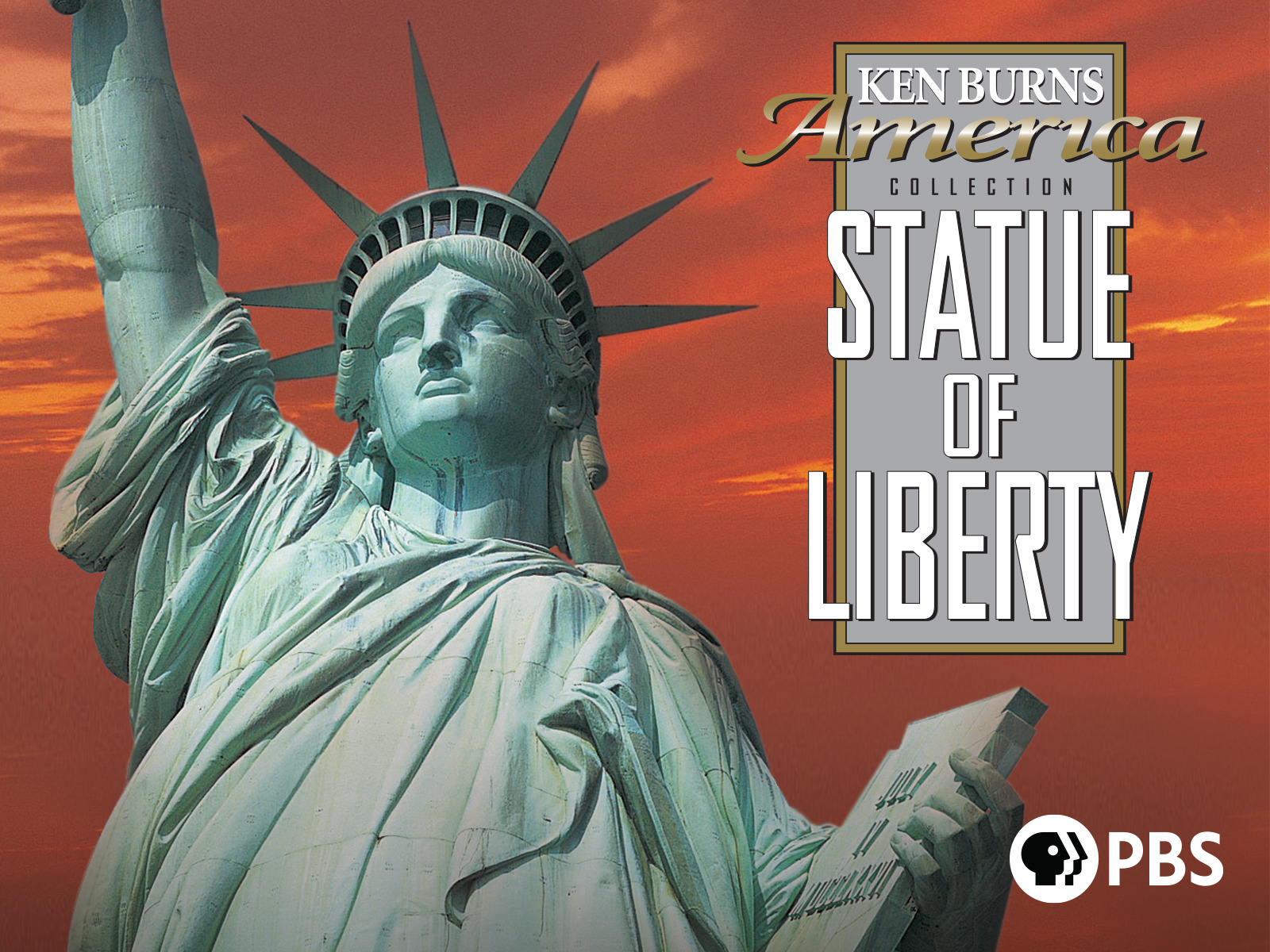
In his third documentary, Ken Burns takes a look back at the construction and legacy of Laboulaye’s gift to America, The Statue of Liberty.
This was my first viewing of the Ken Burns documentary. A decade ago, the hour-long film might have come off as informative or even educational. What happened first is that I visited Liberty Island in 2015 and then I went back again in 2023 in the years after the opening of the new state-of-the-art museum. But in between the two visits, a documentary, Liberty: Mother of Exiles, premiered on HBO in 2019. While both documentaries are different in what they are trying to accomplish, a good amount of the film does not feel new to me.
Burns draws on interviews with historians, writers, politicians, immigrants, and as it turns out, another filmmaker, Miloš Forman. The interviews are woven in with photos, comics, newsreels, and other live-action footage about its construction and significance. One immigrant family that Burns visits in Brighton Beach–I kid you not–is the Vindmans. My initial thought was to wonder if it was the same Vindman family. It’s certainly not a name that I hear often but sure enough, it is them! What are the odds of the Vindmans popping up in a 1985 documentary on the Statue of Liberty?!?
Back in 1865, French lawyer Édouard René Lefèbvre de Laboulaye first proposed constructing a monument for America’s 1876 centennial. He wanted to gift something to America that would honor its democracy, the work of the late President Abraham Lincoln, and maybe even inspire the French with regards to liberty. France was recovering from Napoleon Bonaparte’s dictatorship. Following the establishment of the Franco-American Union, sculptor Frédéric Auguste Bartholdi came on board. After visiting America, the sculptor eyed Bedloe’s Island as the future home of “La Liberté éclairant le monde” (“Liberty Enlightening the World”). Or as we know it today, the Statue of Liberty. It soon becomes a question of not just raising the funds but how do you transfer a massive statue from France to New York Harbor. American mistrust did not help any favors.
French commoners donated money to help with the construction. Meanwhile, Gustave Eiffel would be innovative with designing a skeleton. But with no statue pedestal on what would become Liberty Island in 1956, they had nowhere to put the darned thing! New York World publisher Joseph Pulitzer would intervene by calling on Americans to donate money to complete construction on the pedestal. His call was answered by over 120,000 contributing–their names and testimonials were printed in the newspaper as Pulitzer raised $100,000 to complete the pedestal. Emma Lazarus wrote her now-famous poem to help with the fundraising efforts. In 1886, the Statue of Liberty would finally be dedicated on October 28, 1886. It’s hard to believe but at 305 feet one inch, it was the tallest structure in the US at its dedication. The Washington Monument is 555 feet while the Gateway Arch stands at 630 feet tall.
President Grover Cleveland presided over the dedication ceremony, which surprisingly did not mention immigrants. Not only this but only two women were included during the ceremony. Senator William M. Evarts was talking when Bartholdi accidentally unveiled the face. Unfortunately, Édouard René Lefèbvre de Laboulaye was not alive to see the dedication, having died in 1883. Still though, the day was not without its protests: women didn’t have the right to vote, Jim Crow ruled the south as Reconstruction ended in 1877.
There is something that I did learn from watching the film. It turns out that Americans and French pronounce Gustave Eiffel’s name differently. Americans pronounce Eiffel like Eye-Fel. The film uses the French pronunciation of Eiffel’s name so that really through me off. It’s kind of like discovering how Pittsburgh residents pronounce Andrew Carnegie’s name.
The Statue of Liberty shows how this monument came to represent both freedom and the American Dream, even as America still has work to do.
DIRECTOR: Ken Burns
SCREENWRITERS: Bernard A. Weisberger, Geoffrey C. Ward
NARRATOR: David McCullough
FEATURING: Mario Cuomo, Barbara Jordan, James Baldwin, Jerzy Kosinski, Vartan Gregorian, Ray Charles, Carolyn Forché, Sol M. Linowitz
VOICE CAST: Jeremy Irons, Derek Jacobi, Paul Roebling, Arthur Miller, Miloš Forman, Tucker Burr, Wendy Tilghman, Camilla Rockwell
PBS aired The Statue of Liberty on October 28, 1985. Grade: 3.5/5
Please subscribe to Dugout Dirt and Solzy on Buttondown.