Danielle Solzman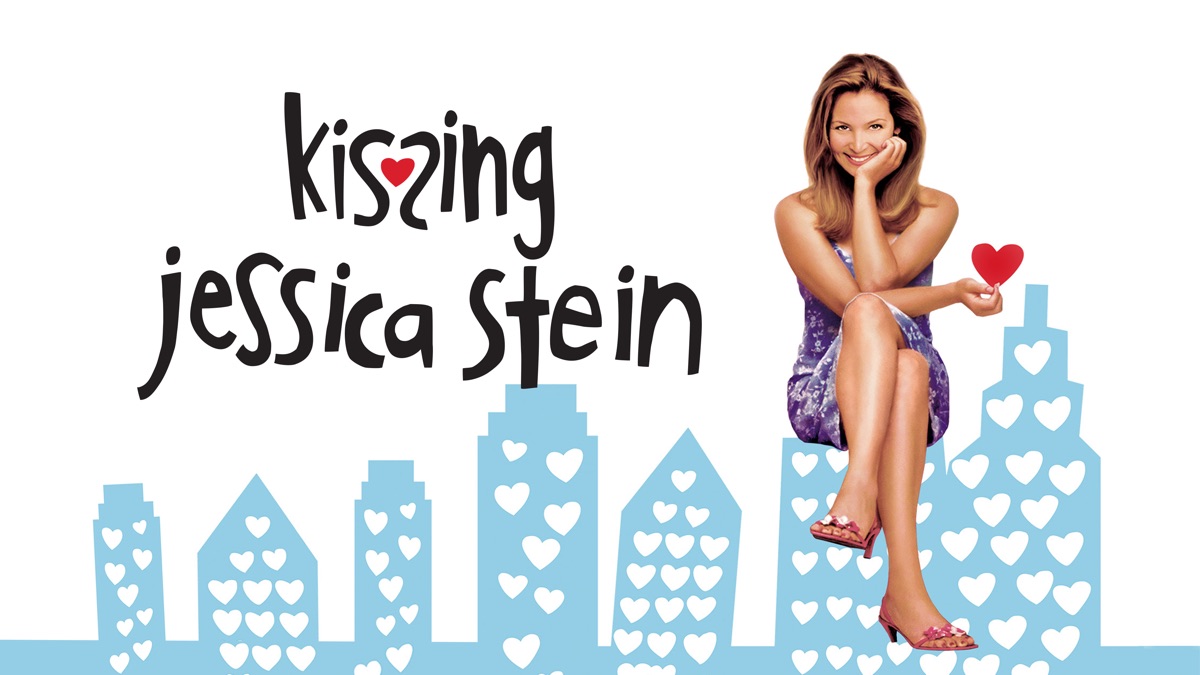
As it celebrates 25 years, Kissing Jessica Stein remains a landmark of early ’00s indie filmmaking, leaving its own clever and heartfelt imprint on the romantic comedy genre.
Jessica Stein (Jennifer Westfeldt) is a neurotic, attractive, Jewish copy editor in New York City, navigating family pressures and the social milestones of her friends. Her older brother Dan (David Aaron Baker) is recently engaged, her best friend Joan Levine (Jackie Hoffman) is expecting a child, and her mother Judy (Tovah Feldshuh) frequently sets her up on disastrous blind dates. One day, Jessica notices a personal ad quoting her favorite Rilke passage, tucked into the “Women Seeking Women” section. Curious, she responds, unaware that this decision will upend her assumptions about love, desire, and the life she thought she wanted.
The ad was placed by Helen Cooper (Heather Juergensen), an art-gallery assistant director exploring dating women after dissatisfaction with men. Their first meeting is awkward, and Jessica initially excuses herself, but Helen persuades her to stay for a drink. They hit it off and share dinner, during which Helen challenges Jessica’s preconceptions about happiness and surprises her with a kiss. This sparks the beginning of a romantic and experimental relationship as Jessica and Helen navigate uncharted emotional and sexual territory together.
Jessica gradually becomes more confident and carefree, noticed even by her boss Josh Meyers (Scott Cohen), a former flame. Family gatherings test their relationship, including a dinner at Jessica’s home where social expectations and matchmaking attempts create tension. After a thunderstorm forces Helen to sleep over, they have sex for the first time, yet Jessica keeps the relationship secret, fearing judgment. Feeling undervalued, Helen ends things, forcing Jessica to confront her own insecurities and eventually reconcile with both her mother and herself, leading to a public reunion at Dan’s wedding where Helen is warmly welcomed.
Over the following months, Jessica and Helen live together, but their sexual and emotional connection falters. Helen realizes she needs more than friendship within the relationship, leading to their permanent split. Helen moves on with a new partner, while Jessica grows calmer and more content. A chance encounter with Josh—now a friend—illustrates Jessica’s emotional growth and capacity for meaningful connections beyond romance. Kissing Jessica Stein closes on a note of bittersweet maturity, as Jessica shares the news with Helen, underscoring both the enduring bond between them and the personal evolution each has undergone.
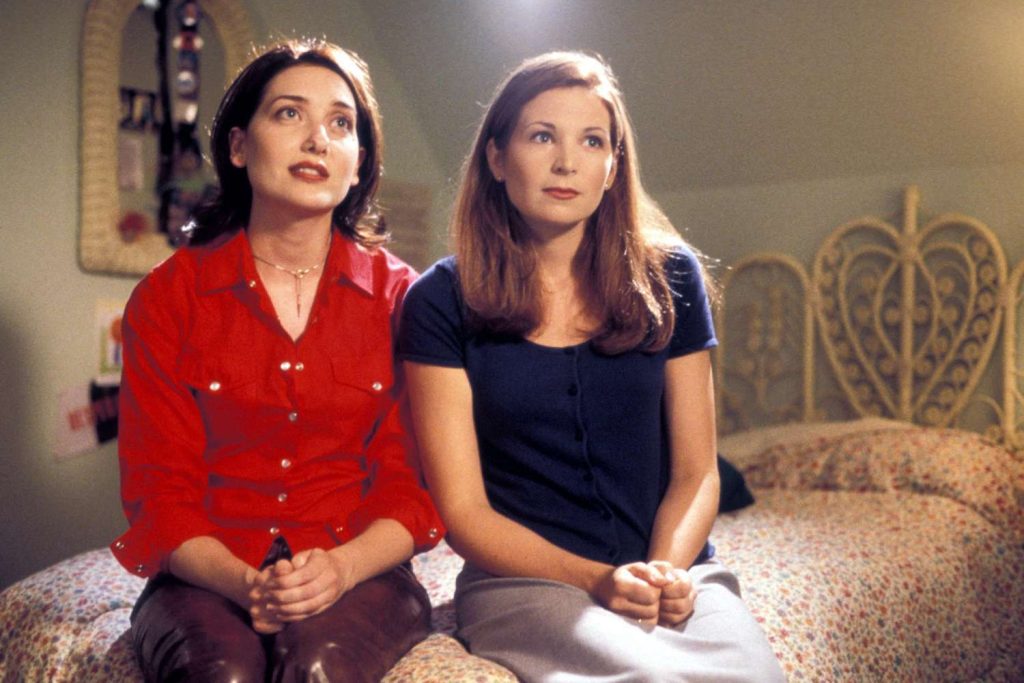
Jennifer Westfeldt and Heather Juergensen were inspired to bring a fresh take to the story of sex and the single girl. What started as an off-Broadway play ended up being optioned (which later expired) and developed as an independent film. Bisexuality is often dismissed, even in the wider LGBTQ community and yet, what we have in Kissing Jessica Stein is a serious look at bisexuality on screen. Both women otherwise outwardly appear as straight to their friends but then Jessica responds to Helen’s ad about looking for a woman and the two hit it off. The fact that Jessica has never been with a woman before is what makes the whole thing dangerous to some extent.
The genius of making this film independently is that the actresses became triple threats by writing, producing, and starring in Kissing Jessica Stein. Other actresses could have taken the roles, but few would have brought what Westfeldt and Juergensen did through the mere basis of having previously performed over six nights in the play that inspired the film. But even beyond that, for a film that made its debut in 2001, it is not a film about political grandstanding by any means.
What Westfeldt and Juergensen found through the process of researching as the script for Kissing Jessica Stein is that women were more likely to explore their sexuality than men. I think this especially shows during the scene in which they’re sitting together with two men. When you sit down to think about it, men don’t get the same freedom. It’s not seen as manly, for one. Whereas with women, even the idea of two women kissing at a bar is something that is generally cheered on by men. As for Jessica and Helen, they enter this experiment for their own reasons: Jessica is desperate while Helen is bored.
It’s one thing to describe Kissing Jessica Stein as a film about a lesbian relationship, but I view it as being about two bisexual women, even if the screenplay never explicitly says so. I didn’t know much about bisexual identity when I first saw the film after its 2002 theatrical release. Most of what I understood about lesbian visibility came from watching Ellen, particularly “The Puppy Episode,” which aired in April 1997—the same year I sensed something was off about my own gender, even if we lacked the language for it.
New York is very much a character in and of itself, but Kissing Jessica Stein wouldn’t work without either the neurotic Jewish voice or the downtown voice coming into the picture. Of course, the duo subverts expectations of the romantic comedy genre while also playing along with familiar beats. Beyond its indie roots in Swingers and Good Will Hunting, Kissing Jessica Stein also sits in conversation with late-’90s and early-2000s LGBTQ cinema, from Chasing Amy to Bend It Like Beckham. By 2000, digital filmmaking was making it easier for auteur voices to emerge.
What’s so interesting about watching Kissing Jessica Stein 25 years after its premiere—and nearly 24 years after my first viewing—is how it takes us back to a time when people sought romantic partners not online but in newspaper classified ads. There was no swiping left or right on dating apps. You had to nervously call someone and hope the chemistry translated in person. Online forums existed but were still in their infancy in the late 1990s, so most connections were analog.
In addition to reflecting an era of pre-digital dating, Kissing Jessica Stein also captures a New York City that existed before the tragic events of 9/11. Early festival screenings at the LA Film Festival and TIFF included a few seconds of the World Trade Center towers, but the filmmakers chose to remove them for the theatrical release following audience reaction in Toronto.
As a Jewish woman, it’s hard not to see myself in Kissing Jessica Stein to some degree. We all have those mothers who pressure us to find someone and settle down. Now imagine that pressure while subconsciously knowing you are a different gender than the one everyone expects you to be. For me, spring 2002 was Junior Prom, which meant trying to find a girl to bring—anyone who would say yes—even though I felt zero attraction to other girls. I felt envy but no attraction, because I was navigating the world as a straight woman living in an AMAB body.
Twenty-five years later, Kissing Jessica Stein remains a smart, witty, and surprisingly nuanced romantic comedy. Its indie roots give it a freshness that still feels distinct in today’s landscape, while its exploration of bisexuality and emotional authenticity ensures it hasn’t lost relevance. Westfeldt and Juergensen’s performances, combined with sharp writing and a keen eye for New York’s character, create a film that balances humor, romance, and self-discovery with effortless charm. Even decades later, it stands as a milestone of late-’90s indie cinema: a film that both honors and subverts the rom-com genre while capturing a moment in time that continues to resonate.
DIRECTOR: Charles Herman-Wurmfeld
SCREENWRITERS: Heather Juergensen, Jennifer Westfeldt
CAST: Jennifer Westfeldt, Heather Juergensen, Scott Cohen, Jackie Hoffman, Michael Mastro, Carson Elrod, Jon Hamm, David Aaron Baker, and Tovah Feldshuh
Kissing Jessica Stein premiered April 21, 2001 during the LA Film Festival. Fox Searchlight Pictures released the film in theaters on March 13, 2002. Grade: 4/5
Please subscribe to The Solzy Report and visit Dugout Dirt.