Danielle Solzman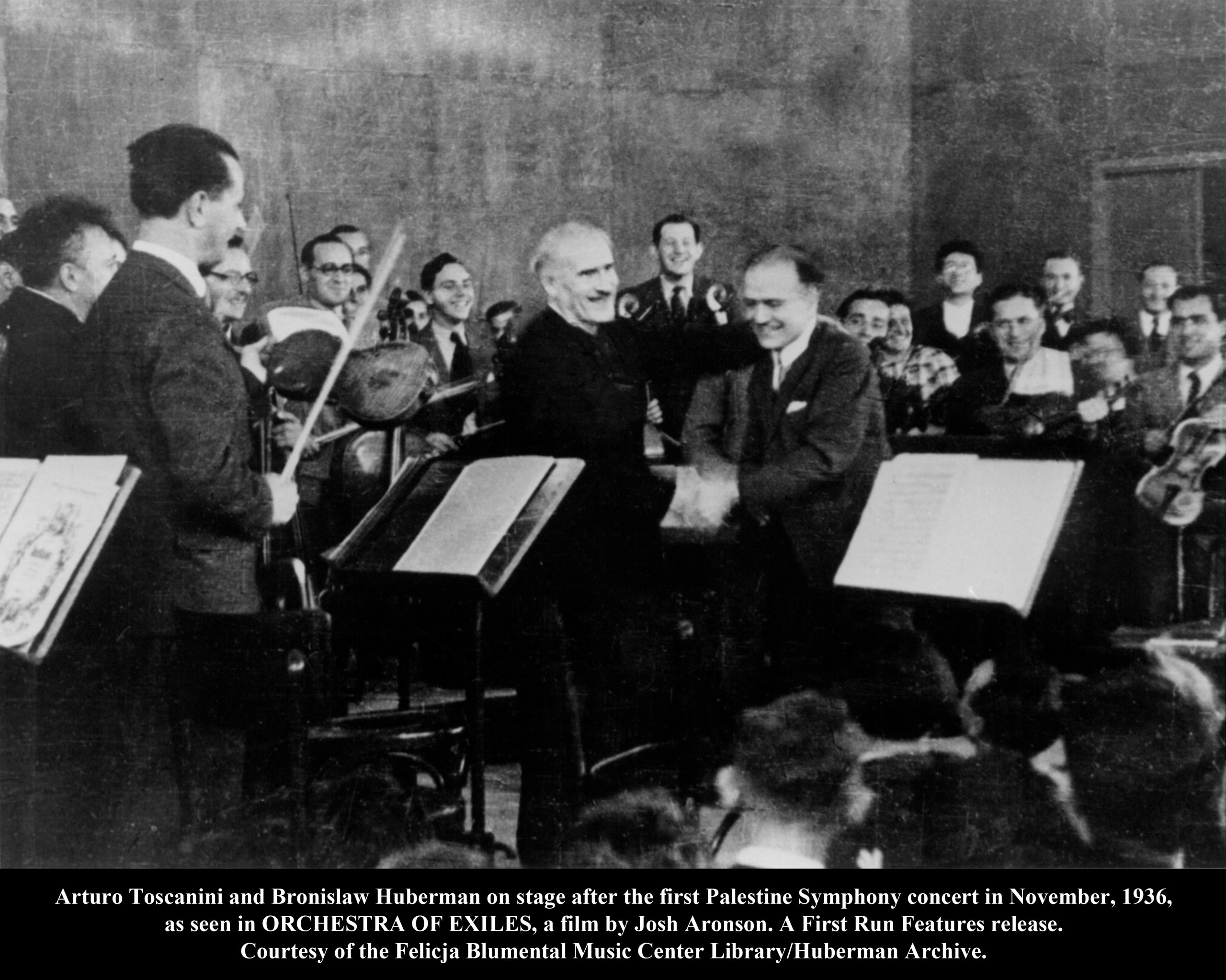
Orchestra of Exiles tells the extraordinary story of Bronislaw Huberman, a renowned Polish violinist who responded to the rise of Nazi Germany with an unlikely weapon: music.
At great personal risk, Huberman orchestrated the rescue of dozens of Jewish musicians, offering them both safety and purpose. Their collaboration laid the foundation for the Palestine Symphony Orchestra, which would later evolve into the Israel Philharmonic Orchestra.
I had initially meant to watch Orchestra of Exiles on Tisha B’Av, given the documentary’s connection to the Holocaust. Time got away from me, and it didn’t happen. Instead, I finally watched it shortly before Rosh Hashanah, then chose to hold my review until Yom Ha’atzmaut. There’s a reason for this: the Palestine Symphony Orchestra became the Israel Philharmonic Orchestra—44 of its original members still present—when Israel declared independence in 1948.
When the orchestra first formed in 1936, it included 73 musicians from across Europe and the British Mandate: Poland (19), Germany(16), Austria (10), Hungary (4), and Holland (4), alongside local players. A total of 20 had been first chairs in their home orchestras; some joined only if they could bring family. Two tragically chose to return to Europe and did not survive the Holocaust. Huberman’s vision not only rescued lives but created an institution that shaped Jewish culture in a new land and still endures to this day.
Huberman could have simply toured as a world-class violinist. Instead, he devoted years to building an orchestra in a region where Western classical music was virtually absent. Orchestra of Exiles shows how his dedication reshaped both music and Jewish history. Leonard Bernstein, a proud Zionist, would later conduct the orchestra many times, but it all began with Huberman. Josh Aronson’s documentary revives a story largely forgotten, weaving reenactments, archival footage, and interviews. The recreations sometimes distract, but with minimal dialogue, they mostly add period atmosphere.
Orchestra of Exiles also explores Huberman’s early life. A child prodigy, he turned inward after his father’s death and World War I, studying at the Sorbonne. This education broadened his worldview, leaving him both humanized and politicized. While other virtuosos lived for acclaim, Huberman sought purpose. By 1936, his mission was clear: fight Nazism by preserving Jewish culture through music. He organized blind auditions, selecting musicians on merit while saving as many as he could from an unknown fate.
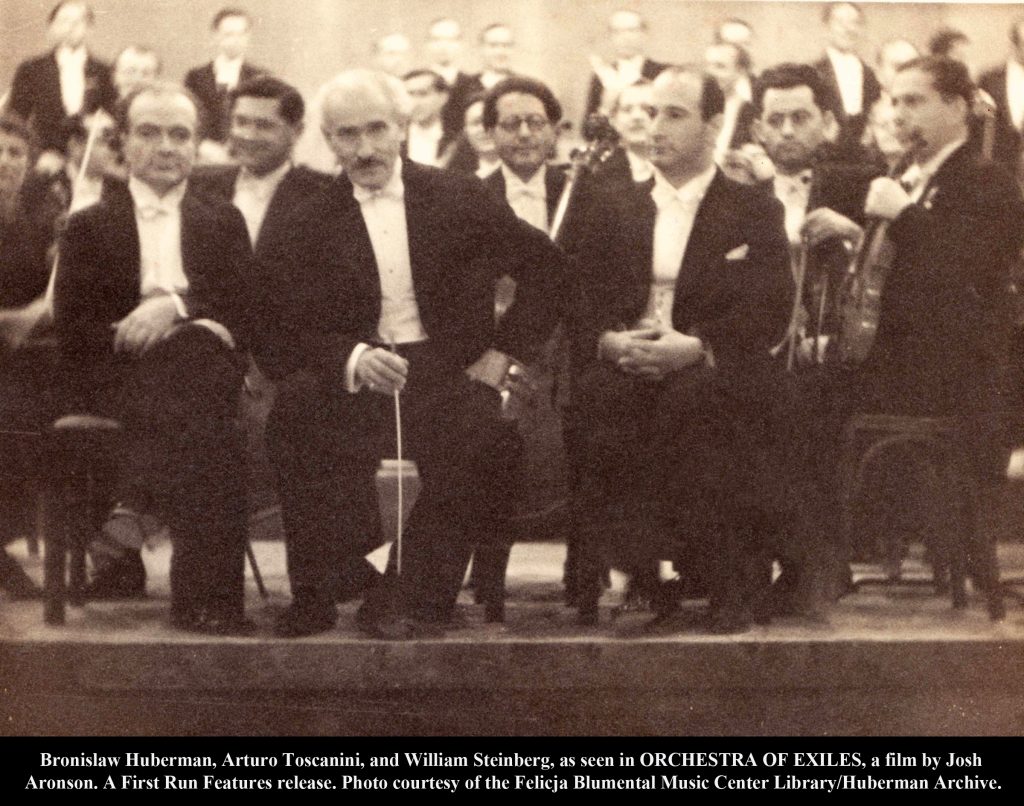
Securing Arturo Toscanini to conduct the new orchestra was a coup. Already renowned at La Scala and the New York Philharmonic, Toscanini accepted as an open protest against Hitler. The debut concert in Tel Aviv drew 3,000 and was broadcast internationally. Toscanini conducted into January, as the orchestra performed for audiences in Jerusalem, Haifa, Cairo, and Alexandria—despite delays from Arab riots earlier that year. His involvement gave the orchestra instant global legitimacy.
Orchestra of Exiles also highlights the Kulturbundbühne, founded by Kurt Singer in Berlin. This organization of German Jews was permitted to perform under Nazi supervision for Jewish audiences. With a membership reaching up to 180,000, it offered brief solace for German artists, musicians, and actors who were fired from German institutions. Some members managed to flee; others underestimated the Nazi threat and stayed, only to perish. Aronson contrasts this with Huberman’s insistence on real escape and survival.
Huberman’s last visit to British Mandate Palestine came in 1938. He lived out his final years with Ida Ibbeken until his death in 1947, after which she moved to Israel and dedicated herself to preserving his legacy. Most movingly, Huberman saved around 1,000 Jews between 1935–39. That number is staggering when we think of what individuals could do before and during the Holocaust. His work safeguarded not only lives but the very future of Jewish music.
Orchestra of Exiles ultimately shows that Huberman’s legacy extends beyond the Israel Philharmonic. It is the story of one man’s determination to preserve culture, resist intolerance, and prove that art itself can be a weapon of survival.
DIRECTOR/SCREENWRITER: Josh Aronson
NARRATOR: Tim Elliot
FEATURING: Itzhak Perlman, Zubin Mehta, Pinchas Zukerman, Leon Botstein, Joshua Bell, Amnon Weinstein
First Run Features released Orchestra of Exiles in theaters on October 26, 2026. Grade: 4.5/5
Please subscribe to The Solzy Report and visit Dugout Dirt.